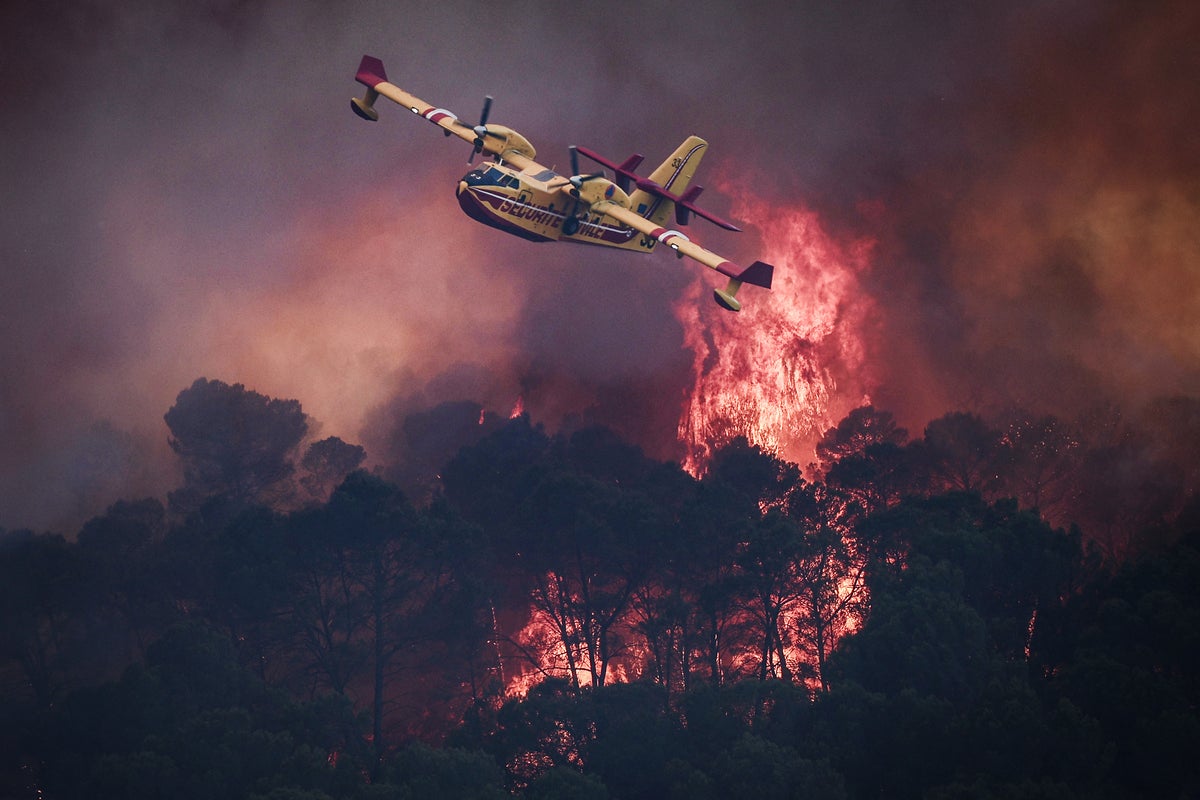
Flame fronts stretching across horizon lines. Bright orange light cutting through thick smoke at 2:00 AM. Sirens wailing while emergency alerts blare on mobile phones across coastal towns.
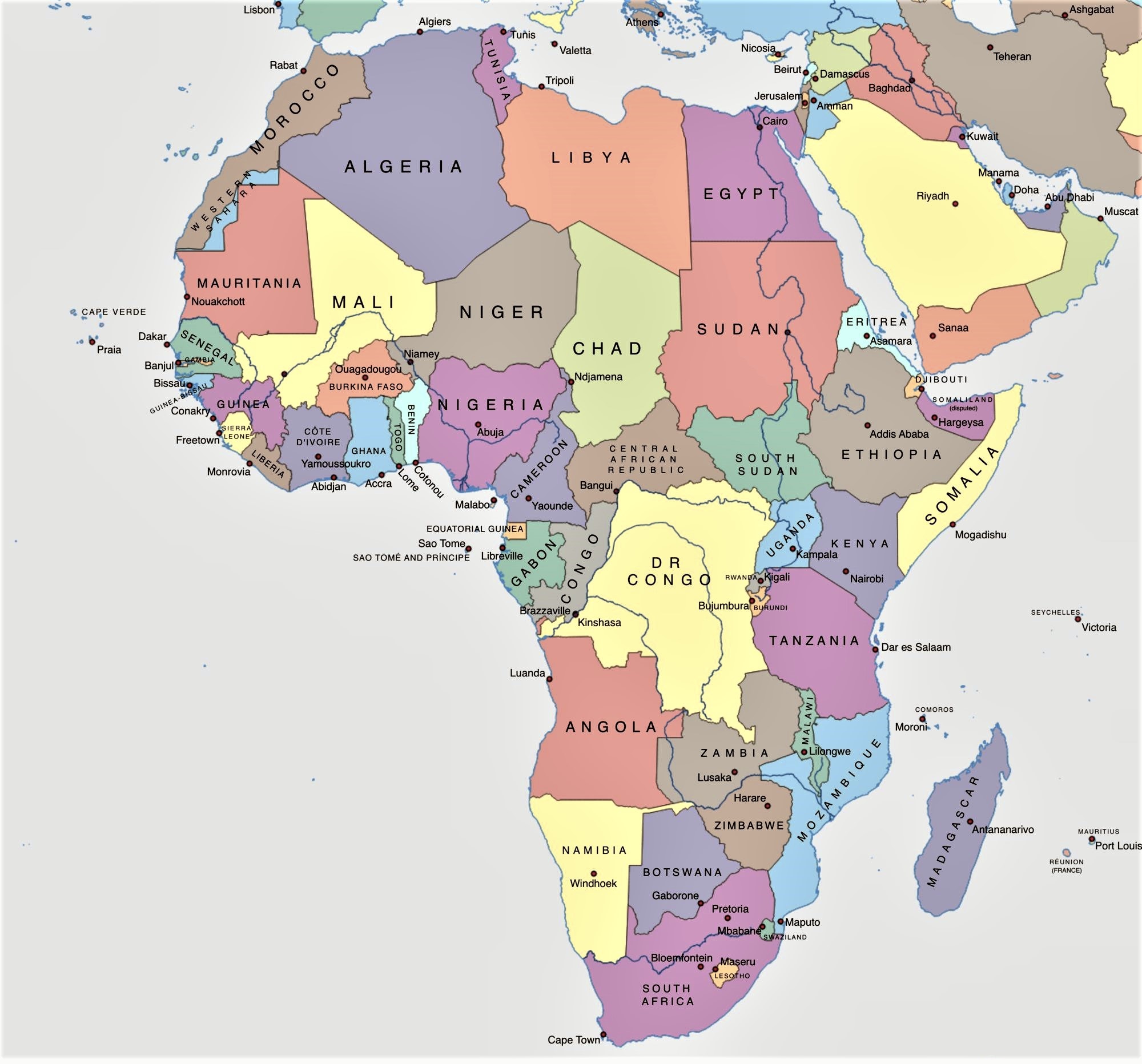
If you tuned into European news recently, you saw these images over and over. More than 20,000 people had to abandon homes, resorts, and campsites across Greece, Italy, Spain, and North Africa as temperatures breached 44°C (111°F). Holiday destinations turned into staging areas for massive air tankers dropping retardant over dry pine forests. Learn more on a related topic: this related article.
Extreme heat isn't just an inconvenience. It turns entire regions into tinderboxes, and southern Europe is currently on the front line.
[Image of hydrogen fuel cell] Additional journalism by NBC News delves into similar views on this issue.
The Deadly Physics Behind 44C Wildfires
Hot air alone doesn't set a hillside on fire. What matters is humidity, wind, and vegetation moisture levels.
When temperatures top 40°C, relative humidity often drops below 15%. Mediterranean vegetation—like Aleppo pine, thyme, and dried maquis shrubland—holds oils that become highly volatile under extreme thermal stress. The vegetation doesn't just dry out. It practically cooks.
Scientists call this soil-moisture depletion. When ground moisture evaporates completely, the sun's energy stops evaporating water and starts directly heating the air. That creates a severe feedback loop.
Strong seasonal winds like the Meltemi in Greece or the Sirocco blowing off the Sahara act like blowtorches. A single spark from an overhead power line, a discarded cigarette, or a piece of glass suddenly turns into a moving wall of flame advancing at 10 kilometers an hour. Fire crews can't safely stand in front of a fire moving that fast. They have to fall back.
Why Evacuation Is Getting Harder
Evacuating 20,000 people from narrow coastal roads is a nightmare for emergency managers.
Many popular destinations in southern Europe feature single-access roads winding through steep topography. When smoke drops visibility to zero, traffic halts. In Rhodes and Corfu during recent peak tourist seasons, authorities had to coordinate evacuations by sea, using private fishing boats alongside coast guard vessels because land routes were cut off by active blazes.
Emergency services face massive logistical hurdles:
- Language barriers: Pushing emergency alert texts to international roaming numbers in multiple languages simultaneously.
- Population spikes: Mediterranean villages with permanent populations of 1,500 suddenly host 20,000 tourists without personal vehicles.
- Infrastructure failure: Power stations go offline as fires burn transmission lines, cutting water pump capabilities just when firefighters need pressure the most.
Governments rely heavily on the European Union Civil Protection Mechanism to pool resources. Canadair firefighting aircraft from France, Italy, and Spain get scrambled across borders within hours. But when half the continent is baking under the same heat dome, those shared assets get stretched dangerously thin.
The Misconception About Arson
Whenever giant fires hit the news, social media fills up with claims that arsonists are entirely to blame.
Human activity does start a huge majority of Mediterranean fires. The European Forest Fire Information System (EFFIS) indicates that human actions cause over 90% of wildland blazes in the region. But focus on deliberate arson misses the real point.
Accidental ignition is the main culprit. Agricultural burning, sparks from power equipment, hot exhaust pipes touching tall grass, and poorly discarded debris cause far more outbreaks than criminal arsonists.
More importantly, blaming arsonists ignores why these fires grow so unmanageable. An accidental spark that would have burned a few square meters thirty years ago now turns into a 5,000-hectare inferno because the forest floor is bone dry. The underlying environmental conditions determine whether a spark dies out or burns through three towns.
Real Solutions Beyond Throwing Water From Planes
Water bombers look dramatic on television. They grab headlines and offer reassuring visuals. But aerial firefighters will tell you straight out: planes don't put out massive wildfires. Ground crews with pulaskis, drip torches, and bulldozers do.
If southern Europe wants to survive summers without constant mass evacuations, forestry management needs a massive shift.
First, rural depopulation left millions of hectares of land unmanaged. Decades ago, villagers collected firewood, grazed goats, and maintained small agricultural clearings. That naturally broke up dense forests. Today, young people move to major cities, leaving overgrown brush to build up fuel loads for years.
Second, fire suppression policies paradoxically made things worse. Suppressing every tiny fire immediately allows brush to stack up endlessly. When a fire finally escapes control during a 44°C heatwave, it burns so hot that it sterilizes the soil and destroys full-grown tree canopies.
Controlled winter burns, subsidized livestock grazing in fire corridors, and strict building buffers around forested residential zones cut down fire intensity far better than a fleet of million-dollar aircraft.
If you plan to travel to high-risk zones during peak heatwaves, stay prepared:
- Download regional emergency alert apps on your phone before departure.
- Keep your vehicle's fuel tank at least half full at all times.
- Pack a basic emergency grab-bag with passports, medication, and N95 masks for smoke.
- Follow local civil protection orders instantly—do not wait around to photograph approaching smoke plumes.