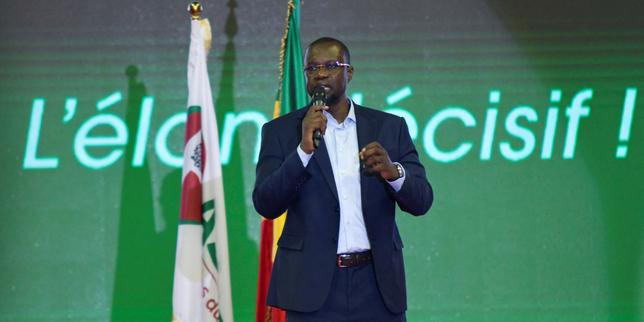
Sovereignty makes for brilliant campaign theater. When Ousmane Sonko declares that Senegal has no lessons to learn from abroad, the crowd roars. It feels good. It tastes like dignity.
It is also an economic suicide note. Also making news lately: The Strategic Mechanics of Bilateral Counter Terrorism Security Architecture Analysis of the India Slovakia Working Group.
The political consensus across West Africa right now is obsessed with autarky. Populists have convinced the public that decoupling from international institutions, renegotiating every foreign contract, and shouting down external critics is the path to prosperity. They treat global integration as a zero-sum game where Africa always loses.
This view is lazy, historically illiterate, and dangerous. Further insights regarding the matter are covered by Associated Press.
The premise that a developing nation can build a modern economy by turning inward is a fantasy. True sovereignty is not the ability to yell at the IMF; it is the financial power to ignore them because your economy is too indispensable to fail. By treating foreign capital and international partnerships as inherently hostile, Senegal risks trading global integration for stagnant provincialism.
The Mirage of the Sovereign Shield
Let us dismantle the core argument of the isolationist camp: the idea that foreign advice and capital are inherently extractive.
Nationalist rhetoric relies on a binary worldview. On one side is the pure, exploited domestic economy. On the other are predatory multinational corporations and colonial-era institutions.
This framework ignores how capital actually flows. Money is cowardly. It goes where it is protected, rewarded, and given structural predictability. When a government signals that it views foreign investment with deep suspicion, capital does not fight back. It simply walks away to micro-markets in East Africa or stable jurisdictions in Southeast Asia.
Imagine a scenario where Senegal successfully tears up every major mining, oil, and gas contract signed over the last decade. The immediate political payoff would be massive. The long-term result? A total freeze on Foreign Direct Investment (FDI).
The state cannot fund its own industrialization through tax revenue alone. The tax base is too narrow, the informal sector is too large, and the domestic banking system lacks the liquidity to finance multi-billion-dollar infrastructure projects.
When you slam the door on foreign capital, you do not achieve independence. You achieve starvation.
The Cost of Saying No to Free Lessons
The claim that Senegal has nothing to learn from the outside world is an admission of intellectual arrogance.
Economic development is a solved problem. The playbook exists. It was written by South Korea in the 1970s, Singapore in the 1980s, and Vietnam in the 1990s. None of these nations achieved hyper-growth by telling the world to mind its own business. They did it by absorbing foreign expertise, copying intellectual property, and integrating into global supply chains.
Look at Vietnam. In the mid-1980s, it was one of the poorest countries in the world. It did not achieve its current status as a manufacturing powerhouse by locking its borders. It implemented the Doi Moi reforms, joined the World Trade Organization, and invited foreign multinationals to build factories. They learned how to manufacture at scale from the outside, then they built their own domestic capacity.
When a leadership class rejects external critiques, they are not protecting national pride. They are protecting their own policy failures from scrutiny. International financial institutions like the World Bank or regional bodies like ECOWAS have plenty of structural flaws. Their macroeconomic prescriptions can be rigid. But their data is often the only check against domestic fiscal mismanagement.
Without external benchmarks, how do you measure efficiency? How do you know if your infrastructure spending is generating a return or just filling the pockets of state-backed monopolies? You cannot. Isolation breeds inefficiency, and inefficiency breeds poverty.
The Myth of Currency Liberation
You cannot talk about Senegalese sovereignty without addressing the elephant in the room: the CFA franc.
The populist line is simple: drop the currency, print a national or regional alternative, and instantly break the chains of monetary colonialism. It sounds incredibly liberating.
It is a trap.
Currency value is a reflection of economic productivity and institutional trust. If Senegal launches a solo currency tomorrow while simultaneously scaring away foreign investment, that new currency will crater. The market will price in the political risk immediately.
What happens next?
- Import costs for essential goods, including food and fuel, skyrocket.
- Inflation eviscerates the purchasing power of the middle class.
- The central bank is forced to raise interest rates to astronomical levels to defend the currency, crushing local businesses.
I have watched governments across the continent experiment with currency manipulation and radical monetary decoupling. Zimbabwe tried it. Nigeria attempted to force the value of the Naira through administrative dictates under the previous administration. The laws of economics do not care about anti-colonial sentiment. When you fight the market with rhetoric, the market wins every time.
True monetary independence requires a productive base that exports high-value goods. Until Senegal exports more than just raw commodities, a stable, guaranteed currency—even one with colonial baggage—provides a baseline of macroeconomic stability that a volatile new fiat currency simply cannot match.
Renegotiation vs. Reputation
The current administration has made a show of reviewing oil and gas contracts with giants like BP and Kosmos Energy. The goal is noble on paper: get a better deal for the Senegalese people.
But there is a fine line between optimization and expropriation.
International energy projects require billions of dollars in upfront capital before a single drop of oil is extracted. Investors take that massive risk based on one thing: contractual sanctity. They need to know that a contract signed by one administration will be honored by the next.
Contract Risk Assessment Matrix:
+------------------------+------------------------+------------------------+
| Action                 | Immediate Result       | Long-Term Consequence  |
+------------------------+------------------------+------------------------+
| Aggressive Unilateral  | Political popularity,  | FDI collapse, legal    |
| Contract Rewrites      | short-term cash spike  | battles in international|
|                        |                        | arbitration courts     |
+------------------------+------------------------+------------------------+
| Strategic Tax & Tariff | Stable investment      | Incremental wealth     |
| Adjustments            | climate, steady flows  | creation, sustainable  |
|                        |                        | industrial growth      |
+------------------------+------------------------+------------------------+
If Senegal gains a reputation as a jurisdiction where contracts are fluid and subject to political whims, the premium on future investment will double. Insurance costs will surge. Future bidders will price that political risk into their offers, meaning Senegal will actually get worse terms on its next natural resource deals.
Worse, these disputes do not stay local. They end up in the International Centre for Settlement of Investment Disputes (ICSID). Nations that lose these arbitrations face asset seizures abroad and a total shutdown of international credit lines. You cannot build a modern state if your sovereign assets are being frozen in London or Paris to satisfy an arbitration award.
The Flawed Premise of Self-Sufficiency
People often ask: Why shouldn't a resource-rich nation like Senegal focus entirely on domestic consumption and self-reliance?
The question itself is structurally flawed. Senegal has a population of roughly 18 million people. That is not a market; that is a neighborhood in Tokyo or Shanghai.
An economy scaled only for domestic consumption cannot achieve the efficiencies required to compete globally. You cannot build a domestic automotive industry, an advanced electronics sector, or a world-class pharmaceutical hub based on a market of 18 million consumers with low average purchasing power.
Economic survival requires export-led growth. And export-led growth requires deep, frictionless integration with the very global markets that isolationist rhetoric condemns. You must sell to the world to grow wealthy. To sell to the world, you must play by the world's rules regarding product standards, legal frameworks, and capital mobility.
Turning inward does not protect local industries; it coddles them. It removes the competitive pressure that forces domestic firms to become efficient. A protected local industry produces low-quality goods at high prices, forcing the local population to subsidize corporate incompetence under the guise of patriotism.
Real Sovereignty is Bought, Not Proclaimed
Let's be clear about the downsides of global integration. It is volatile. It exposes a developing nation to external shocks, like global inflation spikes or Western interest rate hikes. It forces governments to make uncomfortable compromises with international creditors who care more about balance sheets than social welfare.
But the alternative is worse. The alternative is a slow descent into economic irrelevance.
If Senegal wants true sovereignty—the kind where no foreign power or institution can dictate terms—it must stop focusing on rhetoric and start focusing on leverage.
You do not get leverage by exiting the room. You get leverage by becoming indispensable to the global supply chain.
- Look at Taiwan. It is a tiny island under constant existential threat, yet it is secure because it controls the world's most advanced semiconductor manufacturing. The world cannot afford to let Taiwan fail.
- Look at Morocco. It did not posturingly cut ties with Europe; it built the Tangier Med port, integrated its economy into the European automotive supply chain, and made itself a vital logistical hub.
That is real sovereignty. It is practical. It is commercial. It is backed by infrastructure and output, not speeches.
Senegal's leadership needs to pivot away from the easy applause of isolationism. The country does not need a shield to hide behind; it needs an engine to compete. Stop telling the world that Senegal has nothing to learn. Start building an economy that the world cannot afford to ignore.