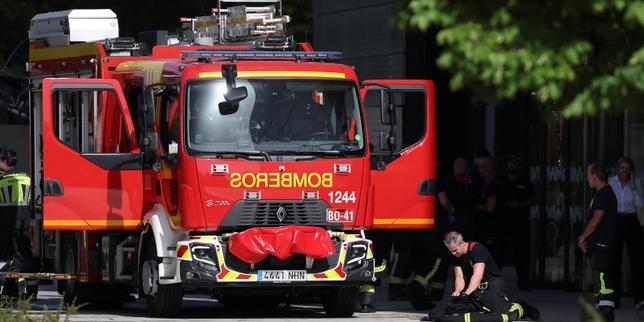
Twelve people just died in an Andalusian forest fire, and the mainstream media is already running the same tired script. They point at the body count, compare it to the entirety of 2025, and scream about a changing climate while demanding more water bombers, more firefighters, and more taxpayer money.
They are diagnosing the symptom and calling it the disease.
The media’s lazy consensus is that fewer fires equal safety. They see a low-burn year like 2025 and call it a victory. In reality, that quiet year was a ticking time bomb. The brutal truth about wildfire management in Mediterranean Europe is that our obsessive, zero-tolerance approach to suppression is exactly what makes these blazes lethal. By putting out every single spark immediately, we are aggressively hoarding fuel for the next inevitable inferno.
The Andalusia tragedy wasn’t a failure of emergency response. It was the predictable consequence of a century of broken forestry policy.
The Suppressed Fuel Paradox
I have spent years analyzing land-use data and working alongside fire ecologists who are terrified of the current political consensus. Here is the mechanism the public never hears about: Mediterranean ecosystems are born to burn. Species like the Aleppo pine (Pinus halepensis) and various rockrose (Cistus) species are pyrophytes. They evolved with fire. They require it to crack open their seeds and clear out undergrowth.
When we suppress every minor ignition, we interrupt this cycle. The result is what ecologists call a "fuel ladder." Dead wood builds up. Shrubs grow thick and tall, bridging the gap between the forest floor and the canopy.
When a fire finally breaks through our multi-million-euro suppression grid, it doesn't just creep along the grass. It climbs. It transforms from a manageable surface fire into a catastrophic, wind-driven crown fire. That is what happened in Andalusia. It wasn't just hot; the forest was packed with decades of unburnt fuel that should have been cleared out years ago by smaller, natural blazes.
We are treating a chronic condition with an overdose of adrenaline, and the patient is suffering a heart attack.
The Illusion of 2025: Why Quiet Years are Dangerous
The media loves a good bar chart. They show you that 2025 had historically low burn acreage in Spain and infer that policy is working. This is a lethal misinterpretation of data.
+------------------------------------+------------------------------------+
| The Media's Interpretation        | The Ecological Reality             |
+------------------------------------+------------------------------------+
| Low burn acreage = Successful      | Low burn acreage = Accumulated     |
| management and safer forests.      | fuel loads and high future risk.   |
+------------------------------------+------------------------------------+
| High casualties = Proof we need   | High casualties = Proof that past  |
| more suppression tech and funding. | suppression created an unmanageable|
|                                    | mega-fire environment.             |
+------------------------------------+------------------------------------+
A quiet year does not mean the danger went away. It means the biomass stayed right where it was, drying out under the Iberian sun, waiting for a single spark. When you look at the European Forest Fire Information System (EFFIS) data over decades, the trend is obvious to anyone not blinded by a news cycle: the total number of fires is going down due to better detection, but the intensity and speed of the fires that do escape control are skyrocketing.
We are trading thousands of small, harmless fires for a handful of unstoppable, killer mega-fires.
Rural Abandonment: The Silent Accelerant
Stop looking exclusively at the thermometer. If you want to understand why Andalusia burned, you need to look at the demographic shift of the last forty years.
Historically, the Spanish countryside was a mosaic. You had patches of forest, butted up against goat pastures, olive groves, and smallholder agricultural plots. This fragmentation created natural firebreaks. If a fire started in a pine grove, it hit a heavily grazed pasture or a plowed field and starved.
Today, rural Spain is empty. The España Vaca (Empty Spain) phenomenon has left millions of hectares of agricultural land abandoned. Without sheep and goats acting as nature’s lawnmowers, and without farmers managing the brush, these abandoned plots have undergone rapid ecological succession. They have filled in with highly flammable scrubland.
The mosaic is gone. It has been replaced by a continuous, unbroken carpet of fuel stretching for hundreds of kilometers. The Andalusia fire didn't catch because the weather was a few degrees hotter than average; it caught because it had a seamless runway of biomass to accelerate through.
The Failure of the Technological Fix
Every time a disaster like this hits the headlines, politicians scramble to buy more toys. They promise fleets of new Canadair water bombers, high-tech thermal imaging drones, and AI-driven predictive dispatch software.
It is a multi-million-euro security theater.
Air tankers do not put out mega-fires. Under extreme conditions—high winds, low humidity, and massive fuel loads—water dropped from a plane evaporates before it even hits the flames, or the smoke column is so turbulent that aircraft cannot fly safely. At a certain threshold of intensity, fire defies technology.
The heavy hitters in wildfire science, like those at the Pau Costa Foundation in Catalonia, have been shouting this into the void for a decade: we cannot out-fight these fires on the frontline. We have to out-smart them in the offseason.
The downside to my contrarian approach? It requires political courage that doesn't fit into an election cycle. Controlled burning looks bad on television. It involves intentionally setting fire to a landscape, creating smoke, and occasionally having a burn breach a containment line. It requires accepting small, controlled risks today to avoid catastrophic losses tomorrow. Politicians would rather buy a shiny new helicopter, stand in front of it for a photo op, and pray the next big fire happens after their term ends.
Dismantling the "People Also Ask" False Premises
When tragedies like this occur, the public asks the wrong questions because they are fed flawed premises. Let's fix them.
"How can we stop all wildfires in Spain?"
You can’t, and trying to do so is exactly what killed twelve people in Andalusia. The premise that a forest without fire is a healthy forest is a lie born of urban disconnection from nature. We must stop asking how to eliminate fire and start asking how to reintroduce the right kind of fire back into the landscape.
"Are hotter summers the sole cause of these mega-fires?"
No. Climate change acts as a force multiplier, drying out fuel faster, but it cannot burn what isn't there. If you have a clean forest floor with low fuel density, a hot summer day leads to a fast-moving, low-intensity surface fire that cleans the ecosystem and leaves the mature trees alive. If you have forty years of accumulated dead wood and brush, that same hot day creates a firestorm that melts soil nutrients and kills people. Fuel load is the variable we can control. Climate is not.
The Fix: Fight Fire With Fire
If we want to honor the twelve people who lost their lives in Andalusia, we need to stop the emotional hand-wringing and completely overhaul our forestry strategy.
First, we must deregulate prescribed burning. Right now, a forestry manager who wants to conduct a controlled burn during the winter faces a mountain of bureaucratic red tape, environmental impact studies, and liability risks. We need to fast-track these permits and train a new generation of fire lighters, not just firefighters.
Second, we need to subsidize extensive pastoralism. Instead of spending millions on aircraft that sit in a hangar for nine months of the year, we should be paying shepherds to graze their herds in strategic fire-break zones around villages and infrastructure. A goat is a far more effective tool against mega-fires than a water bomber.
Stop celebrating quiet fire seasons. Start fearing them. The ashes in Andalusia are the direct result of our own arrogance, thinking we could command nature to stop burning altogether. It’s time to stop fighting the fire and start managing the fuel. All the water bombers in the world won’t save us from a landscape we’ve spent decades turning into a tinderbox. No more excuses. Let it burn when it’s safe, or watch it burn us down when it’s not.