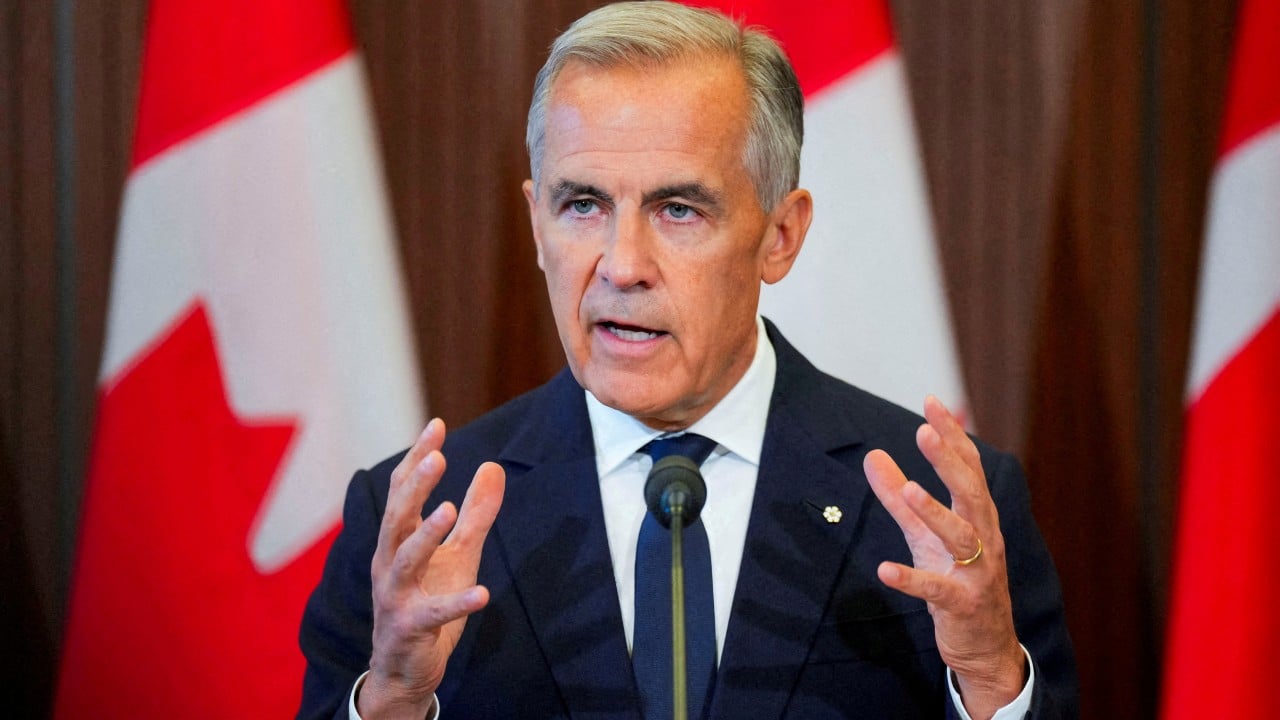
Speaker Mike Johnson found himself navigating a familiar trap last week when pressed on Donald Trump’s latest campaign trail prophecy. The former president had offered a characteristically blunt prediction that any potential conflict involving Iran would wrap up swiftly if he returned to power, specifically hinting at a resolution following the midterm milestones. Asked to weigh in on this timetable, the Speaker chose the language of faith over policy mechanics, telling reporters that he certainly prays the prediction turns out right.
It is a revealing posture. In Washington, prayer is often the default diplomatic shield when leaders are caught between an unpredictable executive standard-bearer and the grim reality of compounding foreign policy crises. The underlying tension, however, goes far beyond a casual exchange on Capitol Hill. It touches on how political survival increasingly relies on outsourcing complex geopolitical outcomes to future electoral timelines while avoiding the hard questions of immediate legislative oversight.
The modern legislative branch has largely abdicated its constitutional authority over war and peace, choosing instead to let executive rhetoric set the tempo. When a prominent political figure suggests that a major international confrontation can be neatly scheduled around a domestic election cycle, it reduces statecraft to a campaign promise. For veteran observers of congressional foreign policy, this deferral is not new, but the casual nature of the timeline reveals a dangerous complacency.
The Mechanics of Deferred Accountability
To understand why figures like Johnson lean into hopeful optimism rather than critical analysis, one must look at the structural incentives of contemporary American politics. Foreign conflicts are messy, expensive, and deeply unpopular with an electorate fatigued by two decades of protracted overseas engagements. Confronting the prospect of a direct confrontation with Iran requires a level of fiscal and strategic candor that few modern politicians are eager to provide.
Instead, the strategy relies on temporal displacement. By projecting resolution onto a post-midterm horizon, leaders create a political buffer. It allows them to express solidarity with the party's titular leader without committing to a specific military doctrine or fiscal appropriation strategy. If the conflict flares up today, it is an administrative headache; if it is promised to end tomorrow—contingent upon a specific electoral outcome—it becomes a campaign asset.
Yet, foreign actors do not calibrate their strategic moves to fit the American electoral calendar. Tehran’s calculus involves regional proxies, nuclear enrichment thresholds, and internal regime security, none of which bow to congressional prayers or presidential forecasts. When domestic political survival dictates that leaders treat severe geopolitical threats as seasonal talking points, the margin for catastrophic miscalculation widens significantly.
Behind Closed Doors On Capitol Hill
Inside the cloakrooms and committee chambers, the mood among national security staffers is markedly different from the public optimism expressed by leadership. Briefings paint a picture of an unstable Middle East where deterrence is increasingly fragile and the risk of accidental escalation remains high. Members of both parties receive intelligence warnings regarding cyber vulnerabilities, proxy network activations, and the vulnerability of regional infrastructure.
Despite these warnings, legislative action remains paralyzed. The refusal to debate or pass a modern Authorization for Use of Military Force means that executive power in a crisis remains virtually unchecked. When the Speaker offers a prayer for a swift, politically timed resolution, he is signaling to the defense hawks and the isolationist base simultaneously. He is telling the hawks that the administration will take a strong stance, while signaling to the weary base that relief is just around the corner.
This dual-messaging works well in television interviews, but it collapses under the weight of actual crisis management. History shows that wars rarely end because a politician predicted a convenient deadline. They end when strategic objectives are met, when costs become unbearable, or through exhaustive, unglamorous diplomacy.
The Cost Of Political Expediency
The danger of treating war as a temporal inconvenience is that it robs the public of honest debate. When citizens are told that complex international conflicts will simply resolve themselves after a given political cycle, there is no public pressure to demand long-term strategy, economic resilience, or diplomatic engagement.
Speaker Johnson’s reliance on faith in this context is emblematic of a broader institutional fatigue. Congress has largely transformed from a deliberative body into a messaging machine, where the primary objective is surviving the next twenty-four news cycle. Whether the prediction about Iran proves accurate matters less to the political apparatus than the fact that the statement itself safely bridges the gap between competing factions for another day.
As the political landscape edges closer to the next round of high-stakes domestic elections, the temptation to rely on rhetorical wishful thinking will only grow. The real test of leadership, however, is not found in how artfully a politician can endorse an optimistic timeline, but in whether they possess the institutional courage to confront a dangerous world without waiting for a better political season.