The dashboard clock in a state trooper’s cruiser reads seconds, but it measures something much heavier. It measures the exact distance between a routine traffic stop and a catastrophe. On a cold December night on the New York State Thruway, those seconds ticked away until they ran out entirely.
When a flashing light appears in your rearview mirror, your heart drops. It is a universal human reaction. You pull over, you wait, you accept the ticket. But on that night, a driver chose to step on the gas instead. What followed was not just a pursuit; it was a demonstration of how quickly institutional protocol can devolve into blind adrenaline.
We look at police chases through the lens of Hollywood movies—screeching tires, heroic maneuvers, the bad guy caught just in time. The reality is far grimmer. It is loud. It is terrifying. And too often, it ends in a metal-on-metal impact that shatters innocent families.
The Velocity of a Bad Decision
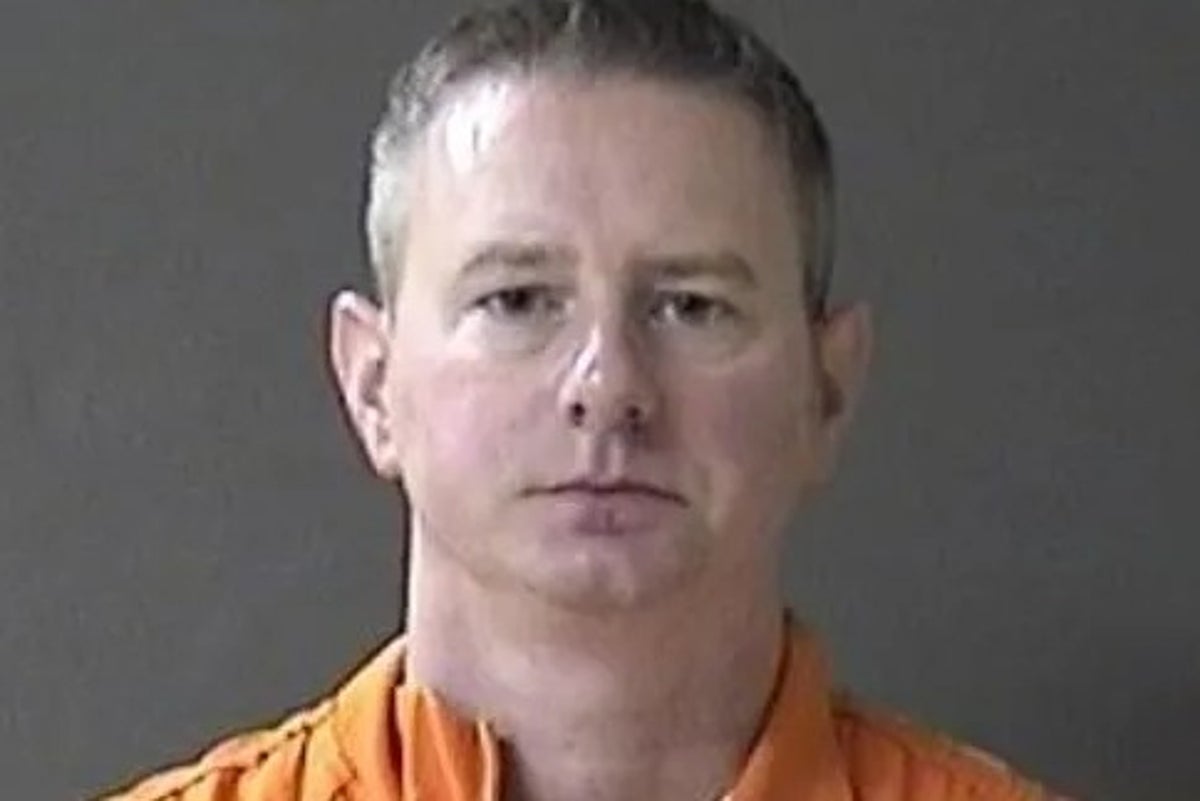
Christopher Baldner was a New York State Trooper, a man sworn to protect the very highway he patrolled. When a vehicle fled his attempt to initiate a traffic stop, a choice had to be made. In the law enforcement community, this is where training is supposed to override instinct. The policy is clear: you weigh the risk of the chase against the immediate danger of the suspect escaping.
He pursued.
The chase reached speeds that turn a two-ton vehicle into a missile. At over one hundred miles per hour, the human brain struggles to process visual data fast enough. The margins for error disappear.
Consider the physics of a high-speed collision. It is not just about the first impact. It is about the kinetic energy that must go somewhere. When a police cruiser rams a fleeing car from behind—a maneuver known as a bumper ramming—the results are entirely unpredictable. The vehicle spins. It flips. It loses all traction.
That night, the fleeing car contained a family. Among them was eleven-year-old Monica Goods. She was not a suspect. She had committed no crime. She was a child in the backseat, completely helpless as the world outside her window turned into a blur of flashing lights and roaring engines.
The Ramming and the Reckoning
The cruiser struck the back of the family's SUV. Twice.
The second impact was decisive. The SUV overturned, tumbling across the dark asphalt before coming to a violent rest. In the wreckage, the flashing lights of the cruiser illuminated a scene of absolute devastation. Monica Goods did not survive the crash.
The legal aftermath of such an event usually winds through bureaucratic channels, protected by the armor of qualified immunity and the benefit of the doubt traditionally afforded to law enforcement. But some actions cross a line that the law cannot ignore.
The prosecution built a case not on a mistake of judgment, but on a pattern of behavior. Investigators discovered this was not an isolated incident. Baldner had used his vehicle as a weapon before. He had rammed other cars in previous pursuits, demonstrating a reckless disregard for the deadly potential of his cruiser.
A courtroom is a quiet place. It stands in stark contrast to the chaos of a midnight highway. In that quiet room, the facts were laid bare. The defense argued that the fleeing driver caused the tragedy by refusing to stop. It is an argument we hear often: if they had just complied, this wouldn't have happened.
But the law holds those in uniform to a higher standard. A badge is not a license to escalate a situation until it claims the life of a bystander. The jury saw the pattern. The judge saw the devastation.
Seven Years
The sentence handed down was consecutive terms totaling over seven years in state prison. For a former state trooper, the transition from the front seat of a patrol car to a prison cell is a long, steep fall.
Seven years is a lifetime for a career. It is a long time to sit in a cell and replay a few minutes of a Tuesday night over and over again. But seven years does not bring back a child who would have been entering her late teens, exploring the world, and figuring out who she wanted to be.
The sentence sends a ripple through police departments across the country. It challenges the culture of the pursuit. For decades, the unspoken rule in many agencies was to catch the suspect at all costs. Winning the chase was everything. Now, the cost is being calculated in a courtroom.
The true tragedy of Monica Goods is how preventable it was. A license plate can be recorded. A helicopter can follow. A warrant can be issued the next morning. The urgency that drives a high-speed chase is almost always an illusion, a chemical rush of adrenaline that convinces a driver—and a pursuer—that the world will end if that car gets away.
But the world only ends for the people inside the wreckage.
The Invisible Stakes of Our Streets
We drive every day. We pass police cars parked in the median, radar guns pointed at traffic. We trust that the people behind those wheels are the adults in the room. We trust that their training will keep us safe, even when someone else decides to break the law.
When that trust breaks, it leaves a scar on the entire community. It makes every driver look at a police cruiser with a hint of anxiety instead of a sense of security.
The mother of Monica Goods spoke after the sentencing. Her words were not about the legal technicalities of third-degree deterrence or reckless endangerment. They were about the empty chair at the dinner table. They were about the birthdays that will never happen.
The legal system has done what it can do. It has weighed the evidence, listened to the arguments, and delivered a punishment. Christopher Baldner will serve his time. The state will move on, and new troopers will graduate from the academy, taking the same oath he took.
But on a quiet stretch of the New York State Thruway, the ghosts of that chase remain. They serve as a silent reminder to every officer who feels the urge to press the accelerator when a suspect flees. The speed is intoxicating. The desire to win is strong. But the price of that victory might be a debt that can never be repaid.
A photograph of an eleven-year-old girl with a bright smile sits on a mantelpiece, frozen in time, while the man who chased her to her death counts the days in a concrete room.