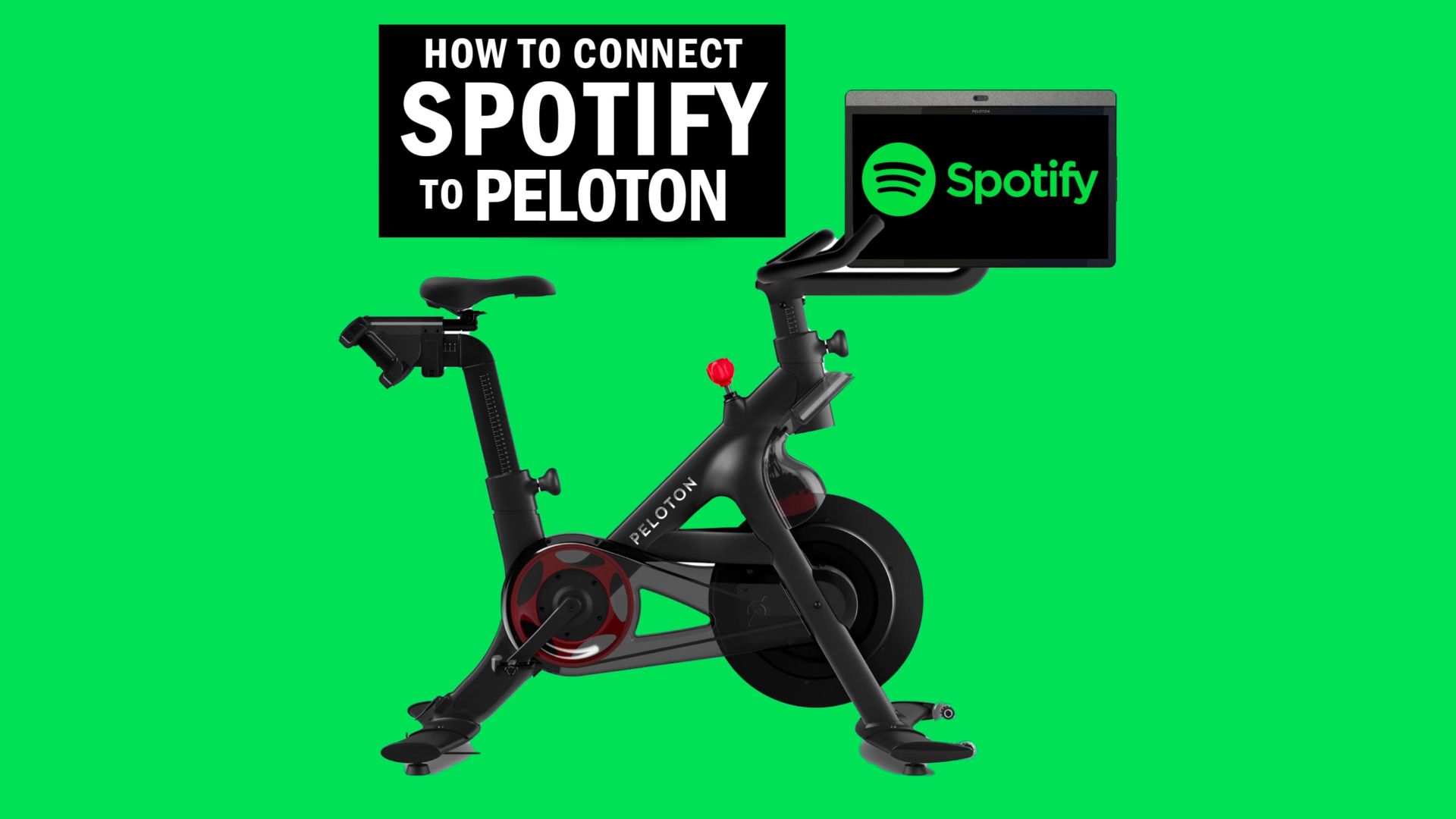
The partnership between Spotify and Peloton to create a dedicated "Track Exercises" hub isn't a mere feature update. It is a calculated land grab for the most valuable piece of digital real estate left in the modern economy: the first sixty minutes of your day. By integrating Peloton’s workout playlists directly into the Spotify interface, the two companies are attempting to solve a mutual crisis of retention. Spotify needs to prove it is more than a passive background noise generator, while Peloton is fighting to remain relevant in a post-pandemic world where the living room is no longer the only gym.
This integration allows users to sync their workout history and discover music curated by Peloton instructors without switching apps. On the surface, it looks like a win for convenience. Beneath the hood, it is a data-sharing pact designed to map out the physical habits of millions. When you know exactly what song makes a person push harder on a stationary bike at 6:15 AM, you don't just own their ears. You own their biology.
The Survival Math Behind the Hub
To understand why this matters, look at the balance sheets. Spotify operates on razor-thin margins because of the exorbitant royalties it pays to major record labels. To escape the trap of being a middleman, Spotify must become a lifestyle utility. If they can embed themselves into your fitness routine, they reduce the "churn"—the industry term for people canceling their subscriptions. A user who associates a specific app with their physical health is significantly less likely to hit the cancel button than someone who just uses it for podcasts.
Peloton is in a much tighter spot. After their stock price cratered from its 2021 highs, the company pivoted from being a hardware manufacturer to a software-first entity. They realized that selling a $2,000 bike is a one-time win, but a $44 monthly app subscription is a forever stream of revenue. By placing their "brand" inside Spotify’s massive ecosystem, Peloton gets a storefront in front of 600 million monthly active users.
Why Music is the Real Product
Music isn't just an accompaniment to a workout; it is the engine. Biomechanical studies consistently show that synchronous music—tracks that match the tempo of the exercise—can reduce perceived exertion by up to 12%.
- Tempo Matching: Spotify’s algorithms can now suggest Peloton classes based on your existing listening history.
- Instructor Influence: Instructors are the new influencers. When an instructor picks a track, that song’s play count spikes, creating a feedback loop that benefits the record labels.
- Engagement Loops: Saving a song during a ride and having it automatically appear in a Spotify "Liked Songs" folder removes the friction that usually kills digital engagement.
The Privacy Cost of High Performance
We often ignore what we trade for a smoother user experience. In this case, the trade-off is a granular map of your physical exertion. When these two platforms talk to each other, they are merging your musical taste with your heart rate, calorie burn, and frequency of movement.
Imagine a hypothetical scenario where an insurance company looks at this data. They see a user who hasn't opened the Peloton hub in three months but is listening to "sad" acoustic playlists at 2:00 AM. This isn't just "content discovery." It is a behavioral profile that tells a story about your mental and physical state. While both companies claim to prioritize user privacy, the long-term value of these combined datasets is too high for any corporate board to ignore indefinitely. They are building a 360-degree view of the human condition, one squat at a time.
The Competition for Your Attention
Spotify isn't just fighting Apple Music anymore. It’s fighting YouTube, Netflix, and even sleep. By claiming the "fitness" category through Peloton, they are boxing out competitors who don't have the same level of cultural integration.
| Platform | Primary Strategy | Fitness Integration |
|---|---|---|
| Spotify | Ecosystem Ubiquity | Deep integration with Peloton/Strava |
| Apple Music | Vertical Integration | Native Apple Fitness+ (Closed Loop) |
| YouTube Music | Video Dominance | High-volume, low-integration |
The "closed loop" of Apple Fitness+ is the biggest threat here. Apple owns the watch, the phone, the headphones, and the fitness content. Spotify and Peloton are two "best-of-breed" players forced into a marriage of convenience to prevent Apple from monopolizing the health space entirely. It is an alliance of necessity.
The Instructor as the New DJ
The traditional radio DJ is dead, and the club DJ is a niche luxury. The most influential curators in the music industry today wear spandex and shout encouragement over heavy basslines. Peloton instructors have become powerful kingmakers for new artists. A single "shoutout" during a HIIT class can trigger a massive wave of Shazams and Spotify saves.
By formalizing this via a global content hub, Spotify is essentially outsourcing its A&R (Artists and Repertoire) work to fitness professionals. They are betting that you trust your favorite instructor's taste more than a cold, faceless algorithm. This humanizes the tech. It makes the platform feel curated rather than calculated, even though the calculation is happening every second in the background.
Friction is the Enemy of Profit
Every time you have to close one app to open another, there is a chance you will put your phone down and do something else. Tech giants call this "friction." The goal of the Spotify-Peloton hub is to eliminate the gap between wanting to exercise and starting the exercise.
This is part of a broader trend of "super-app" behavior. While Western apps haven't reached the total dominance of China’s WeChat, they are getting closer. We are seeing a consolidation of the digital experience. Instead of ten apps for ten tasks, we are moving toward three "anchor" apps that handle everything. Spotify wants to be your anchor for sound, health, and focus.
The Risks of the Monoculture
When two giants decide what "fitness music" sounds like, the variety of the experience inevitably shrinks. Algorithms favor the middle. They favor what is proven to work for the widest possible audience. This leads to a homogenization of the workout experience. If the data shows that 128 BPM house music keeps people on the bike for five minutes longer, that is all the "hub" will suggest. The quirkiness of human discovery is replaced by the efficiency of the machine.
Beyond the Stationary Bike
This partnership signals a move toward "ambient computing." This is the idea that your technology should follow you from the car to the office to the gym without you having to prompt it. If you start a playlist on your commute, Spotify wants that same vibe to be waiting for you when you clip into your pedals.
The technical hurdles are significant. Syncing real-time metadata across different cloud architectures without latency is a massive engineering task. But the payoff is a "sticky" user. Once your workout history, your favorite songs, and your instructor preferences are all entwined in one interface, leaving that ecosystem becomes a massive headache. You aren't just a customer; you are a resident of their digital estate.
What Users Actually Get
Strip away the marketing fluff and the "wellness" buzzwords. What remains is a more efficient way to distract yourself from the pain of a workout.
- Customized Shelves: Specialized areas within the Spotify app dedicated to specific workout types (Yoga, Strength, Running).
- Instructor Playlists: Direct access to the musical minds of the Peloton staff.
- Automatic Logging: No more manual entry of what you did and when you did it.
For the power user, this is a major quality-of-life improvement. For the casual listener, it is another reason to never look at a competitor’s app.
The Industry Fallout
Other fitness platforms are now under immense pressure to find their own "Spotify." Platforms like Zwift, Tonal, and Mirror cannot afford to be silos. They have to integrate or they will be ignored. We are entering an era of "Integrated Wellness," where your hardware is only as good as the software partnerships it maintains.
Investors are watching this closely. If Spotify can prove that this hub increases the "Lifetime Value" (LTV) of a user, expect to see similar hubs for sleep, meditation, and even cooking. They are building a map of your life, one category at a time. The Peloton deal is just the first major milestone in a much longer journey toward total lifestyle integration.
The ultimate success of this venture won't be measured in press releases or app downloads. It will be measured in the quiet, invisible moments of your morning. If you find yourself reaching for Spotify before you’ve even put on your shoes, they have already won. They don't need you to love the app; they just need you to find it indispensable.
Stop looking for the "new features" and start looking at how much of your daily autonomy you are handing over for the sake of a slightly better playlist.