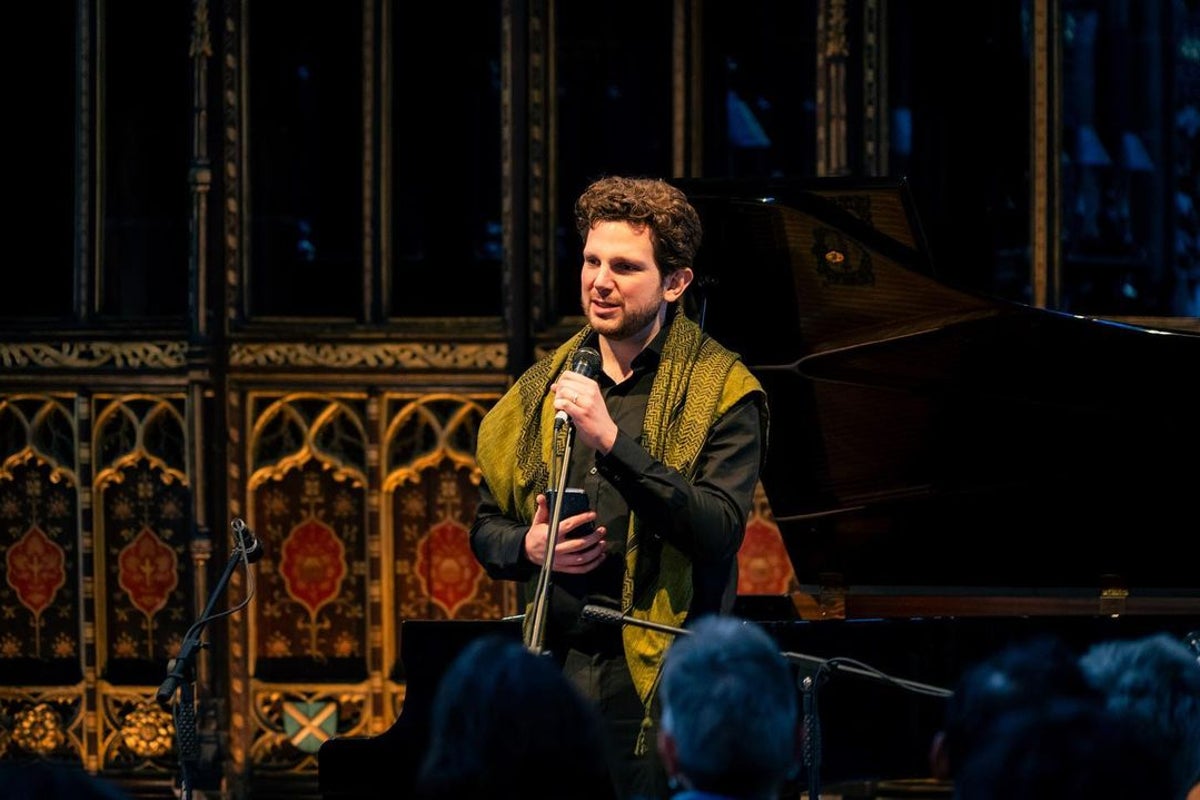
Cultural institutions operating under a donor-and-subscriber business model retain absolute sovereignty over the use of their physical and brand platforms, overriding a performer's independent right to unauthorized political speech. The Federal Court of Australia’s dismissal of concert pianist Jayson Gillham’s discrimination claim against the Melbourne Symphony Orchestra (MSO) establishes a clear judicial line between statutory workplace protections and commercial risk mitigation. The ruling confirms that for independent contractors, organizational risk-management policies legally supersede individual expressive intent.
Understanding this case requires analyzing the interaction between employment classification, commercial asset control, and the structural limitations of Australian anti-discrimination frameworks.
The Structural Trifecta of Institutional Risk Mitigation
The conflict began on August 11, 2024, when Gillham introduced a musical piece with unauthorized remarks accusing Israeli forces of the targeted assassination of journalists in Gaza. The MSO immediately cancelled his subsequent August 15 performance.
The primary operational error committed by outside analysts is framing this sequence as ideological censorship. In corporate governance, the MSO’s intervention is better understood through a risk-mitigation framework consisting of three operational pillars:
- Platform Sovereignty: The physical stage and the performance program represent the core brand assets of an arts organization. When an artist repurposes this platform for unprogrammed political commentary without prior executive authorization, it constitutes a structural breach of brand alignment.
- The Commercial Neutrality Directive: Institutions relying on a diversified capital stack—composed of corporate sponsorships, philanthropic donations, state funding, and ticket sales—must maintain geopolitical neutrality. The MSO maintained an explicit policy of not expressing support for either side of the Israel-Gaza conflict to insulate its capital stack from reputational contagion.
- The Custom of the Host: The court recognized a long-standing industry practice within classical music: guest artists do not deliver unsolicited social or political commentary from the stage without the host organization's explicit sanction.
The data demonstrates the volatile feedback loops governing these situations. Following Gillham’s initial remarks, the MSO received exactly one written and two verbal complaints. However, when management attempted an uncoordinated operational reversal—cancelling the next show, offering a conditional reinstatement if Gillham remained silent, and then permanently pulling the concert citing security concerns—the public feedback loop intensified, generating 487 complaints. The organization's initial vulnerability lay not in its stance, but in its fragmented crisis management.
The Independent Contractor Bottleneck in Statutory Law
The legal architecture of Gillham’s claim collapsed due to an employment status mismatch under Australian labor law. Gillham attempted to leverage the Fair Work Act and Victoria’s Equal Opportunity Act to argue that his cancellation constituted unlawful adverse action based on political belief.
[Worker Classification] ---> [Statutory Framework] ---> [Judicial Outcome]
Independent Contractor  ---> Fair Work Act Sec 342 ---> Excluded from Core Protections
Independent Contractor  ---> Equal Opportunity Act ---> Not Categorized as Workplace Law
Justice Graeme Hill's ruling exposed the technical bottleneck in this strategy. Gillham was engaged as an independent contractor, not an employee. This distinction alters the legal matrix:
- Exclusion from Core Protections: The workplace rights protected from adverse action under the Fair Work Act do not automatically extend to independent service providers who are managing their own commercial entities.
- The Separation of Jurisdictions: The plaintiff argued that Victoria's Equal Opportunity Act operates effectively as a workplace law, which would grant him protection under federal oversight. The court rejected this integration, ruling that the state-level Equal Opportunity Act stands independently and cannot be treated as a workplace law to invent a federal workplace right where none exists.
- The Post-Termination Barrier: The MSO’s subsequent actions—such as offering a conditional performance or failing to apologize in media statements—occurred after the initial contract had been legally terminated. The court ruled these actions did not alter Gillham’s position to his prejudice because no active contractual benefits remained to be compromised.
The Substantial and Operative Reason Test
To prevail in an adverse action claim, a plaintiff must prove that the protected attribute (in this case, political belief) was the "substantial and operative reason" for the negative treatment. The MSO’s defense successfully decoupled the content of the speech from the operational disruption caused by the speech.
Justice Hill verified that the political substance of Gillham’s statement was not the driving mechanism behind the MSO's management choices. The court stated that the orchestra would have executed identical cancellation procedures had the performer made an unauthorized stage statement of a highly political nature supporting Israel, or on any alternative topic introducing equivalent commercial and reputational volatility.
The legal cause-and-effect relationship was rooted in business preservation rather than ideological alignment. The intervention was triggered because the performance platform was utilized outside its authorized operational scope, creating immediate risk for the institution's audience metrics, donor networks, and corporate partnerships.
Operational Frameworks for Cultural Enterprise Governance
The resolution of Gillham v MSO provides a blueprint for how cultural enterprises must manage executive control over public assets going forward. Organizations cannot rely on ambiguous behavioral expectations; they must formalize platform governance through explicit contractual instruments.
First, contracts must include clear platform-control clauses. These provisions must explicitly state that the performance stage remains under the exclusive editorial and operational control of the host organization. Any unauthorized verbal or visual communication to the audience must be designated a material breach of contract, allowing for immediate termination without penalty.
Second, institutions must establish formalized crisis-response protocols. The MSO's escalation from an initial three complaints to nearly 500 highlights the risk of reactive policy shifts. Management teams require predefined communication matrices that isolate artistic production from corporate governance, ensuring that statements regarding political neutrality are issued uniformly and without administrative delays.
Third, risk assessments must account for the structural differences between employees and external contractors. While internal workforces are governed by internal codes of conduct, external talent profiles require clear, binding addendums detailing the organization's neutral stance on geopolitical issues before any contract is finalized.
The precedent clarifies the legal boundaries of freelance creative work. While an individual artist possesses freedom of speech under broader civil terms, that right does not grant an unpenalized entitlement to use a contractually leased, commercially sensitive corporate platform as the vehicle for its delivery.