Ancient epics survive because human suffering doesn't change much. Swords turn into drones, and armor becomes flak jackets, but the core human cost remains identical. When artists take a three-thousand-year-old Greek text and map it directly onto a modern crisis, they aren't just trying to be clever. They are trying to find a language for things that defy description.
Right now, theater troupes in Europe and Ukraine are using Homer's Odyssey to make sense of active military aggression. It's a brutal, necessary translation. We watch Odysseus try to get home, and we instantly think of millions of displaced Ukrainians scattered across Europe, staring at phone screens to check if their hometown still stands.
Ancient literature provides a safe distance for raw trauma. You can't always look directly at the news without breaking down. Art lets you look sideways.
The Weight of Returning Home
Odysseus takes ten years to get back to Ithaca after fighting a war he didn't really want to start. That wait isn't just an adventure plotline. It is a psychological portrait of displacement.
When you strip away the monsters and the gods, the Odyssey is a refugee story. It is about the impossibility of going back to the person you were before the violence started. Modern productions staging this text in Kyiv and Warsaw lean heavily into this reality. Actors don't wear bronze breastplates. They wear standard-issue tactical gear, mud-caked boots, and civilian coats that smell of train stations and bomb shelters.
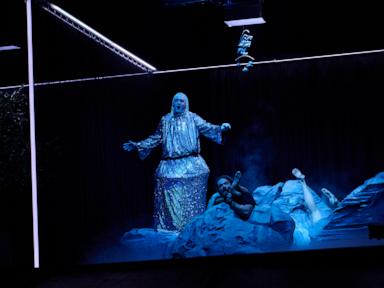
The monsters Odysseus faces aren't cyclopes with single eyes. They are bureaucracy, grief, survivor's guilt, and the sheer administrative nightmare of existing as a displaced person. When the stage production shows Odysseus washing ashore on a strange coast, it mirrors the exact posture of refugees stepping off crowded buses at border crossings.
Critics often wonder why theater companies turn to classical texts during active crises instead of writing new plays about current events. The answer is simple. Direct documentary theater can feel flat or too journalistic. Myth gives the horror a universal frame. It tells the audience that humans have lived through this exact flavor of nightmare before, and somehow, poetry survived.
How Performance Artists Adapt the Text
Theatre artists working in conflict zones face staging challenges that go far beyond normal production logistics. Rehearsals get interrupted by air raid sirens. Cast members have family members on the front lines. The text shifts meaning depending on who is sitting in the audience.
Directors working on these adaptations usually discard the heroic posturing. There is no glamor in dying for a state. Instead, they focus on the small, domestic details that get lost in nightly casualty reports.
- Cooking a meal in a ruined kitchen
- The sound of a distant phone ringing in an empty apartment
- The strange silence of a city after curfew
- Holding a passport that no longer opens the right doors
These elements ground the epic in physical reality. You stop thinking about literary history and start thinking about survival. The stage design often incorporates actual debris, shattered window frames, and discarded humanitarian aid boxes. This isn't just set decoration. It's found material collected from cities hit by artillery fire.
When an actor recites lines about missing a wife, a home, or a patch of soil, the words carry the weight of contemporary reality. The audience doesn't clap politely at the end of a scene. They sit in heavy silence because the boundary between the stage and the street has completely vanished.
Why Ancient Greece Speaks to Modern Ukraine
Classical Greek tragedy obsesses over hubris, the gods punishing mortals who overstep their bounds, and the inescapable cycle of vengeance. It is a worldview shaped by constant warfare.
Ukraine's current cultural output taps directly into this classical pessimism while holding onto a stubborn refusal to despair. The Odyssey works particularly well because it is fundamentally about endurance. Odysseus doesn't win the war by being the strongest guy in the room. He wins by refusing to disappear. He outlasts the obstacles.
International audiences often consume war through a political lens, debating strategy, supply lines, and geopolitical shifts. Theater shifts the focus back to individual agency. It asks what happens to a piano teacher who has to pick up a rifle. It examines how a children's theater director learns to run a logistics hub.
Theater doesn't change military strategy or stop missiles. What it does is preserve human dignity inside a machine designed to crush it. By filtering current headlines through ancient verse, these productions force viewers to acknowledge that civilization is terrifyingly fragile.
Keep paying attention to independent cultural projects coming out of Eastern Europe right now. They aren't just entertaining audiences. They are writing the historical record in real time, using the oldest tools available to make sure the world doesn't look away.