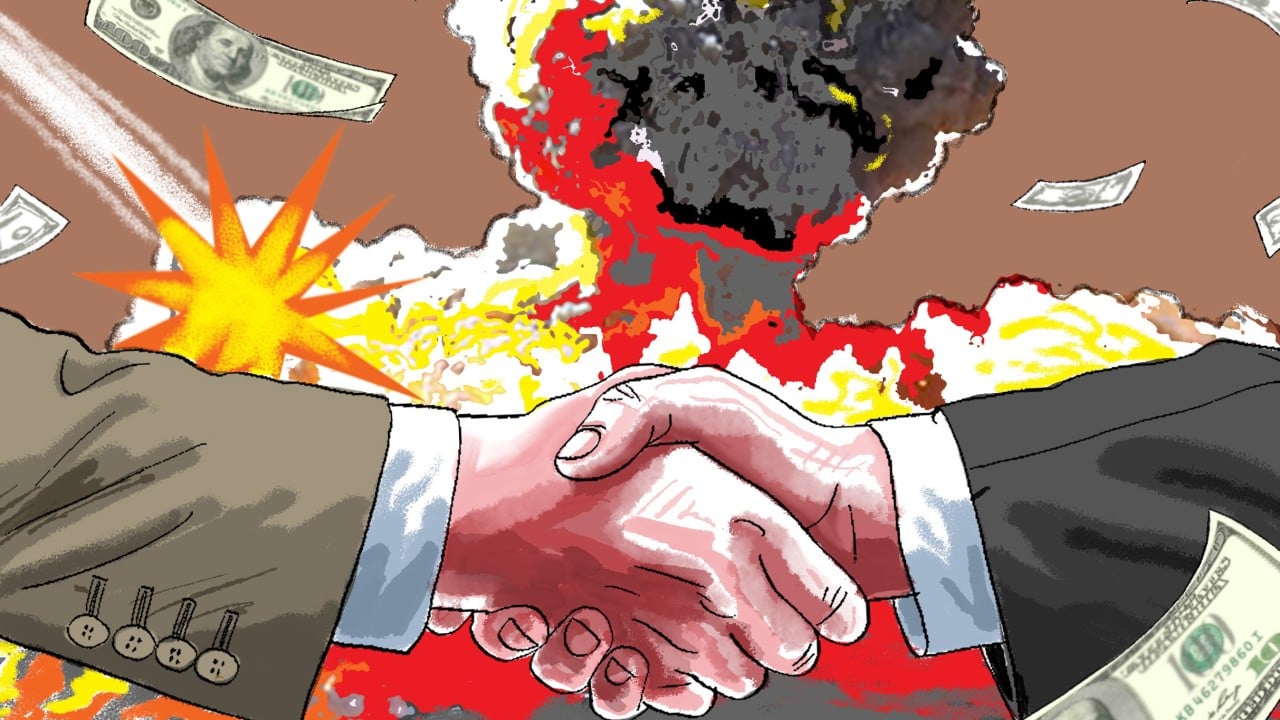
The pundits are obsessed with the "cost" of the US-Israel-Iran deadlock. They stare at oil tickers, calculate shipping insurance premiums, and wring their hands over the "fragility" of the Middle East. They treat the current friction as a bug in the global machine. They are dead wrong. This isn't a bug. It is the feature.
The most dangerous thing for the global economy right now isn't a stalemate; it’s a resolution.
We have been conditioned to believe that peace is the ultimate economic stimulant. In reality, the geopolitical tension between Washington, Jerusalem, and Tehran serves as a massive, invisible subsidy for the military-industrial complex, the cybersecurity sector, and the energy hedgers. If you want to know who profits, stop looking at the flags and start looking at the order books. The stalemate provides a predictable level of "controlled chaos" that markets have already priced in. A sudden shift—either toward total war or total peace—would be the actual catastrophe.
The Defense Industry’s Perennial Subscription Model
Standard analysis suggests that defense contractors only win when bombs are falling. That’s amateur logic. True profit lies in the readiness loop.
The US-Israel-Iran standoff has turned defense procurement into a SaaS (Software as a Service) model. Israel doesn't just buy F-35s; they provide the world’s most intense R&D testing ground for Lockheed Martin. Every time a drone is intercepted or a cyber-attack is neutralized, the data is fed back into the system, justifying the next trillion-dollar upgrade.
The stalemate creates a permanent requirement for "overmatch" capability. If the threat from Iran vanished tomorrow, the justification for the massive annual aid packages and the breakneck pace of Iron Dome development would evaporate. The defense industry doesn't want a "win." They want a renewal.
I’ve sat in rooms where "regional stability" is discussed as a risk factor. Why? Because stability leads to budget cuts. Friction leads to procurement. The current deadlock is the most efficient wealth transfer mechanism from taxpayers to aerospace engineers ever devised.
The Energy Hedge Fallacy
The "People Also Ask" sections of the internet are littered with questions about how an Iran-Israel conflict will send oil to $200. This is a flawed premise. The market doesn't fear the stalemate; it feasts on the volatility it generates.
The true beneficiaries aren't the oil producers themselves, but the commodity traders and the LNG infrastructure giants.
- Risk Premiums: The constant "will they, won't they" adds a structural $5-$10 "fear premium" to every barrel of oil. This isn't a loss; it's a massive margin for traders who can navigate the noise.
- The LNG Pivot: As long as the Strait of Hormuz remains a theoretical flashpoint, the push for American and Qatari LNG remains a matter of "national security."
- Green Transition Momentum: Nothing sells a renewable energy project faster than the threat of a Middle Eastern supply shock. The stalemate is the primary marketing engine for the global energy transition.
If the region actually stabilized, the urgency to decouple from fossil fuels would slacken. The high-stakes drama keeps the capital flowing into alternative energy under the guise of "energy independence."
The Cybersecurity Arms Race
We need to stop viewing Iranian cyber-activity as a nuisance. It is the primary driver of the global cybersecurity market.
Iran’s offensive capabilities—units like MuddyWater or the Phosphorus group—provide a constant, live-fire exercise for Western cybersecurity firms. Every time a regional bank or a water utility in Israel is targeted, it creates a "proof of concept" for why every Fortune 500 company needs to double their security budget.
This is a symbiotic relationship. The threat from Tehran is the best salesperson CrowdStrike, Palo Alto Networks, and Check Point ever had. If the "stalemate" ended, the existential dread that fuels the $200 billion cybersecurity industry would lose its sharpest edge.
We are seeing a massive shift where geopolitical friction is the primary driver of technological innovation. The stalemate isn't slowing us down; it’s the whip hitting the horse.
Why "Peace" is a Market Crash
Imagine a scenario where the US, Israel, and Iran signed a comprehensive, permanent peace treaty tomorrow.
- Defense stocks would crater as "peace dividends" are demanded by every legislature on earth.
- Energy markets would face a supply glut as Iranian oil flooded the market without the friction of sanctions, potentially crashing prices and bankrupting high-cost US shale producers.
- Tech valuation would take a hit as the "security" premium is stripped away from infrastructure projects.
The current stalemate is the "Goldilocks" zone for global capital. It’s hot enough to justify massive spending on tech and weapons, but cold enough to prevent the total destruction of the infrastructure that allows trade to happen.
The "lazy consensus" says this situation is a tragedy. From a cold-blooded economic perspective, it is a masterpiece of equilibrium.
The Winner Nobody Talks About: The Middlemen
The real profit isn't in the victory; it's in the friction.
Look at the rise of the "middle powers." Countries like the UAE and Qatar have mastered the art of being the "neutral ground." They profit from the logistics, the diplomacy, and the financial flows that have to bypass the direct US-Iran-Israel axes.
These entities don't want the stalemate to end. They are the new brokers of the 21st century. They thrive because the primary players are locked in a permanent scowl.
The Actionable Reality
If you are an investor or a business leader, stop waiting for the "resolution." Stop hedging for the "big one" that never comes.
- Bet on the Grind: Invest in the companies that provide the tools for the stalemate—maintenance, logistics, cybersecurity, and surveillance.
- Ignore the Rhetoric: The fiery speeches are for domestic consumption. The actual movements—the deployment of hardware and the flow of "security aid"—tell the real story.
- Understand the Incentive: No one in a position of power in Washington, Tehran, or Jerusalem is actually incentivized to end this. It provides them all with an external enemy to justify internal control and massive budgets.
The world doesn't want this problem solved. It wants this problem funded.
The stalemate is the engine. The tension is the fuel. We aren't watching a countdown to a collision; we are watching a perpetual motion machine that generates billions for those smart enough to stop praying for peace and start accounting for the friction.
Stop looking for the exit. We are exactly where the money wants us to be.