When a government body fires an editor for drawing a line against censorship, the boundary between public information and state propaganda vanishes.
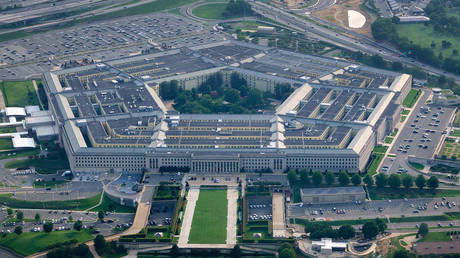
The Pentagon didn't quietly ease out the leadership of Stars and Stripes. Defense officials handed separation notices to editor-in-chief Erik Slavin and Middle East reporter Lara Korte, citing insubordination. Their crime? Speaking honestly to CBS News about editorial independence. Publisher Max Lederer, who had already announced his departure after three decades with the paper, was shown the door too. You might also find this similar coverage insightful: The Anatomy of Modern Cross-Border Strike Mechanics A Strategic Deconstruction.
If you think this is just standard bureaucratic friction, you aren't paying attention. This is a deliberate realignment of military media under Defense Secretary Pete Hegseth, and it sets a dangerous precedent for anyone who believes troops deserve an unvarnished truth.
The Anatomy of a Military Media Crackdown
To understand why these firings matter, you have to look at how Stars and Stripes actually operates. It is not just another corporate daily. Funded partly by Congress and partly by non-appropriated funds, the paper occupies a unique legal space. It is mandated by policy and tradition to maintain editorial independence from the military chain of command. Service members reading it overseas are supposed to get real news, not sanitized press releases written by public affairs officers. As highlighted in recent coverage by TIME, the implications are significant.
That independent streak has rubbed the current administration the wrong way. Earlier this year, chief Pentagon spokesperson Sean Parnell made it clear on social media that the publication needed a drastic makeover. The stated goal was to strip away what the department labeled "woke distractions" and refocus strictly on warfighting, weapons systems, and fitness.
Then came the friction points. Earlier in the month, independent outlets including military-focused channels reported on deteriorating living conditions for sailors aboard the aircraft carrier USS Abraham Lincoln. That kind of hard-hitting reporting creates political headaches for leadership. When journalists start poking around actual troop morale and structural failures, institutional pushback is rarely subtle.
Crossing the Red Line on Air
The immediate catalyst for the purge happened in front of a television camera. Erik Slavin and Lara Korte participated in a CBS segment discussing the future of the publication. During the interview, Slavin stated plainly that hypothetical censorship of news for service members would represent a personal red line. Korte backed this up by reminding viewers that her loyalty lies with the readership and the military community, not with political appointees inside the Pentagon.
The response was swift. Separation notices arrived citing insubordination.
The message from the Defense Department is loud and clear. Speak out about potential interference, and you lose your job. National Press Club President Mark Schoeff Jr. called the move a brazen attempt to dictate coverage, pointing out that silencing editors who defend their newsrooms endangers the trust service members place in public reporting.
Yet the administration is moving forward anyway. Active-duty Navy Captain William Urban was previously installed as deputy publisher, injecting active-duty oversight directly into the publishing hierarchy. For an institution built on civilian editorial oversight, this structural shift feels less like a reform and more like a hostile takeover.
What Happens to the Troops in the Middle of It All?
Let's address the core question underlying this whole mess. Who actually suffers when a military newspaper loses its independence?
It isn't the political appointees. It's the nineteen-year-old enlistee sitting on a base overseas who wants to know what is actually happening back home or within their own chain of command. When a news outlet becomes an internal mouthpiece, it loses credibility. Troops aren't naive. They know the difference between objective reporting and top-down messaging.
If Stars and Stripes stops asking hard questions about housing, equipment failures, and deployment realities, soldiers lose their primary advocate. Previous firings, such as the removal of newspaper ombudsman Jacqueline Smith in April, signaled that independent oversight structures were on the chopping block long before these latest dismissals.
Press freedom inside defense circles is shrinking fast. Lawsuits, restricted press access at the Pentagon, and now the explicit punishment of journalists who refuse to pledge blind loyalty point to a new era of information control.
Watch how the remaining newsroom staff responds. The true test of Stars and Stripes isn't what leadership posts on social media. It is whether the reporters left standing are willing to keep digging when the stories get uncomfortable.