SpaceX keeps hitting walls with the bigger Starship. Every time Elon Musk points toward the launchpad, a new technical hurdle pops up. Skeptics are having a field day, calling the setbacks a sign that the massive rocket is too complex to fly regularly. They are wrong.
Building a 400-foot stainless steel skyscraper that survives orbit isn't like building a standard Falcon 9. The recent string of pad aborts, structural cracks, and methane leaks aren't failures. They are the exact data points SpaceX needs. If you look closely at how the company operates, these problems show that the hardware-rich testing strategy is working exactly as intended.
SpaceX is trying to do something that has never been done. They want a fully reusable, rapidly deployable system capable of carrying 150 metric tons to space. Traditional aerospace companies spend ten years running computer simulations to avoid a single launchpad issue. SpaceX builds, breaks, learns, and rebuilds in weeks.
The Real Reason the Bigger Starship Keeps Stalling
The current version of Starship is taller, heavier, and packs more thrust than the early prototypes that flew out of Boca Chica, Texas. This scaling up created unexpected engineering bottlenecks.
The biggest culprit right now is the Raptor 3 engine cluster. Packing 33 engines onto the Super Heavy booster creates a terrifying amount of acoustic and thermal energy. During recent static fire tests, the sheer vibration levels caused plumbing micro-fractures in the engine bay. Liquid methane and liquid oxygen under high pressure do not tolerate micro-fractures.
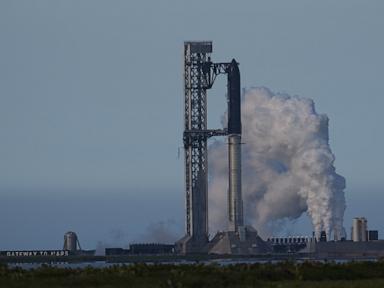
SpaceX engineers also ran into severe issues with the launchpad infrastructure. The orbital launch mount takes a beating that distorts steel plates. The water deluge system, designed to dampen the sound waves, suffered pressure drops during recent countdown simulations. Without that water shield, the acoustic energy bounces off the pad and can literally vibrate the rocket to pieces from the bottom up.
What the Mainstream Media Gets Wrong About Rocket Failures
When a mainstream news outlet reports that SpaceX postponed a launch due to a valve issue, the tone is usually pessimistic. They frame it as a defeat. That perspective misses the entire philosophy of iterative design.
In the old days of the Apollo program, NASA couldn't afford to lose a Saturn V. The budget wouldn't allow it, and the political will wasn't there. NASA chose a data-heavy, slow approach. SpaceX uses a trial-by-fire method. They intentionally push hardware to its absolute limit because finding a weak weld on the ground is infinitely better than watching a $100 million vehicle explode at 50,000 feet.
Take the recent thermal protection tile issues. Starship is covered in thousands of hexagonal ceramic tiles designed to protect it from the intense heat of reentry. During ground testing, some of these tiles cracked under structural stress. Critics called it a design flaw. In reality, it allowed SpaceX to change the adhesive chemistry and mechanical attachment pins before the vehicle ever left the atmosphere.
The Methane Problem Nobody Talks About
Everyone focuses on the engines, but managing the propellant is a nightmare of its own. Starship uses sub-cooled liquid methane and liquid oxygen.
Methane is a fantastic rocket fuel because it burns clean and can theoretically be manufactured on Mars. But it's incredibly finicky to handle at cryogenic temperatures. It wants to expand. It leaks through seals that would hold normal jet fuel perfectly fine.
SpaceX faced a series of leaks in the quick-disconnect arm—the giant umbilical cord that feeds fuel into the rocket until the moment of liftoff. A tiny leak means a cloud of highly flammable gas hovering around a spark-heavy launchpad. You can't launch through that. Fixing these plumbing issues requires tedious, time-consuming adjustments to the seal materials and the automated alignment software. It slows things down, but skipping it means losing the entire pad.
How to Track Starship Progress Like an Expert
If you want to know when Starship will actually fly, stop listening to the vague timelines given on social media. Look at the concrete indicators at Starbase.
First, watch the regulatory filings with the Federal Aviation Administration. A launch cannot happen without an updated launch license, which requires environmental closures and safety sign-offs. Second, monitor the local road closures in Cameron County. True launch attempts require extended closures of Highway 4 and Boca Chica Beach for public safety.
Finally, pay attention to the tank farm activity. If SpaceX is running full-duration tanking tests where they load millions of pounds of propellant into the ship, a real flight attempt is imminent. If they abort a tanking test halfway through, you know they found another valve or software glitch that needs a week of physical labor to fix.
Keep your eyes on the physical hardware changes on the pad. Watch the plumbing lines. That's where the real battle for orbit is being won.