We were never really looking at the screen. We were looking at a mirror, fogged by time, reflecting the exact moment we realized that growing up was going to hurt.
When the news broke that the world was collectively locking its eyes back on the orange velvet sofa—that the ghosts of Central Perk were pulling up their old slouchy armchairs for a reunion special—the internet didn't just vibrate. It groaned under the weight of shared, retroactive grief. Millions of people who had spent decades figuring out rent, bad jobs, and worse romances suddenly remembered the six people who made it look bearable.
Consider the anatomy of that obsession. It makes no rational sense on paper. Characters frozen in amber from the nineties drinking endless cups of oversized coffee while living in impossibly spacious Manhattan apartments that zero baristas could ever afford. Yet, when Matthew Perry adjusted his sweater or Jennifer Aniston let out that specific, nervous snort of a laugh, an entire generation exhaled. We weren't watching a sitcom. We were visiting our own youth.
But culture rarely stays still long enough for nostalgia to keep us warm. While the orange couch beckoned us backward, the art world was demanding we look somewhere completely different, somewhere blindingly, dizzyingly infinite.
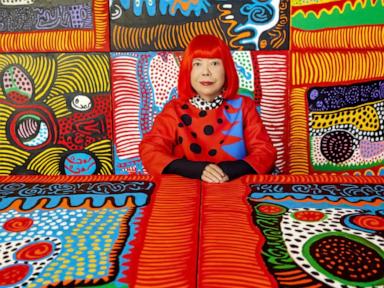
Step into a room of mirrors. Infinite dots. Yellow pumpkins smeared with black polka dots that stretch into a horizon that never ends. Yayoi Kusama does not invite you to view art; she traps you inside her own brain. Imagine standing in a darkened cube where tiny LED lights pulse like dying stars, reflecting off glass floors until you lose all sense of where your own shoes end and the universe begins.
People wait hours in freezing rain outside New York and Tokyo galleries just to spend forty-five seconds inside one of these Infinity rooms. Why? Because in a world where our attention is fractured into eight-second TikTok clips and algorithmic noise, Kusama offers a rare, terrifying commodity: total immersion. She took the claustrophobia of her own lifelong mental illness and turned it into a public cathedral. You stand there, dwarfed by infinite reflections of yourself, and for a brief, terrifying second, you realize how small you are—and how strangely comforting that anonymity feels.
Then, the cultural pendulum swings back down to earth, dragging us from the infinite cosmos straight to a kitchen counter in Los Angeles, where Busy Philipps is talking directly into her phone camera without a stitch of makeup on.
There is an art to the unfiltered panic of modern celebrity, and Busy mastered it long before the rest of Hollywood realized the polished press tour was dead. Watch her stories on any given Tuesday. She is complaining about her teenager's attitude, or crying over a stupid commercial, or burning toast while her dog barks at the mailman. It is messy. It is loud. It strips away the velvet rope that used to separate the famous from the forgotten.
We crave this mess because we are drowning in curation. Every Instagram grid looks like a mood board for a life nobody actually lives. When a celebrity drops the mask and admits they are just as anxious, bloated, and confused as the person watching them from a commuter train, it acts as a valve releasing pressure from the boiler.
These three cultural touchstones—a scripted comedy from 1994, an octogenarian Japanese artist's dizzying light rooms, and a raw, rapid-fire smartphone confession from a working actress—look like they have nothing to do with each other. They belong on different tabs. Different algorithms. Different feeds entirely.
They share a single, pulsing vein.
Connection.
We are lonely. That is the quiet, invisible subtext of every trending topic, every viral hashtag, every algorithmically generated recommendation on your phone. We scroll because we are looking for proof that someone else is awake in the dark, feeling the exact same texture of anxiety or joy.
When the Friends cast sat together on that soundstage, looking older, softer, and visibly weathered by the decades that had passed since Rachel walked off a plane, they weren't just giving us fan service. They were standing as physical evidence of our shared passage through time. They grew up while we grew up. We aged together, even if they didn't know our names.
When you walk into a Kusama mirror room, you are surrounded by duplicates of your own body, forced to confront your own presence in a space that feels godlike in its scale. You are alone with your thoughts, magnified a thousand times over.
And when Busy Philipps rants into a front-facing camera about the absurdity of middle age, she is holding up a digital flashcard that says: You are not the only one losing your mind.
We consume culture not to escape reality, but to find landmarks in the fog. We want to know where we parked our past. We want to know if anyone else feels the walls closing in. And most of all, we want to hear a voice—whether it comes from a nineties laugh track, a mirrored infinity box, or a phone screen glowing in a dark bedroom—whisper back across the static.
You are here. You are seen. Keep going.
/David_SM_Maggiore-5797d2fb5f9b58461f588fdb.jpg)