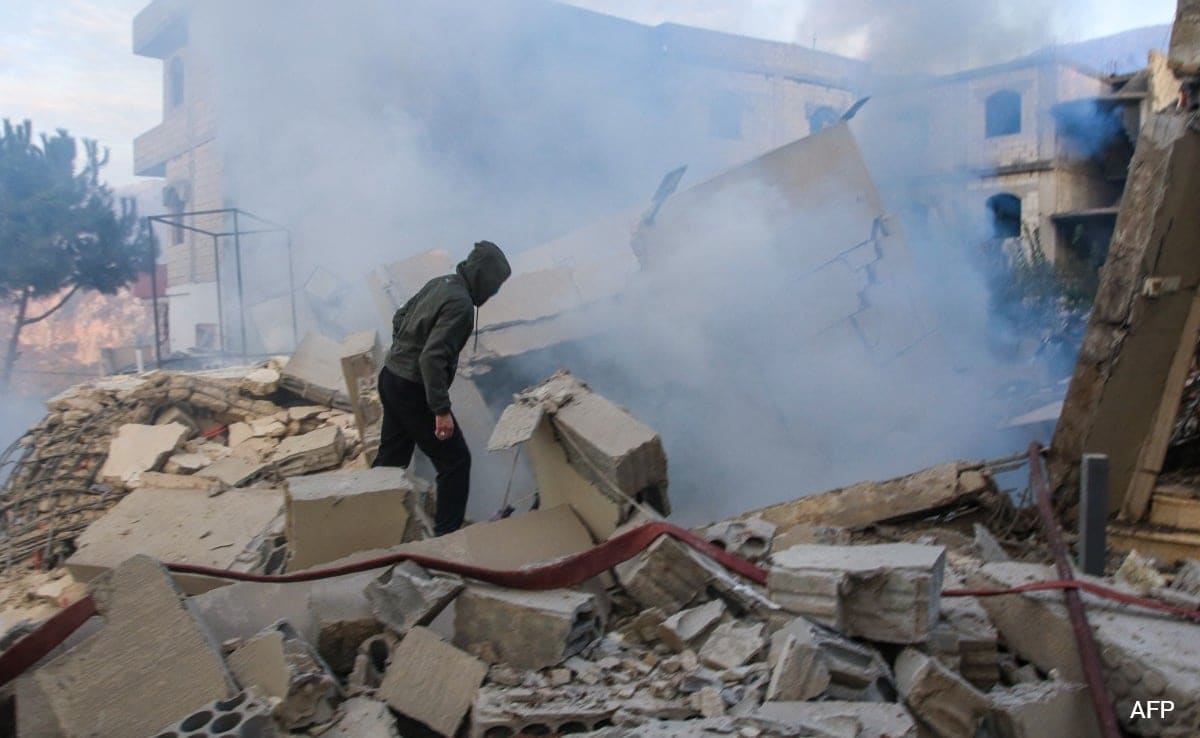
The physical destruction in Southern Lebanon and the Bekaa Valley is easy to quantify. You can count the flattened apartment blocks, the charred olive groves, and the number of missiles launched across the Blue Line. What remains uncounted, and largely ignored by the geopolitical strategists in Beirut and Tel Aviv, is the systematic psychological collapse of a generation. Lebanese children are not just surviving a war; they are being forced into a premature, traumatized version of adulthood that will haunt the region for decades.
This isn't just about the immediate fear of a drone overhead. It is about the total disintegration of the structures that make a child a child. Schools have turned into overcrowded shelters. Playgrounds are now potential strike zones. The basic rhythm of life—the assumption that tomorrow will look like today—has been erased. When a ten-year-old begins to discuss the difference between the sound of a reconnaissance drone and a fighter jet, the innocence required for healthy development has already vanished. We are witnessing the birth of a lost generation, raised in a pressure cooker of displacement and fear. If you enjoyed this article, you might want to read: this related article.
The Infrastructure of Trauma
The crisis is not a byproduct of the conflict. It is a central feature of it. When a missile hits a residential area in Nabatieh or Tyre, the immediate news cycle focuses on casualties. However, the secondary blast wave hits the education system. Since late 2023, hundreds of schools in Lebanon have been shuttered, either because they are in the line of fire or because they have been repurposed to house the nearly one million people displaced by the fighting.
Education is the only stabilizing force in a child's life during a crisis. Without it, the day loses its shape. In the makeshift shelters of Beirut, children sit on thin mattresses in damp hallways, their lives reduced to a singular, agonizing question: "When can we go home?" For many, the answer is never. Their homes are rubble, and the villages they knew are now tactical maps for artillery batteries. For another perspective on this development, refer to the latest coverage from USA Today.
This displacement creates a specific kind of "toxic stress." Unlike the temporary fear of a loud noise, toxic stress is the prolonged activation of stress response systems in the absence of protective relationships. Parents, themselves stretched to the breaking point by poverty and the threat of death, often cannot provide the emotional buffer their children need. The result is a population of minors who are constantly in "fight or flight" mode. This state of hyper-vigilance isn't a phase. It rewires the developing brain.
The Economic Death Spiral
Lebanon was already a failed state before the first rocket was fired in this current escalation. The currency has lost over 95% of its value since 2019, pushing the majority of the population below the poverty line. War has acted as a catalyst for total economic ruin. For a child, this means that even if the bombs stop falling, the hunger will remain.
Malnutrition is becoming a quiet killer in the shelters. While international aid agencies scramble to provide flour and canned goods, the dietary needs of growing children are being ignored. Protein is a luxury. Fresh fruit is a memory. We are seeing the return of preventable developmental stuntedness, a physical manifestation of a broken political system.
Furthermore, the war has forced a surge in child labor. In the northern camps and the streets of the capital, boys as young as eight are selling tissues or cleaning windshields to help their families buy bread. This isn't "helping out." It is a desperate survival tactic that cements their exit from the formal economy. Once a child drops out of school to work during a war, the statistical likelihood of them ever returning to a classroom drops to near zero.
The Sound of the Skies
Ask any child in Sidon or the southern suburbs of Beirut what they fear most, and they won't say "the enemy." They will describe the sound of the Mk, the colloquial term for Israeli reconnaissance drones that hum incessantly over Lebanese airspace.
This sound is a form of psychological warfare. It is a constant, buzzing reminder that someone is watching, and that at any second, the sky could open up. It creates an environment where sleep is impossible and anxiety is the default setting.
"It sounds like a giant mosquito that never goes away," says a twelve-year-old girl in a Beirut school-turned-shelter. "Even when I close my eyes, I can feel it in my teeth."
This sensory bombardment leads to widespread regressive behavior. Pediatricians in Lebanon report a massive spike in bed-wetting, night terrors, and selective mutism among children who were previously high-achieving and social. These are the classic symptoms of a nervous system that has been pushed past its limit. They are the marks of a war that has aged its youngest victims by decades in a matter of months.
A Failure of International Will
The international community treats the plight of Lebanese children as a tragic casualty of "regional instability." This is a sanitized lie. The suffering of these minors is a direct result of a calculated refusal by global powers to enforce international law regarding the protection of civilians and the preservation of educational infrastructure.
There is no "both sides" when it comes to the neurological damage being done to a six-year-old. Whether it is the indiscriminate nature of rocket fire or the targeted intensity of airstrikes, the outcome for the child is the same: a life defined by wreckage.
The humanitarian response is also fundamentally flawed. Most NGOs focus on short-term "psychosocial support" sessions—drawing pictures of feelings and talking in circles. These are band-aids on a gunshot wound. You cannot "heal" a child from trauma while the drones are still overhead and the family is sleeping on a classroom floor. True intervention requires a ceasefire, followed by a massive, multi-decade investment in specialized mental health care and the total reconstruction of the southern economy.
The Long Road to Nowhere
If the fighting stopped tomorrow, the crisis would not end. The "aging" of Lebanon's children is a permanent shift. They have seen their parents humiliated by poverty and terrified by violence. They have learned that the world is a place where might makes right and where their lives are worth less than a geopolitical talking point.
The long-term consequences of this are terrifying. A generation raised in anger, without education, and with nothing to lose is a recipe for the next fifty years of conflict. When we look at Lebanon, we shouldn't just see a border dispute. We should see a factory of future resentment.
The children of the south are no longer children. They are small adults with hollow eyes, waiting for a peace that no one seems interested in giving them. They are the collateral damage of a world that has forgotten how to protect the vulnerable.
Demand that your local representatives prioritize immediate, unconditional humanitarian corridors specifically for pediatric medical and nutritional supplies, and press for an immediate freeze on military aid to any party that targets residential blocks or schools.