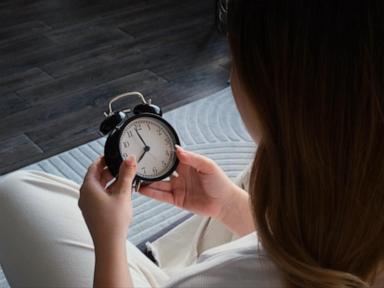
Six o'clock on a January morning feels less like a time and more like a geographic location. It is a cold, black, unforgiving space.
Imagine waking up to that darkness, not just for a brutal week in the dead of winter, but as a permanent fixture of your calendar. Your alarm blares. You step out of bed, but your brain remains firmly locked in a hormonal midnight. You grope for the light switch, pack lunches in the dark, and herd your children out the front door. They stand at the school bus stop under the glow of a streetlamp, shivering in the pitch black at 8:15 AM.
This is the hidden ledger of permanent daylight saving time.
For years, a seductive idea has floated through state legislatures and national governments: why not just lock the clock? We love the sun. We love those balmy, post-work summer evenings when the light stretches past 9:00 PM, allowing for backyard barbecues, patio drinks, and long walks. The biannual ritual of changing the clocks feels archaic, a collective bout of jet lag forced upon millions every March and November. The solution seems simple. Keep the late sun forever.
But time is zero-sum. You cannot manufacture light; you can only steal it from the morning and give it to the evening. And that theft carries a biological tax that your body is not equipped to pay.
The Tyranny of the Social Clock
To understand why a permanent shift to later afternoons ruins our mornings, we have to look at the three different clocks that govern our lives.
First is the orbital clock: the literal rotation of the Earth, dictating when the sun rises and sets. Second is our social clock: the rigid schedules demanded by schools, offices, and factories. Third is our body clock: the master circadian pacemaker nestled deep within the brain's hypothalamus, a tiny cluster of cells called the suprachiasmatic nucleus.
Our internal pacemaker cares nothing for corporate productivity or daylight saving legislation. It responds to one thing above all else: blue sky light.
When dawn breaks, the specific wavelength of morning sunlight hits the ganglion cells in our retinas. This signal travels straight to the brain, halting the production of melatonin, the hormone that makes us sleepy. It triggers a surge of cortisol, ramping up our body temperature and sharpening our alertness. It is our natural ignition switch.
Under standard time, our social clock aligns reasonably well with this biological reality. The sun rises early enough to wake us up naturally before we have to commute.
Permanent daylight saving time breaks this alignment entirely. By shifting the social clock an hour ahead of the sun, we force ourselves to wake up in the psychological equivalent of the deep night.
Consider a hypothetical commuter named Sarah. Under a permanent daylight saving regime in a northern city like Detroit or Seattle, Sarah's alarm goes off at 6:30 AM in January. But according to the sun, it is actually 5:30 AM. Her brain is still swimming in melatonin. She drives to work in total darkness, her headlights cutting through a sleepy fog. By the time the sun finally crests the horizon at nearly 9:00 AM, Sarah has already been sitting at her desk for an hour. She missed the morning light signal entirely.
Her internal clock remains stuck in yesterday.
The Lessons of 1974
This is not a theoretical exercise. We have tried this before, and the results were disastrous.
In the winter of 1973, America was facing a severe energy crisis. The OPEC oil embargo had sent gas prices soaring, and the nation was desperate for solutions. Politicians reasoned that keeping daylight saving time through the winter would reduce evening energy consumption. People would use less electricity at home if the sun stayed out later.
President Richard Nixon signed the Emergency Daylight Saving Time Energy Conservation Act into law, and on January 6, 1974, the nation pushed its clocks forward.
The honeymoon lasted less than a month.
By late January, the reality of dark winter mornings set in. Parents across the country watched in horror as their children walked to school along icy roads in pitch-black conditions. In Florida, eight children were killed or injured in traffic accidents during the first few weeks of the experiment. Governors scrambled to delay school start times, causing logistical nightmares for working parents.
Public approval plummeted. When the law was passed in December 1973, 79 percent of Americans favored it. By February 1974, that support had cratered to 42 percent. The experiment was meant to last nearly two years, but Congress intervened, prematurely ending the trial and returning the country to standard time that October.
The fundamental human truth of that winter was simple: parents care far more about their children’s safety on a freezing Tuesday morning than they do about an extra hour of twilight on a Tuesday evening.
The Micro-Consequences of Chronodisruption
When we systematically deprive ourselves of morning light, we enter a state known as chronic social jet lag. It is the feeling of living in a timezone that is perpetually one hour off from where your body wants to be.
The consequences are subtle at first. A lingering grogginess that requires a third cup of coffee. A mild irritability during afternoon meetings. But over months and years, these micro-consequences compound into macro-health crises.
Sleep scientists have tracked the health differences between populations living on the eastern and western edges of the same time zones. On the western edge, the sun rises later relative to the clock, creating a natural simulation of permanent daylight saving time. The data is sobering. People living on the western edges get less sleep on average and face significantly higher rates of breast cancer, colorectal cancer, obesity, diabetes, and heart attacks.
Why? Because human physiology requires a dark-to-light transition to reset its metabolic processes.
When we force our bodies to active status before the sun is up, we elevate our stress hormones. We eat breakfast when our digestive tract is still asleep, leading to poor glucose regulation. In the evening, the delayed sunset delays our melatonin production, pushing our natural bedtime later. But because our work schedules cannot move, we simply clip an hour off our night.
We become a society running on a sleep deficit, paying the interest in cardiovascular health and mental well-being.
The Seduction of the Afterglow
Why, then, does the push for permanent daylight saving time persist? Why do politicians continually introduce bills to make it a reality?
Because the human brain is highly susceptible to immediate gratification.
We remember the golden afternoons of July. We remember the feeling of leaving the office and stepping into warm, bright air, feeling like the day is still young. We associate daylight saving time with freedom, recreation, and vitality. It is easy to lobby for more of that feeling.
The advocates for permanent summer time point to retail spending and golf course revenues, both of which see a measurable bump when evenings are longer. People stop at stores on the way home if it is light outside. They spend money. They move around.
But this economic argument ignores the quiet toll taken in the early hours. It prioritizes the consumer over the human being. It values the cash register over the circadian rhythm.
If we want to eliminate the twice-a-year clock change—a goal that sleep physicians, economists, and exhausted parents all agree on—the scientifically sound path is permanent standard time. It is the time zone that closest matches our evolutionary biology. It ensures that the largest number of people wake up with the sun, giving our brains the jumpstart they need to function safely and effectively.
Yet standard time is a hard sell. It means accepting that in June, the sun will rise at 4:30 AM while most of us are asleep, and it will set an hour earlier in the evening. It requires us to give up the illusion that we can legislate the sun into staying up past its bedtime.
The Price of Light
We live in a culture that believes it can optimize everything. We use black-out curtains, blue-light blocking glasses, melatonin supplements, and bright light therapy lamps to manipulate our biology to fit our lifestyles. We treat sleep as an inconvenience to be managed rather than a foundational pillar of life.
Permanent daylight saving time is the ultimate expression of this hubris. It is an attempt to bend the solar system to our social calendar.
The next time you find yourself wishing for endless summer evenings, look instead toward the winter morning. Picture the empty street, the biting frost, and the child waiting on a curb in the dark, waiting for a dawn that won't arrive for another hour, all so we can have a little more light at the end of our day.