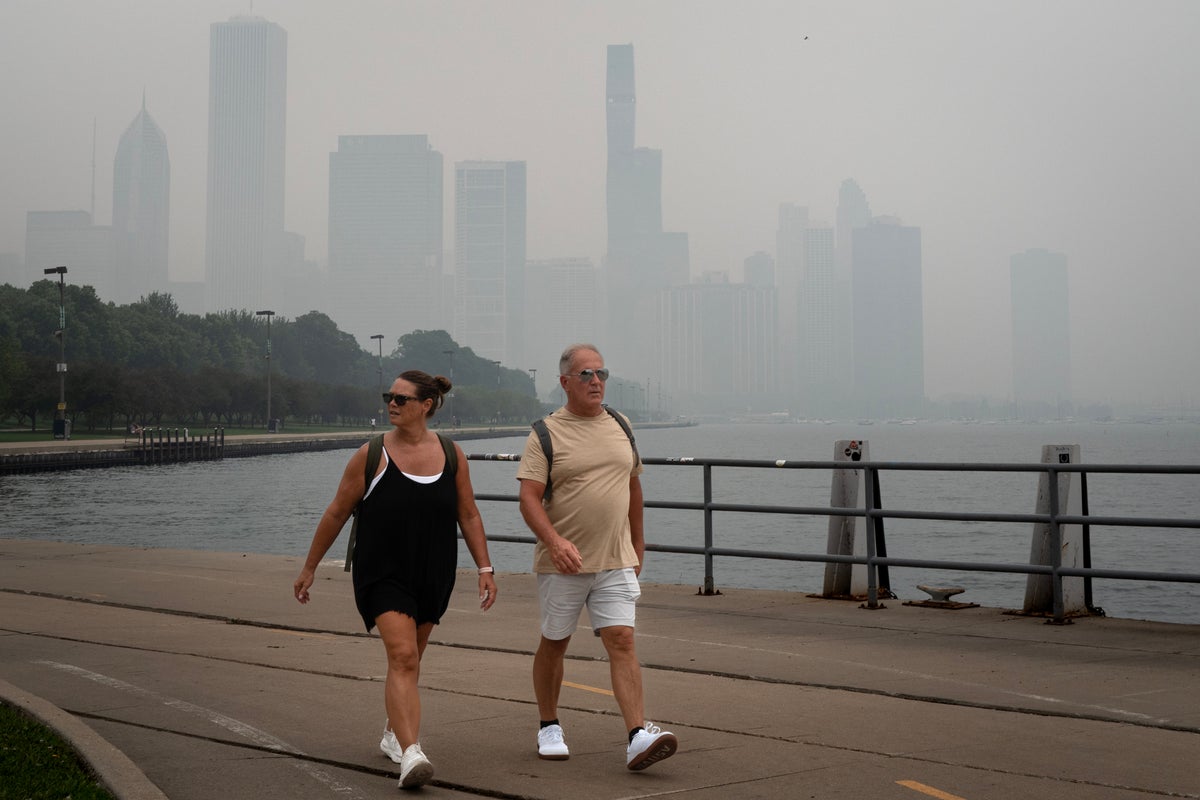
The media warning engine loves a good invisible enemy, and right on schedule every fire season, headline writers point their fingers at central air conditioners. "Your AC is pulling wildfire smoke into your living room," they claim.
It is a completely absurd take. It reveals a fundamental ignorance of how residential HVAC systems work.
If your home is filling up with smoke during a wildfire event, your air conditioner is not the villain. In fact, if you turn it off based on mainstream advice, you are likely making your indoor air quality drastically worse while risking heat stroke.
Let us dismantle the panic and look at mechanical reality.
The Recirculation Fallacy
The standard consumer narrative assumes your central air conditioner functions like a giant straw sticking out the side of your house, sucking in outside air, chilling it, and blowing it into your bedroom.
This is dead wrong.
Standard residential split-system central air conditioners do not bring outside air indoors. Period. The condensing unit sitting on your concrete pad outside is exchanging heat, not air. The fan outdoors blows air across aluminum fins to cool down refrigerant line loops. That outdoor air stays outdoors.
The unit inside your home—your air handler or furnace—takes air from inside your hallway or living room through a return vent, runs it across an evaporator coil, passes it through a filter, and pushes it back into your rooms. It is a closed loop.
When fear-mongering articles tell you that your AC unit is recirculating smoke particles from outside, they are confusing recirculation with infiltration. Your AC is simply moving the air you already have inside your house. If smoke is in that air, the air conditioner did not pull it in from the backyard. Your drafty windows, unsealed door sweeps, recessed lighting cans, and leaky attic access hatches did.
Shutting Off Your AC Makes Things Worse
What happens when you follow bad advice and shut off your AC during a heavy smoke event?
First, indoor temperatures spike. High heat combined with particulate stress places massive physiological strain on the human cardiovascular system.
Second, and more importantly, you kill your best defense mechanism against fine particulate matter ($PM_{2.5}$).
When an air handler runs, it forces home air through a mechanical filter. Even a standard, mid-tier MERV 11 filter traps a massive percentage of fine combustion byproducts every time the air loops through the system. By turning off your air conditioner out of misplaced fear, you stop air movement entirely. The particulate matter that leaked through your poorly sealed windows now sits stagnant in your breathing zone instead of getting scrubbed by your filter.
I have spent years testing indoor air quality metrics during severe regional smoke spikes. The data never lies: homes with active, properly filtered central air maintain dramatically lower internal particle counts than homes where terrified residents turned their HVAC off and sat in stagnant, warming air.
The Real Culprit: Duct Leakage and Envelope Creep
Now, let us address the one nuance the panic peddlers accidentally stumble near without understanding the physics: negative pressure and leaky ductwork.
If your AC system is contributing to smoke accumulation, it is due to mechanical failure and poor installation, not normal design.
Return Line Leaks in Unconditioned Spaces
If your duct system has leaks on the return side (the suction side) and those ducts run through an unconditioned attic or crawlspace that connects to the outside, the fan acts like a vacuum. It draws smoky air out of the attic cavity and pumps it straight into your supply vents.
This is not a reason to hate air conditioning; it is a reason to seal your ductwork with mastic sealant rather than cheap duct tape.
Structural Exfiltration and Infiltration
Your house is a sieve. Air moves in and out based on pressure differentials. When you run exhaust fans (like your kitchen range hood or bathroom fans), you throw your home into negative pressure. That air must be replaced. It gets pulled straight through the cracks in your home envelope, bringing $PM_{2.5}$ particles with it.
Your central air fan, if unbalanced due to closed bedroom doors or blocked returns, creates localized pressure imbalances that accelerate this infiltration.
How to Actually Smoke-Proof Your Air System
Forget the advice telling you to shut down your system and suffer. If you want clean air when the sky turns orange, execute a real strategy.
- Switch your thermostat fan setting from AUTO to ON. Keep the blower running continuously. Even when the compressor stops chilling, the fan continues pulling indoor air through your filtration setup.
- Upgrade to MERV 13, but check your static pressure. MERV 13 filters trap the microscopic particles ($PM_{2.5}$) found in wood smoke. However, dense filters increase resistance. If your blower motor struggles, you reduce airflow and risk damaging your compressor. If your system cannot handle MERV 13, stick with MERV 11 and supplement with standalone HEPA units in high-traffic rooms.
- Seal your returns. Grab a tub of duct mastic and seal the joints in your return air plenum. Stop pulling dirty air from your attic.
- Tape up fresh air intakes. Some modern homes feature mechanical fresh air dampers that pull outside air into the return trunk to meet ventilation codes. During an active wildfire event, close or temporarily seal these intakes.
Stop treating your HVAC system like an enemy during air quality crises. It is the most powerful air purification tool you own—if you understand how it actually works.


.png?width=1200&auto=webp&trim=0%2C0%2C0%2C0)