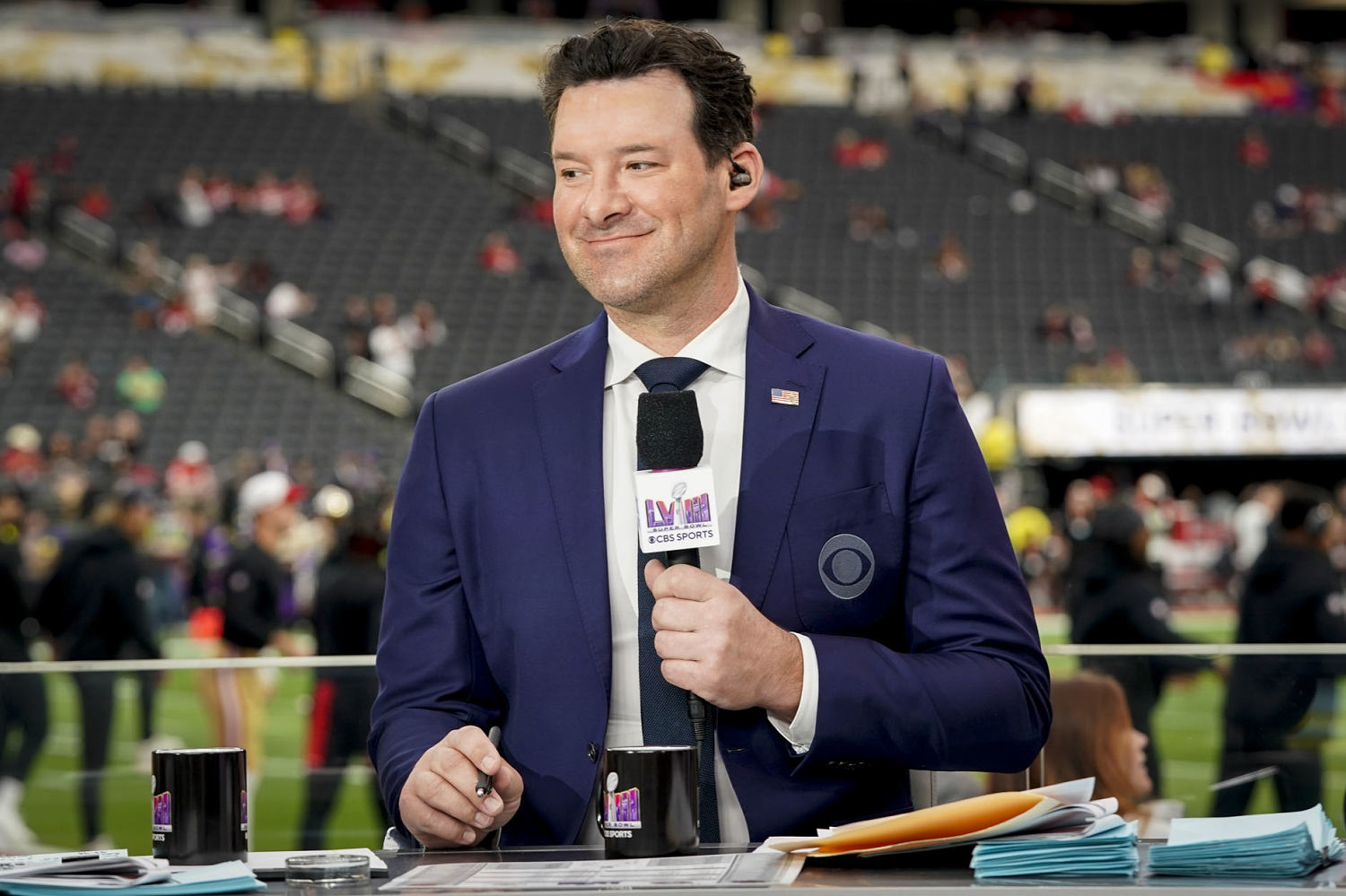
The moral panic over Tony Romo taking a leave of absence from CBS Sports following his Wisconsin arrest is entirely misdirected.
Standard media commentary treats this situation through a primitive lens. The hot takes write themselves: a high-profile broadcaster makes a reckless mistake, the network clutches its pearls, and standard corporate risk mitigation demands an immediate benching. Everyone assumes CBS is reacting to bad behavior, a stained brand, and the sacred code of family-friendly sports television.
That narrative is comfortable. It is also completely wrong.
CBS Sports did not bench Romo because they suddenly discovered high moral standards in executive row. They did it because the traditional sports broadcasting model is terrified of volatility, and Romo's booth performance had already made him a liability long before any flashing red lights appeared in Wisconsin. The arrest merely provided a clean administrative exit ramp for a relationship that was already grinding its gears.
I have spent two decades watching media executives panic over talent trajectory. I have seen networks pour millions into guaranteed contracts, only to watch public sentiment pivot on a dime. When you hand an unproven analyst a massive, ten-year, eighteen-million-dollar annual payday without a performance clawback, you stop managing a broadcast and start managing a hostage situation.
Let us look at the actual mechanics of why this situation unfolded the way it did, stripping away the public relations spin.
The Myth of the Untouchable Analyst
The lazy consensus in sports media argues that top-tier talent is bulletproof. The assumption is that once a quarterback steps out of the huddle and directly into a lead broadcast chair, his Q-rating protects him from gravity.
Data completely contradicts this naive view.
Audience tolerance for unrefined booth commentary has plummeted. When Romo first entered the booth for CBS, his unscripted, predictive enthusiasm felt like a breath of fresh air. He called plays before the snap. He sounded like a fan who had just stepped out of a huddle with a six-pack. It was novel. It was energetic.
Novelty has an expiration date.
By season three, that same style calcified into noise. Instead of crisp structural analysis, viewers got a steady stream of breathless volume and broken predictions. The football IQ was still there, trapped somewhere underneath the hyperactive delivery, but the discipline vanished. When you pay someone historic money, you expect a polished institution. What CBS got was an erratic hype man whose shtick had worn thin with an increasingly sophisticated television audience.
The Wisconsin incident did not create the Romo problem at CBS. It accelerated a conversation network executives were already having behind closed doors about ROI, listener fatigue, and contract leverage.
The Corporate Reaction Function
When a lead analyst faces legal trouble, television networks face a predictable playbook. Legal departments calculate liability. Public relations teams monitor social media sentiment. Executives weigh the cost of a temporary suspension against the cost of a permanent buyout.
Let us be brutally honest about how these decisions work. Networks do not care about the offense; they care about the optics of the response.
If Romo had been lighting up the ratings charts—if viewers were tuning in specifically to hear his tactical breakdowns—CBS would have weathered the storm with a brief statement about respecting the legal process and a one-week cooling-off period. Talent shields behavior. When you deliver massive ratings, moral clauses become flexible suggestions.
When your approval numbers are sliding and your delivery is drawing open mockery on social media, however, that same legal trouble becomes a convenient off-ramp.
This is the dirty secret of sports media talent management. Executives look for triggers to fix mistakes they made during the initial contracting frenzy. A leave of absence is not a punishment. It is a corporate timeout used to test how much the audience actually misses the product.
Why the Fan Base Misses the Point
Social media timelines are currently split into two predictable camps.
Camp one treats Romo like a fallen hero who deserves immediate forgiveness, pointing out that off-field struggles happen to everyone and demanding his immediate reinstatement.
Camp two acts like a minor traffic stop in rural Wisconsin is a capital offense, calling for lifetime bans and immediate termination of his broadcast privileges.
Both extremes miss the operational reality of modern sports television.
Television networks are multi-billion-dollar advertising engines. They do not operate on moral frameworks; they operate on delivery metrics. The problem with Romo has never been his personal life. The problem is that the gap between his massive compensation package and his actual value to a Sunday afternoon broadcast widened into a canyon.
Imagine a scenario where a corporate CEO signs a ten-year supply contract for a product that starts failing basic quality checks. Six months in, the vendor gets into a public relations scrape. Does the CEO cancel the contract because of the scrape, or because the widgets were already cracking under pressure? The scrape is just the paperwork excuse to fix a bad deal.
That is where CBS stands right now.
The Real Cost of Guaranteed Money
The root cause of this entire mess goes back to the broadcasting arms race that kicked off a few years ago. Networks panicked over the streaming shift and began bidding against each other with astronomical, un-tradeable contracts. They treated former quarterbacks like rare art rather than working employees.
When you guarantee an analyst generational wealth before they have proven they can sustain a thirty-year broadcast career, you remove the incentive for self-improvement. Why spend hours in the production meeting grinding tape when your bank account is secure until the next decade?
The best analysts in sports history—people who command respect decades after hanging up their microphones—treated every single broadcast like an audition. They understood that the audience owes them nothing.
Romo skipped that evolution because the market inflated his value too fast, too soon.
What Happens Next in the Booth
The temporary leave of absence will pass. Legal proceedings will resolve. Romo will likely return to a television screen near you, because the economics of finding a replacement who moves the needle are brutally difficult.
The composition of that broadcast might change, though. Expect tighter producer control. Expect fewer unscripted, wandering predictions. Expect a sanitized, risk-averse delivery designed to offend nobody and excite even fewer.
That is the true tragedy here. We are not losing a revolutionary voice; we are watching a system sanitize the last remaining ounce of personality out of a multi-billion-dollar sports broadcast, replacing genuine enthusiasm with corporate anxiety.
Stop pretending this is a moral crisis. It is a bad contract hitting reality, and the bill has finally come due.