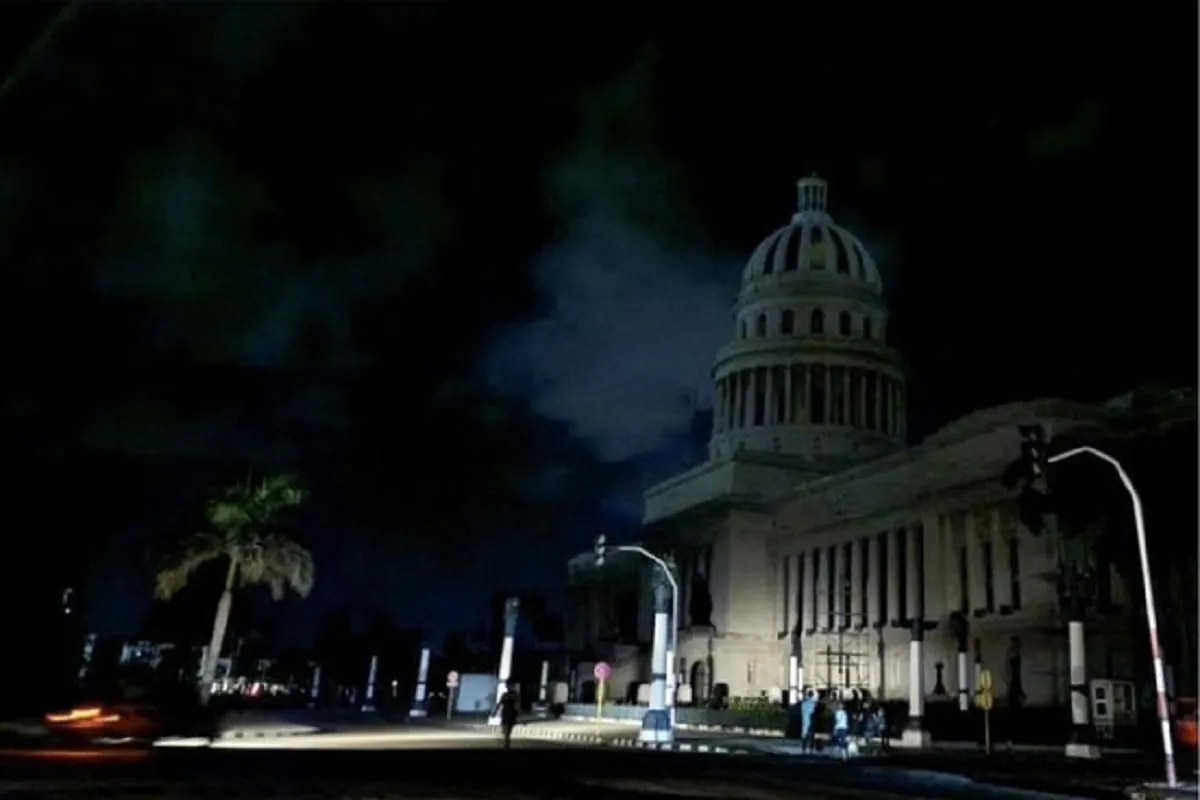
The media is lazy. When Havana goes dark, the global press corps follows a predictable, well-worn script: Washington tightened the screws, Venezuela stopped shipping crude, and an innocent island nation was plunged into primitive darkness.
It is a comforting, linear narrative. It is also completely wrong.
The recent declaration by Cuba’s Energy Minister, Vicente de la O Levy, that the island has completely run out of diesel and fuel oil has sent shockwaves through regional coverage. With Havana enduring 20 to 22-hour daily blackouts, schools shuttered, and garbage rotting in the streets because collection trucks lack fuel, the mainstream press has unanimously pinned the blame on the aggressive US oil blockade initiated in January.
Blaming external embargoes is the ultimate get-out-of-jail-free card for economic incompetence. The current collapse of the Cuban energy grid is not a tragic byproduct of foreign foreign policy; it is the inevitable mathematical outcome of a state-run monopoly that chose political control over basic engineering and economic reality.
The Myth of the External Shock
Let us dismantle the primary defense weapon of the Cuban regime: the idea that the US blockade stopped oil from arriving, and therefore, the lights went out.
Geopolitics does not happen in a vacuum. Every sovereign nation understands its risk profile. For over six decades, Cuba has known its relationship with the United States is volatile. Yet, instead of building a resilient, diversified energy infrastructure, Havana relied entirely on a sequence of foreign benefactors to keep its outdated, Soviet-era thermoelectric plants running. First it was Moscow, then Caracas, and briefly Mexico.
When you build an entire nation's survival on the charity of volatile allies, you are not a victim of a blockade; you are a victim of your own reckless supply-chain architecture.
I have watched state-controlled entities across the globe make this exact blunder. They treat energy infrastructure as a political piggy bank rather than a depreciating industrial asset. Cuba's seven main thermoelectric plants are over 40 years old. They were designed to burn specific types of crude oil that Cuba does not produce in sufficient quantities. They require constant, highly specialized maintenance and millions of dollars in spare parts.
Instead of reinvesting tourism dollars or foreign remittances into upgrading these facilities, the state bureaucracy diverted funds into building luxury hotels for tourists who are now fleeing the island because the air conditioning does not work. That is not Washington’s fault. That is a corporate governance failure on a national scale.
The Fake Solace of the Solar Revolution
Lately, a secondary, equally naive narrative has emerged: the idea that this crisis will force a green transition, financed by Beijing. Outlets are pointing to the installation of 1,300 megawatts of solar power over the past two years as a sign of resilience.
This is a fundamental misunderstanding of grid mechanics.
Solar panels generate electricity when the sun shines. They do not generate electricity at 2:00 AM when protests are erupting in Havana because citizens cannot sleep in the suffocating tropical heat. To make solar power viable for a national grid, you need massive utility-scale battery storage systems. Cuba does not have them.
Worse, as the energy minister himself admitted, the national grid is currently so unstable due to the lack of baseline fuel oil that the existing solar capacity cannot even be integrated efficiently. The grid keeps tripping. You cannot fix a structural baseload collapse by throwing uncoordinated solar panels at a dying distribution network. It is like putting a fresh coat of paint on a car with a cracked engine block.
The Real Math Behind the Shortage
To understand why the system broke down completely this month, we have to look at the numbers. Cuba requires roughly 8 million tons of fuel annually to run its economy and keep the lights on. It produces less than 40% of that domestically, mostly heavy, sulfur-rich crude that erodes the internals of its power plants.
| Fuel Source | Percentage of National Requirement | Reliability Status |
|---|---|---|
| Domestic Crude & Gas | ~35-40% | Low quality, damages infrastructure |
| Venezuelan/Mexican Imports | ~50% | Completely halted due to sanctions pressure |
| Spot Market / Foreign Tankers | ~10-15% | Blocked by high prices and credit default risk |
When the Russian tanker arrived in late March with 730,000 barrels of crude, the regime celebrated it as a triumph over the blockade. It bought them exactly four weeks of survival. Why? Because a single tanker is a drop in the bucket for a country that refuses to allow free-market pricing for utilities.
When electricity is heavily subsidized by the state, demand signals are completely distorted. Citizens have no incentive to conserve, and the state-owned utility company, Unión Eléctrica (UNE), generates zero profit to reinvest in infrastructure. The business model is designed to lose money on every kilowatt-hour delivered. Under those economics, bankruptcy is the only logical conclusion, regardless of whether Donald Trump or anyone else sits in the White House.
The Cost of Centralized Control
The true tragedy of the Cuban energy crisis is that the solution is staring the regime in the face, but implementing it would require surrendering absolute control.
Imagine a scenario where the Cuban government allowed private individuals and small enterprises (the mipymes) to import fuel directly, set their own prices, and operate micro-grids. The fuel shortage would vanish in weeks. Private capital would find a way around the restrictions, just as it does in sanction-heavy environments from Venezuela to Iran.
But Havana refuses. The regime prefers total control over a dark island rather than partial control over a prosperous, illuminated one. They view economic autonomy as a greater threat than a total blackout.
The downside of this analysis is grim: as long as the political structure prioritizes ideological purity over operational competence, the island will remain trapped in this loop. No amount of humanitarian aid—like the $100 million package offered by the US State Department—will fix a grid run by commissars instead of engineers.
Stop reading the headlines that treat Cuba as a passive leaf blown around by the winds of American foreign policy. The lights are out in Havana because the system was designed to fail.