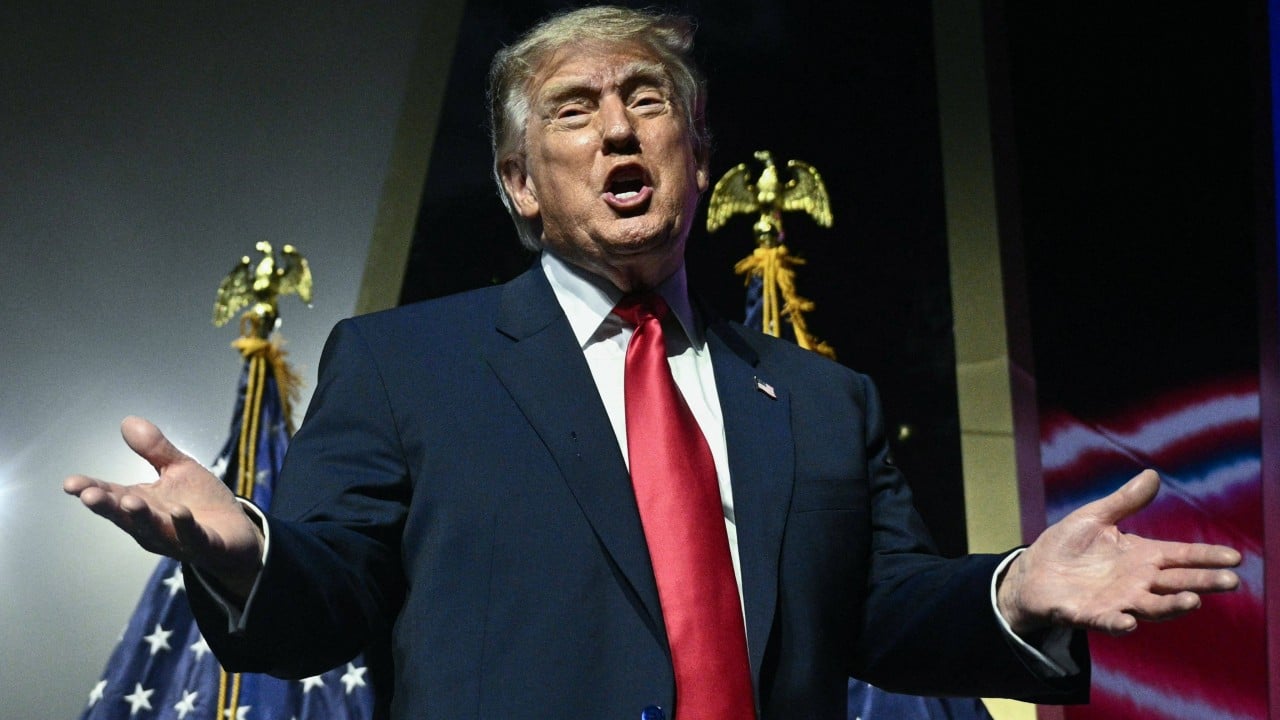
Mainstream foreign policy desks are tripping over themselves to frame the September 22 encounter between Donald Trump and Venezuela’s acting president, Delcy Rodríguez, as a "historic diplomatic milestone". They point to the fact that it is the first direct sit-down between an American president and a Venezuelan head of state since Barack Obama shook Nicolás Maduro’s hand in Panama in 2015. They obsess over the optics at the Lotte Palace Hotel on the sidelines of the 81st United Nations General Assembly, analyzing whether Rodríguez looked tense next to Trump while Maduro sat just miles away in a Brooklyn jail cell.
Every single one of those takes misses the point entirely.
Calling this "diplomacy" is like calling a corporate liquidation a friendly coffee chat. Diplomacy implies two sovereign equals negotiating mutual concessions. What happened in New York on September 22 was a boardroom check-in between a majority shareholder and an interim branch manager. If you analyze this encounter through the lens of traditional statecraft, human rights, or democratic transitions, you are asking the wrong questions—and you are going to misread every geopolitical and energy market move coming out of Latin America over the next 24 months.
The Lazy Consensus vs. The Balance Sheet
The standard media narrative paints the Trump-Rodríguez summit as a bizarre ideological U-turn. Reporters scratch their heads wondering how a socialist firebrand who spent 25 years rising through the ranks of Chavismo ended up smiling for cameras alongside a U.S. president who ordered the January 3 military raid that snatched her former boss out of Caracas. Pundits on the right, like Senator Rick Scott, call the handshake a "slap in the face" to democracy advocates. Pundits on the left fret over American "imperialist aggression".
Both sides are trapped in 20th-century ideological theater. They are looking at political labels while ignoring the actual ledger.
Let’s look at the mechanics of what actually occurred between January and September 2026:
- The Removal: On January 3, U.S. forces executed Operation Absolute Resolve, extracting Nicolás Maduro and Cilia Flores to face federal narco-terrorism and drug trafficking charges in New York.
- The Pivot: Before Maduro was even processed at the DEA field office in Manhattan, Rodríguez—who had quietly signaled to U.S. and Qatari intermediaries back in December that Maduro needed to go—stepped into the acting presidency.
- The Collateral: Within 72 hours of the raid, Caracas agreed to hand over 30 to 50 million barrels of crude for Washington to market.
- The Receivership: By late August, Trump and Rodríguez announced an agreement granting majority U.S. participation in over 65 billion barrels of proven reserves across 17 oil fields, backed by $100 billion in promised private investment.
Look at who sat in that room at the Lotte Palace Hotel on September 22. Yes, Secretary of State Marco Rubio and National Security Advisor Stephen Miller were there. More tellingly, Treasury Secretary Scott Bessent was at the table. You do not bring the Treasury Secretary to an "informal pull-aside" at the UN unless the primary agenda item is cash flow, sovereign debt restructuring, and escrow management.
Since January, the U.S. administration has collected over $12 billion to $13 billion in proceeds from Venezuelan oil and mineral sales, holding the funds in trust and disbursing revenue as direct financial leverage over Caracas. Rodríguez didn't fly to New York to negotiate foreign policy. She flew to New York to ask her receivership board for operating capital and international legitimacy with the IMF and World Bank.
Why the "Elections" Question Is a Distraction
If you search for coverage of the September 22 meeting, the top "People Also Ask" queries revolve around one obsession: When will Venezuela hold free and fair elections?
Foreign policy commentators treat the absence of an election date as a failure of U.S. leverage. Brazilian President Luiz Inácio Lula da Silva refused to meet Rodríguez in New York and publicly demanded elections. Venezuelan opposition figures—including María Corina Machado, who has been conspicuously sidelined from the direct negotiations between Rodríguez and representatives of the 2015 National Assembly—have warned that democracy is being traded for crude.
Here is the brutal truth nobody in Washington or Brussels wants to say out loud: Holding an immediate election in Venezuela right now would blow up the entire stabilization plan.
I have watched institutional restructurings across emerging markets for two decades, and the single fastest way to destroy a turnaround is to hand an insolvent, fractured state to a brand-new populist administration before the cash flows are locked in. Look at the reality on the ground in Caracas:
- The Military Equation: Rodríguez spent March purging and replacing Venezuela’s top military commanders, yet Chavista loyalists like Diosdado Cabello still command armed factions across the country. If an opposition government took office tomorrow without a negotiated exit ramp for the current regime apparatus, Venezuela wouldn't get a peaceful transition—it would get an immediate civil war and sabotaged pipelines.
- Contract Sanctity: International oil majors and private equity funds do not deploy $100 billion into a country where a snap election could bring in a new legislature eager to tear up unratified bilateral agreements. Notice that as of late September, neither Washington nor Caracas had even published the official text of the August oil agreements.
- Institutional Ruin: You cannot run a credible national vote when the Supreme Court of Justice and the National Electoral Council are still stacked with legacy appointees. Even Secretary Rubio’s phased roadmap acknowledges that appointing new justices and building a neutral electoral council has to precede any presidential vacancy declaration.
Trump’s refusal to set a rigid election timeline isn't an oversight. It is a deliberate sequencing choice. Washington is using Rodríguez as a transitional shock absorber—forcing a Chavista insider to dismantle Chavista economic controls, absorb the domestic political blowback of privatizing PDVSA's assets, and clear the legal underbrush before voters ever step into a ballot box.
The Structural Trap Nobody Is Talking About
To understand why Rodríguez is playing along—and why her position is far more precarious than the triumphant state TV broadcasts in Caracas suggest—you have to understand the mechanics of sovereign receivership.
In standard international relations, a weaker state plays superpowers off against one another. For twenty years, Caracas used Beijing and Moscow as financial and military shields against Washington. That option evaporated on January 3. By capturing Maduro and establishing direct control over Venezuelan oil export revenues, Washington severed the lifelines connecting Caracas to Russian and Chinese creditors. While Russian diplomats still maintain parallel contacts with Venezuelan delegations at the UN, Moscow has zero ability to outbid or out-muscle the U.S. Treasury in the Caribbean basin.
Rodríguez is caught in a classic principal-agent trap:
| Dimension | What Caracas Wants | What Washington Enforces | The Resulting Reality |
|---|---|---|---|
| Oil Revenue | Immediate liquidity to pay public sector wages and stabilize the bolívar. | Escrow control over $12B+ in sales proceeds to prevent graft and fund infrastructure. | Caracas gets an allowance, not a blank check. |
| Sanctions Relief | Permanent statutory repeal of all U.S. financial and sectoral restrictions. | Conditional, revocable licenses tied to operational milestones. | One wrong move snaps the economic trap shut overnight. |
| Political Survival | Normalization as a legitimate head of state via UN and IMF engagement. | A "pull-aside" hotel meeting rather than a formal White House state visit. | Enough legitimacy to keep generals loyal, never enough to claim independence. |
| Energy Partners | Hand-picked domestic intermediaries and flexible royalty terms. | Direct U.S. major participation—though even ExxonMobil got public pushback from Trump for "playing too cute". | Capital flows only to operators approved by Washington. |
Look at that third row. The White House deliberately labeled the September 22 encounter an "informal pull-aside" at a Manhattan hotel rather than a formal bilateral summit. Meanwhile, Latin America specialists like Orlando Pérez at the University of North Texas at Dallas noted that Rodríguez got the exact photo-op she needed to prove to the Venezuelan military that Washington backs her authority.
Both observations are true, and together they reveal the real game. Trump gave Rodríguez just enough oxygen to survive a coup attempt in Caracas, while keeping her on a short leash in New York. As Trump bluntly put it when bragging about the oil deal, "to the victor belong the spoils". You don't say that next to an equal partner. You say that next to an asset you currently control.
The Blind Spot in Washington's Playbook
I am not here to tell you this strategy is bulletproof. Any contrarian analysis worth reading has to admit the massive structural risks baked into Washington’s approach—and right now, energy investors and policy hawks are wildly underpricing three specific failure points.
1. The Infrastructure Reality Check
Promising $100 billion in investment across 17 oil fields makes for a great press release, but heavy crude in the Orinoco Belt does not respond to political decrees. After two decades of deferred maintenance, cannibalized rigs, brain drain, and electrical grid collapse, Venezuela’s production capacity cannot simply be switched back on like a light. Even with U.S. sanctions lifted and Treasury backing, bringing millions of barrels of extra-heavy crude back online requires years of specialized engineering, diluent supply chains, and upgrader repairs. Anyone betting on an immediate flood of cheap Venezuelan oil crashing global crude prices before the U.S. midterms is ignoring basic petroleum engineering.
2. The Legitimacy Deficit of Unratified Deals
When María Corina Machado gave her October interview to The New York Times attacking Venezuelan oil deal intermediaries over corruption and electricity blackouts, she dropped a subtle warning that Wall Street missed. She didn't attack Trump, and she didn't reject U.S. energy investment—but she made it clear that crony deals cut behind closed doors without a democratically legitimate legislature are radioactive. If the U.S. administration bypasses the 2015 National Assembly and Machado’s movement to cut fast bilateral deals with Rodríguez’s inner circle, those contracts will face immediate legal challenges the moment a real democratic government finally takes power in 2027 or beyond.
3. The Crony Capitalism Trap
Removing Maduro did not magically erase the entrenched networks inside PDVSA and the Venezuelan state apparatus. By empowering Rodríguez to manage the transition without transparent public reporting on the oil agreements, Washington risks entrenching a mutated version of the exact oligarchy it spent a decade sanctioning—only this time, the oligarchs wear suits in Manhattan instead of fatigues in Caracas.
How to Actually Read the Playbook
If you are an investor, an energy analyst, or simply someone trying to understand how power actually operates in the Western Hemisphere in 2026, stop watching the press conferences. Stop counting how many times a diplomat uses the word "democracy" at a UN podium.
Watch these three indicators instead:
- Treasury Disbursement Audits, Not UN Speeches: Ignore what Rodríguez says at the General Assembly. Watch the U.S. Treasury reports on how the $12 billion-plus trust fund is actually being spent. If money goes toward electrical grid stabilization and debt service to bondholders, the receivership is working. If it vanishes into opaque local joint ventures, the restructuring is rotting from the inside.
- Institutional Milestones, Not Election Rhetoric: Don't fall for vague promises about 2027 elections. Track the hard institutional prerequisites: the appointment of new Supreme Court justices and the overhaul of the National Electoral Council. Until those two bodies are rebuilt with genuine opposition participation, any talk of a presidential vote is pure theater.
- The Return of Tier-One Operators: Ignore headline numbers about "$100 billion in pledged investment". Watch which actual operators deploy physical drilling rigs and sign binding engineering, procurement, and construction contracts. When conservative, risk-averse majors put real steel in the ground—rather than trading houses flipping cargoes—you will know the legal framework is finally bankable.
The September 22 meeting at the Lotte Palace Hotel wasn't the dawn of a new diplomatic era. It was a status update on a hostile takeover that happened nine months earlier. Treat it like a business restructuring, follow the escrow accounts, and stop expecting diplomats to tell you who actually owns the building.