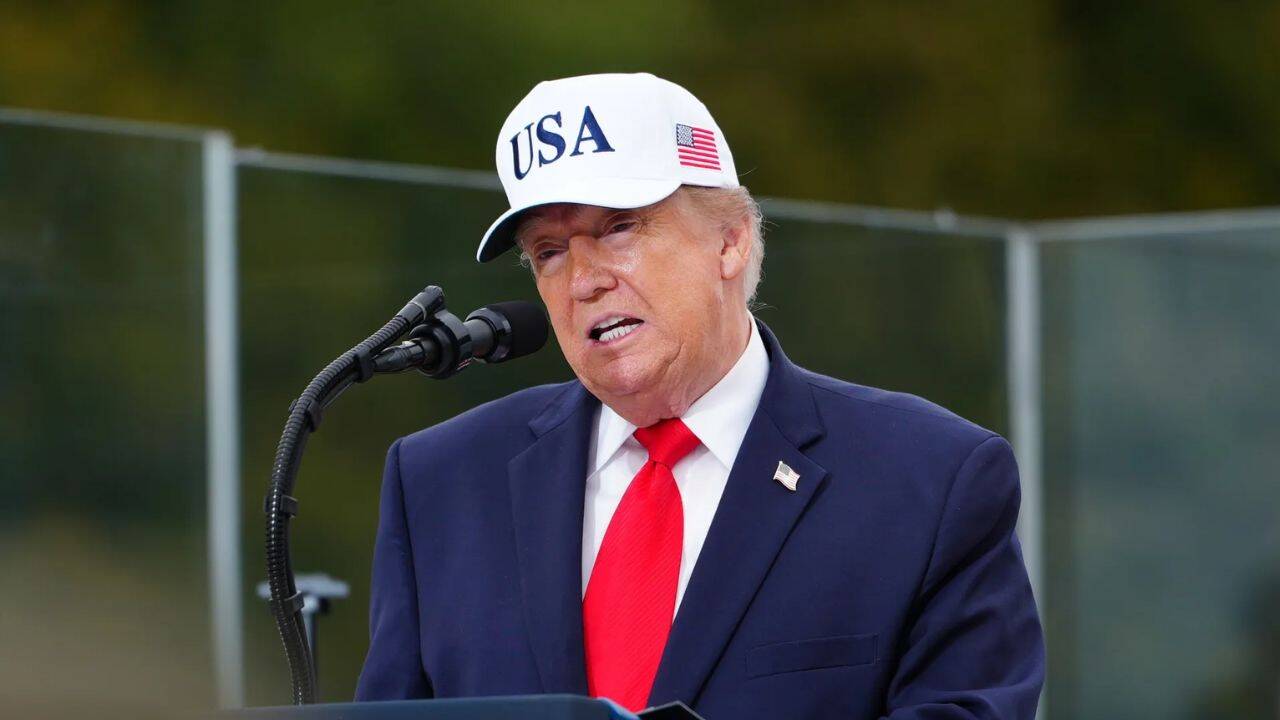
The cable news chyrons are screaming again. You know the drill by now. A senior federal official drops a cinematic threat about "hunting down" unlawful voters, and within forty-five minutes, a blue-state governor holds an emergency press conference promising to throw every legal wrench in the state's arsenal at federal immigration agents.
Everyone picks a jersey. Everyone screams at their screens. And everyone misses the actual story.
If you read the mainstream coverage of the latest clash between the Department of Homeland Security and Sacramento, you are being fed a comfortable, pre-packaged narrative: an unstoppable force of federal law enforcement meeting an immovable object of state-level sanctuary resistance. It makes for phenomenal fundraising emails. It drives ratings through the roof.
It is also complete operational fiction.
After fifteen years of watching administrative law collisions from the inside, I can tell you that when Washington and state capitals trade haymakers in front of television cameras, the real mechanics of power are happening somewhere else entirely. The lazy consensus treats these Election Day standoffs as existential battles over the ballot box. In reality, you are watching two political machines execute a synchronized performance that relies on the public misunderstanding basic constitutional mechanics, federal statutory limits, and how voter rolls actually function.
The Anatomy of a Manufactured Standoff
Let us strip away the rhetoric and look at the cold statutory reality. When the head of the Department of Homeland Security threatens to "hunt down" non-citizen voters on Election Day, it sounds like tactical teams are preparing to sweep precincts with clipboards and handcuffs.
They are not. They cannot.
Federal law is explicit on this point. Under 18 U.S.C. § 592, it is a federal felony for any officer of the civil, military, or naval service of the United States to bring armed men or troops to any place where a general or special election is held, unless it is strictly necessary to repel armed enemies of the United States. Even without armed troops, the Department of Justice’s own long-standing ballot access guidelines—outlined in the Federal Prosecution of Election Offenses manual—strictly prohibit federal investigators and immigration enforcement officers from conducting overt operations inside or immediately outside polling locations while voting is underway. Why? Because the mere presence of federal badges at a precinct triggers immediate federal litigation under the Voting Rights Act for voter intimidation, tainting the very election results the government claims to protect.
So why make the threat? Because deterrence through headlines costs zero dollars in overtime and requires zero logistical deployment.
Now look at the other side of the split-screen. When California Governor Gavin Newsom and his state Attorney General fire back, vowing to block Immigration and Customs Enforcement from interfering with state election administration, they are fighting a phantom army. State officials do not have the constitutional authority to arrest federal agents executing valid federal warrants, a principle settled by the Supreme Court in In re Neagle over a century ago. Conversely, federal agents have no jurisdiction over the physical administration of state-run polling sites, a boundary protected by the Elections Clause of the Constitution and the Tenth Amendment's anti-commandeering doctrine, reaffirmed in Printz v. United States and Murphy v. NCAA.
Both sides know the exact perimeter of the sandbox. Neither side is actually crossing the line. Yet both sides need you to believe the other is inches away from burning the Constitution to the ground.
Why You Are Asking the Wrong Question
If you spend your energy debating whether DHS will actually arrest undocumented immigrants at a Los Angeles middle school gymnasium, or whether California state troopers will physically block ICE vans from entering a precinct parking lot, you are asking the wrong question.
The real question is not about Election Day enforcement. The real question is about back-end database reconciliation and administrative friction.
Voter registration does not happen in a vacuum on the first Tuesday in November. It happens months earlier at the Department of Motor Vehicles, through third-party registration drives, and via online portals. When a non-citizen ends up on a state voter roll, it is almost never the result of a coordinated covert operation. I have audited municipal and state registration workflows where administrative bloat, poorly designed automatic voter registration (AVR) opt-out screens, and mismatched database fields created thousands of erroneous entries without a single malicious actor lifting a finger.
Consider the mechanics of an AVR system—often called "Motor Voter" programs. When a resident applies for a driver's license or state ID, the system prompts them to attest to their citizenship. In states that issue driver's licenses regardless of immigration status, the software architecture relies on the applicant correctly navigating a multi-step digital screen, often in a second language, while a clerk rushes them through a line. If the software defaults to registration unless the user actively opts out, or if a clerical error miscodes a status field, that individual’s data is transmitted straight to the Secretary of State’s voter database.
What Happens When Databases Collide
Once that name hits the roll, the true battle begins—and it has nothing to do with armed agents at the polls. It happens in sterile server rooms through three specific mechanisms:
- SAVE Program Queries: The Systematic Alien Verification for Entitlements (SAVE) database, managed by U.S. Citizenship and Immigration Services, allows state election officials to verify citizenship status. However, SAVE requires an alien registration number or specific immigration identifier to run a query. State DMVs often do not collect or retain those numbers for standard license applicants, rendering the database useless for bulk roll maintenance without external matching.
- Social Security Administration (SSA) Mismatches: Under the Help America Vote Act (HAVA), states verify new registrants against the last four digits of their Social Security Number. The SSA database confirms whether the name, date of birth, and SSN match, and whether the person is deceased. It does not verify citizenship, because lawful permanent residents and work-authorized non-citizens also hold valid SSNs.
- Jury Duty Excusal Cross-Checks: The single most effective—and least publicized—method for catching non-citizens on voter rolls happens when a registered voter receives a county jury summons and checks the box stating, "I am not a U.S. citizen." In well-run jurisdictions, the clerk of courts transmits that excusal form directly to the county registrar of voters to trigger a removal notice. In poorly run jurisdictions, those two county offices do not share a single spreadsheet.
Notice what is missing from that list? Dramatic press conferences. Threats to "hunt people down." Gubernatorial vows of resistance.
Dismantling the Myths Both Sides Peddle
To understand why this political theater persists, we have to dismantle the core talking points both camps rely on to keep their bases mobilized.
Myth 1: Non-citizen voting is a massive, organized conspiracy swaying national elections.
Let’s look at the hard numbers from states that have conducted aggressive, post-election audits. When Texas, Georgia, and Ohio—states led by Republican officials with every political incentive to find widespread fraud—ran comprehensive cross-checks of their entire voter rolls against state DMV records and federal immigration databases, the numbers were microscopic. In Georgia, a 2022 audit of 8.2 million registered voters found roughly 1,634 non-citizens who had attempted to register over a 25-year period—and zero who had actually cast a ballot. In Ohio, a rigorous 2024 review identified roughly 137 non-citizens who appeared to have voted across multiple election cycles out of more than 8 million registered voters.
When a non-citizen actually casts a ballot, it is overwhelmingly an act of bureaucratic confusion—such as a green card holder mistakenly believing permanent residency confers voting rights—that immediately ruins their life. Under federal immigration law, voting unlawfully is a strict-liability offense that triggers automatic deportation and a permanent bar to naturalization, with zero waivers available. No rational person risks permanent exile from their family and livelihood to cast a single vote in a precinct decided by ten thousand ballots.
Myth 2: Federal oversight of voter rolls is inherently an attack on voting rights.
On the flip side, the progressive consensus treats any federal inquiry into voter roll accuracy as a Jim Crow-era suppression tactic. This is equally dishonest. Clean voter rolls are the bedrock of public trust in democratic outcomes. When states refuse to perform basic list maintenance, fail to process interstate moves, or resist sharing non-sensitive metadata with federal auditors, they create an information vacuum. And in politics, an information vacuum is always filled by the loudest conspiracy theorist in the room.
Furthermore, the National Voter Registration Act (NVRA) explicitly mandates that states conduct general programs that make a reasonable effort to remove the names of ineligible voters. When governors posture as heroic defenders of democracy while their own election agencies operate on twenty-year-old legacy software that cannot reconcile basic address changes, they are not protecting voters. They are protecting bureaucratic incompetence.
The Unspoken Collateral Damage
There is a massive downside to this endless cycle of chest-thumping that neither DHS officials nor state governors will ever admit. The rhetoric itself does the damage that the law forbids.
Imagine a scenario where a naturalized U.S. citizen—someone who spent seven years and thousands of dollars navigating the immigration system, passed the civics exam, and took the oath of allegiance—turns on the evening news. They hear the Secretary of Homeland Security warn that federal agents are going to "hunt down" illegal voters on Election Day. They know that federal databases often lag behind naturalization ceremonies by months, meaning their name might still show up as a non-citizen on an outdated federal list.
Does that naturalized citizen risk going to the polls if they think armed federal agents are waiting outside to detain anyone whose paperwork hits a snag? Many stay home.
Now flip the coin. Imagine a suburban voter who already harbors deep skepticism about institutional competence. They hear their governor aggressively vow to block federal immigration authorities from enforcing the law on Election Day. That voter doesn't hear a nuanced legal argument about the Tenth Amendment's anti-commandeering doctrine. They hear a state executive actively shielding unlawful voters from federal scrutiny. Their trust in the legitimacy of the final tally evaporates before a single ballot is counted.
Both sides get what they want: polarized, furious, hyper-engaged voters who open their wallets and hit the share button. Meanwhile, legitimate citizens are chilled from participating, and the remaining electorate loses faith in the outcome.
What Actual Election Integrity Looks Like
If we want to fix the underlying vulnerabilities without turning every November into a constitutional crisis, we have to abandon the theater and focus on boring, unglamorous administrative engineering. You cannot fix a database problem with a SWAT team, and you cannot fix a public trust problem with a press conference.
Here is what actually works—and why politicians hate it:
- Eliminate Passive Opt-Out Registration at DMVs: Automatic Voter Registration should be an active choice, not a default setting buried in fine print. Requiring an applicant to affirmatively check a box stating "Yes, I am a U.S. citizen and I want to register to vote" cuts accidental non-citizen registrations by over ninety percent overnight. It removes ambiguity, protects non-citizens from inadvertent felonies, and keeps the rolls clean at the point of entry.
- Mandate Real-Time Naturalization Syncing: When USCIS administers the oath of citizenship, that data should transmit electronically to state Secretaries of State within twenty-four hours. Simultaneously, DHS should provide states with free, automated API access to verify citizenship status against the full USCIS database—not just the fragmented SAVE system—under strict statutory privacy guardrails that prohibit using the data for civil enforcement sweeps.
- Integrate Jury Clerk and Registrar Databases: Every county in the United States should be legally required to link its jury commissioner’s excusal logs with its voter registration roll. If a resident swears under penalty of perjury that they are not a citizen to get out of jury duty, their voter registration should be automatically flagged for a 30-day cure notice. If they fail to provide proof of citizenship within thirty days, the registration is cancelled. No raids. No headlines. Just clean administrative hygiene.
- Enforce the 90-Day Quiet Period: Under the NVRA, systematic purges of voter rolls are prohibited within 90 days of a federal election. This rule exists to prevent last-minute clerical errors from disenfranchising eligible voters when there is no time to fix the mistake. Both federal officials and state executives should be bound by a strict operational moratorium on public enforcement threats during that same 90-day window.
The Reality Check Nobody Wants
I will be the first to admit the flaw in this approach: it is completely unmarketable.
You cannot fit "API integration between USCIS naturalization logs and state DMV portals" onto a bumper sticker. Nobody is going to donate fifty dollars to a political action committee because a candidate promised to streamline county jury excusal cross-checks. Fixing the plumbing of democracy requires bipartisan technical cooperation, sustained funding for county election boards, and a willingness to let professionals do their jobs out of the spotlight.
Politicians do not want to solve this problem because the conflict is far too profitable. A functioning, boring, transparent registration system deprives Washington of a scapegoat and deprives state capitals of a villain.
The next time you see a federal official promising to hunt people down at the ballot box, or a governor promising to stand in the schoolhouse door to stop them, turn off the television. Look at the statutes. Look at the database architecture. You aren't watching a war for the soul of the republic. You are watching two sides argue over a script they wrote together, hoping you never notice that nobody is actually guarding the server room.