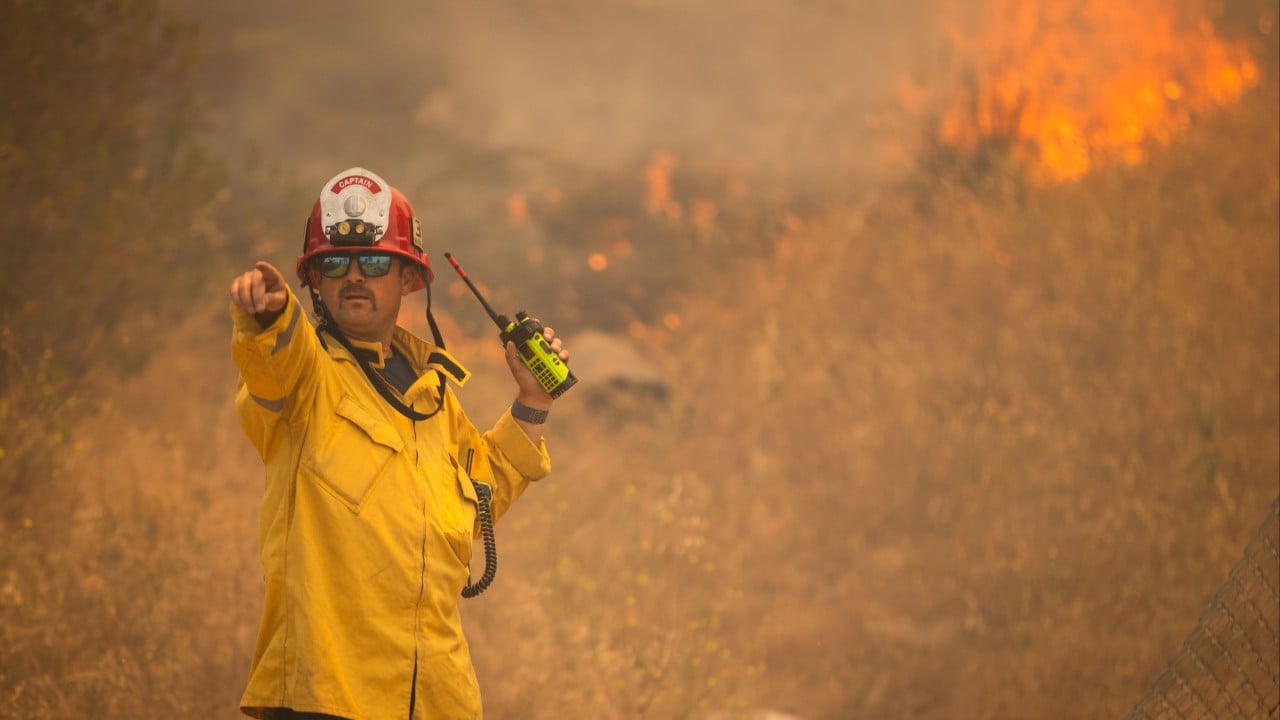
The standard breaking news script plays out the same way every summer and fall. Sirens wail. Red-orange skies paint a apocalyptic backdrop. An anchor solemnly reads evacuation numbers while footage of a DC-10 dropping bright pink fire retardant flashes across the screen. The narrative is baked in: nature is angry, humans are the victims, and aggressive suppression is our only salvation.
It is a comforting, high-stakes drama. It is also entirely wrong.
By treating every wildfire in Southern California as an existential threat to be choked out at all costs, emergency management systems and public policy are actually fueling the next megafire. The lazy consensus insists that total suppression equals safety. The hard truth is that decades of putting out every single spark has created a ticking ecological time bomb. We do not have a wildfire problem; we have a fire deficit problem.
The Fire Suppression Paradox
For over a century, policy has dictated that fire is an enemy to be eradicated from the geography. This mindset ignores basic forestry and ecological mechanics.
Western ecosystems evolved alongside fire. It is a natural waste management system, clearing out dead brush, recycling nutrients into the soil, and thinning out overpopulated plant canopy. When you eliminate small, low-intensity burns, that organic material does not magically disappear. It accumulates.
Consider the fuel loading math. In a healthy, naturally cycling chaparral or forest ecosystem, dead wood and underbrush might amount to a few tons per acre. After fifty years of aggressive firefighting, that volume multiplies exponentially. The ground becomes choked with fuel.
When a spark inevitably hits this buildup during a Santa Ana wind event, the resulting fire is not a manageable surface burn. It is a catastrophic inferno. The heat grows so intense it bakes the soil into a water-repellent layer, leading to the devastating mudslides that routinely wreck communities the following winter.
We are spending billions of taxpayer dollars to convert a natural, localized maintenance process into an unstoppable regional disaster.
The Myth of the Wildland-Urban Interface
The media routinely blames climate change alone for the rising destruction of property. While shifting weather patterns extend the dry season, the real driver of property loss is where we build, and how we protect it.
The Wildland-Urban Interface (WUI) is the fastest-growing land type in the United States. We are pushing suburbs deep into terrain that is ecologically mandated to burn. Then, we expect municipal fire departments to act as private security guards for homes built with flammable materials.
Imagine a scenario where a developer builds a luxury subdivision out of cardboard in a known flood zone, and then demands the government reroute the river every time it rains. That is the current state of California housing expansion.
The focus on massive evacuation orders obscures the real failure: a lack of stringent, non-negotiable building codes and zoning laws. A home built with proper ember-resistant vents, a metal roof, and a strictly maintained 100-foot defensible space buffer can survive a passing wildfire without a single fire truck present. Yet, local governments continue to approve sprawling developments in high-risk zones without mandating these structural defenses, relying instead on the heroic, unsustainable efforts of overstretched hotshot crews.
Dismantling the "People Also Ask" Consensus
Look at the standard questions driving public discourse around these events, and you will see how flawed the foundational premise is.
Why can't we just extinguish wildfires faster?
Because physics wins. When a fire transitions from a surface burn to a crown fire—moving through the tops of trees and brush driven by 60-mile-per-hour winds—human intervention is useless. Dropping water or retardant from planes in those conditions is theater. It looks impressive on the evening news, but it does not stop a fire blowing through thousands of BTUs of energy per square yard. The only thing that stops a wind-driven WUI fire is a lack of fuel or a shift in the weather.
How do evacuations save communities?
Evacuations save lives, but they do not save communities. In fact, the logistical nightmare of moving twenty thousand people out of a single-access canyon road often pulls critical resources away from actual perimeter management. The obsession with mass evacuations is an admission of failure. It proves the community itself was never built to withstand the environment it occupies.
The True Cost of Aggressive Suppression
I have spent years analyzing resource allocation in emergency management, watching agencies throw millions at immediate crises while starving long-term mitigation. The economics of our current approach are completely broken.
The federal and state budgets for emergency fire suppression have skyrocketed over the past two decades. We pour funds into heavy machinery, aviation contracts, and overtime pay during the summer peak. Meanwhile, the budget for prescribed burns—the deliberate, controlled introduction of fire during the damp winter months—is a fraction of that amount.
Prescribed burning is politically difficult. It creates temporary smoke. It requires meticulous planning, and there is always a minor risk that a controlled burn breaches a line. Because politicians are risk-averse, they prefer the optics of fighting a massive, unmanaged disaster to the minor public relations headache of managing a controlled, smoky fire in February.
The irony is brutal. By refusing to tolerate small amounts of smoke when conditions are safe, we guarantee massive blankets of toxic smoke when conditions are at their worst.
The Blueprint for Coexistence
Shifting away from the failed doctrine of total suppression requires a cold, unsentimental overhaul of how California manages its landscape.
- Mandated Managed Wildfire: If a fire starts in a wilderness area or remote canyon away from critical infrastructure, the default response should be monitoring, not suppression. Let it clear the dead fuel load.
- Hard Zoning Limits: Stop building in high-hazard zones. If a developer insists on building in the WUI, the financial burden of specialized insurance and infrastructure hardening must fall entirely on them, not the general taxpayer.
- Retrofitting Over Rebuilding: State funds should be redirected from post-disaster rebuilding grants into proactive retrofitting subsidies. Swap out wood decks for composite materials, replace vinyl siding, and clear the brush.
- Industrial-Scale Prescribed Burns: We need to scale up controlled burns by a factor of ten. This means rewriting air quality regulations to allow for smoke management windows during the winter.
This approach is not free of downsides. It means accepting that fire is a permanent, visible element of the Western landscape. It means acknowledging that certain remote properties cannot, and should not, be saved by putting firefighters' lives at risk.
The current strategy of treating fire as an unexpected invader is a collective delusion. Fire belongs in California. Humans are the guests. Stop trying to extinguish a vital ecological process and start building communities that can take a hit.