You are lying awake at 3:00 AM listening to a sound that resembles a chainsaw tearing through a corrugated iron sheet. It is your partner. Or maybe you are the one waking up with a throat like sandpaper, feeling like you slept for twenty minutes instead of eight hours. You want a fix. You want it now.
Go online and you will find an absolute swamp of gadgets promising instant silence. Nose clips with tiny magnets. Smart pillows that vibrate. Mouthpieces that look like boxer gear. Chin straps that bind your jaw shut.
Most of them are garbage.
Some of them actually work beautifully. The trick is knowing which is which before you waste hundreds of dollars on plastic junk that ends up in your nightstand drawer. Let's look at the hard data, the mechanics of your throat, and what sleep doctors actually recommend.
The Brutal Physics of Why You Snore
Snoring is not a nose problem for most people. It is a throat problem.
When you fall asleep, your muscles relax. The fleshy tissues at the back of your throat—the soft palate, the tonsils, the uvula, and the base of your tongue—drop backward. As you breathe, air forces its way through this narrowed gap. The tissue vibrates wildly. That vibration is the noise keeping your household awake.
If you buy a device that opens your nose when your throat is the bottleneck, you are flushing money down the toilet. You need to figure out your anatomy before pulling out a credit card.
Mouthpieces Are the Only Gadgets with Real Proof
If you want an over-the-counter fix that has a mountain of peer-reviewed data behind it, look at oral appliances. Specifically, you want a Mandibular Advancement Device (MAD).
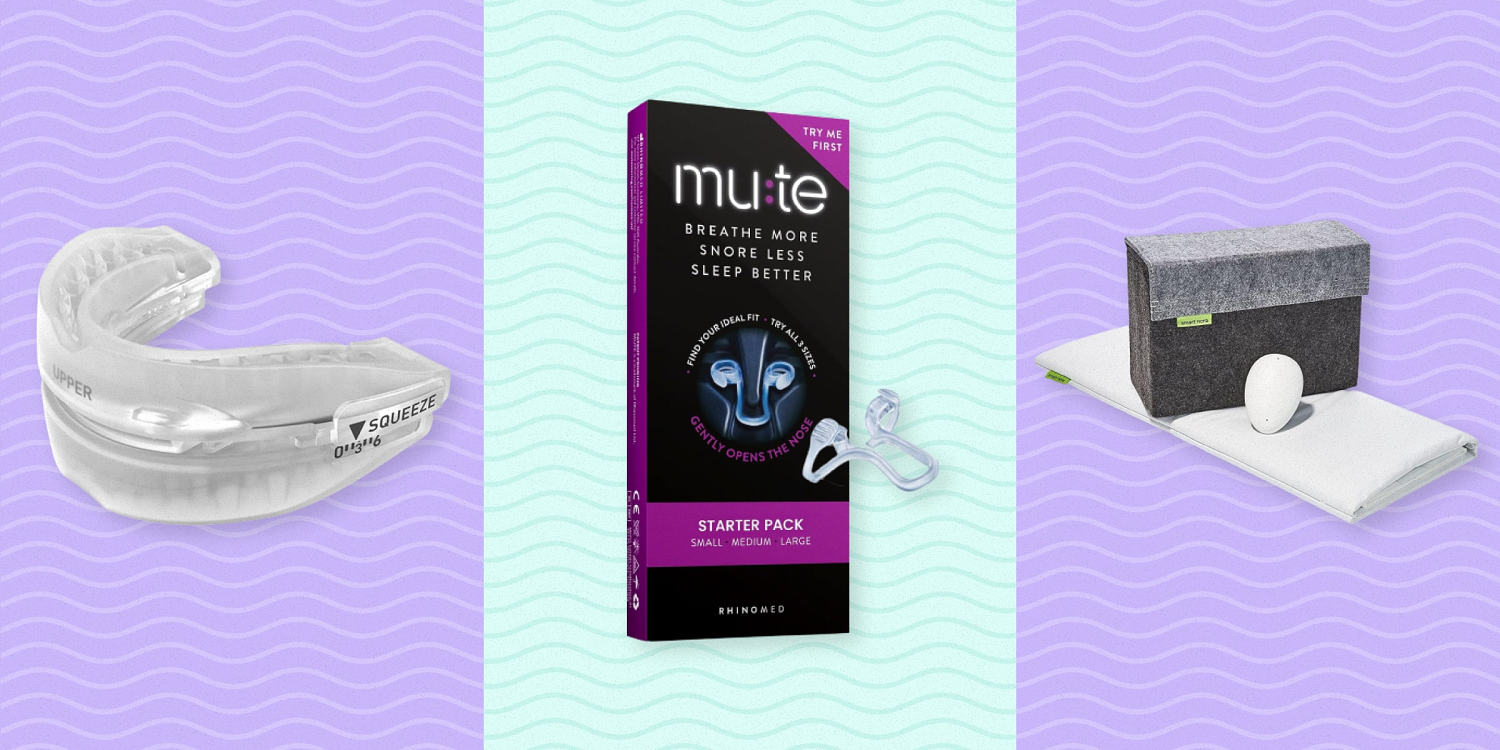
These look like heavy-duty sports mouthguards. They work by physically locking onto your upper and lower teeth, then forcing your lower jaw forward by anywhere from 5 to 10 millimeters. Because your tongue is attached to your lower jaw, moving the jaw forward pulls the tongue away from the back of your throat. It widens the airway.
Data published in the Journal of Thoracic Disease confirms that these devices significantly reduce snoring and daytime sleepiness. In fact, for people with mild to moderate obstructive sleep apnea, a good mouthguard performs comparably to a heavy CPAP machine because people actually use it.
You have two routes here:
- The Boil-and-Bite Route: Brands like SnoreRx Plus allow you to soften the plastic in hot water and mold it to your teeth at home. They cost around $100 to $200. They are a great, affordable proof-of-concept.
- The Custom Dental Route: A sleep dentist takes a digital impression of your mouth and creates a medical-grade, bespoke appliance. It costs closer to $1,500, but it fits perfectly, lasts for years, and causes far fewer structural issues with your bite.
Yes, there are side effects. You will drool like a Saint Bernard for the first two weeks. Your jaw will feel stiff in the morning. Over several years, they can even subtly shift your teeth alignment. But if you want the snoring to stop by tomorrow night, this is your best bet.
The Naked Truth About Nasal Strips and Dilators
We have all seen the commercial where someone slaps a sticky band across the bridge of their nose and suddenly sleeps like a baby.
Breathe Right strips and internal metal dilators like the Rhinomed Mute do exactly what they advertise: they open up your nostrils. The Rhinomed Mute, for instance, can increase airflow through the nose by up to 38%.
That is fantastic if you have a deviated septum, seasonal allergies, or chronic congestion. If your snoring happens because you are struggling to pull air through your nose, forcing you to open your mouth, these will fix it.
But if you are an anatomical mouth-snorer whose airway collapses at the base of the tongue, nasal strips won't do a thing. Your nose will be wide open, and your throat will still be screaming. Try a simple test: close your mouth and try to fake a snore through your nose. Now open your mouth and make the same sound from your throat. If your real snore sounds like the second one, ditch the nasal strips.
Awaking Muscles with Electricity
The newest tech category skips the mechanical barriers entirely. Devices like the FDA-cleared eXciteOSA take a completely different angle. Instead of wearing something while you sleep, you use it while you are wide awake.
It is a mouthpiece equipped with electrodes. You pop it in for 20 minutes a day for about six weeks. It delivers gentle electrical stimulation to your tongue muscles. Think of it as weightlifting for your mouth. By toning the oral muscles, the tongue becomes less likely to go completely slack and collapse into your airway when you pass out at night.
Clinical trials show measurable reductions in loud snoring time. It is expensive, and gagging or excessive salivation during the sessions is common, but it avoids the jaw pain associated with traditional mouthguards.
Positional Aids and Free Fixes That Actually Work
You don't always need to buy a gadget. Sometimes you just need to fight gravity.
When you sleep flat on your back, gravity pulls your jaw and tongue straight down into your breathing tube. Side sleeping fixes this for a massive percentage of chronic snorers.
- The Tennis Ball Trick: Sew a tennis ball into the back of a tight t-shirt. If you roll onto your back in your sleep, the discomfort forces you back onto your side without waking you up completely. It looks ridiculous, but it costs five dollars.
- Smart Pillows: Products like the Nitetronic Z6 use internal microphones to detect the exact frequency of a snore. When it hears you, internal air chambers inflate, gently shifting your head to the side until the noise stops. It works well, though stomach sleepers will hate the firm memory foam structure.
The Red Flags You Cannot Ignore
Here is a warning you need to take seriously. Snoring isn't always just an annoying habit. It is often the primary symptom of Obstructive Sleep Apnea (OSA)—a dangerous medical condition where you literally stop breathing dozens of times per hour. OSA strains your heart, spikes your blood pressure, and destroys your daytime energy.
If you try an over-the-counter mouthguard and it completely silences your snoring, but you still wake up feeling like a zombie, you haven't cured anything. You have just muted the alarm system.
Look out for these signs:
- Waking up gasping or choking for air.
- Unexplained morning headaches.
- Severe daytime fatigue despite getting eight hours of sleep.
- Your partner notices you actually stop breathing before making a loud snorting sound.
If any of those ring true, stop looking at retail gadgets. Schedule a real sleep study through your doctor.
Your Immediate Strategy
Stop buying cheap magnetic nose rings or chin straps that look like medieval torture devices. They do not work.
Start by identifying where the sound originates. If it is your nose, buy a pack of extra-strength nasal strips or an internal dilator today. If the sound is coming from your throat, buy an adjustable, FDA-cleared boil-and-bite mandibular advancement mouthpiece. Use it at its lowest setting for four nights to let your jaw adapt, then incrementally advance it until the noise stops. If the jaw pain doesn't subside after two weeks, pack it up and see a sleep dentist for a custom-molded medical device.