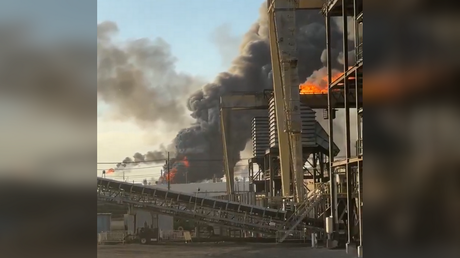
The sky over the Texas Gulf Coast isn't falling; it’s just venting.
When a refinery goes "boom" and the local news anchors start rehearsing their somber faces, the narrative is always the same: corporate greed, aging infrastructure, and a community held hostage by the Big Oil boogeyman. It’s a tired script. It’s also wrong. If you want to understand why these facilities occasionally turn into Roman candles, you have to stop looking at the fire and start looking at the regulatory and economic straightjackets we’ve forced them into.
The "shelter in place" order is the ultimate PR security blanket. It keeps the public terrified and the lawyers busy. But the real tragedy isn't the explosion itself. It’s the fact that we’ve made it nearly impossible to build the modern, hyper-efficient plants that wouldn't explode in the first place.
The Myth of the "Aging" Deathtrap
Critics love to point at the age of Texas refineries as if a 50-year-old steel tower is a ticking time bomb. This is a fundamental misunderstanding of chemical engineering. A refinery isn't a 1974 Chevy Nova rotting in a field. It is a living, breathing organism of constant parts replacement.
The problem isn't age; it's complexity creep.
Every time a new regulation is slapped onto an existing facility, engineers have to "bolt on" a solution. You end up with a Frankenstein’s monster of sensors, bypass valves, and redundant systems that eventually stop talking to each other. I’ve walked the catwalks of these facilities. I’ve seen control rooms where the "safety" upgrades are so convoluted that they actually mask the root cause of a pressure spike until it’s too late.
We don't have an aging infrastructure problem. We have a permit-induced stagnation problem. Because we won't allow a single new "greenfield" refinery to be built from the ground up with 2026-era safety automation, we force companies to keep patching the old ones. It’s like trying to turn a typewriter into a MacBook by adding more keys. Eventually, something snaps.
Why Your "Safety First" Policy is Killing People
Here is the truth that will get me banned from the next ESG conference: The obsession with "zero-risk" environments is exactly what causes catastrophic failures.
In a high-pressure, high-heat environment, you need operators who are intimately familiar with the "feel" of the plant. But the industry has pivoted to a philosophy of total automation. We’ve replaced seasoned veterans who could smell a leaking seal from three decks away with 22-year-olds staring at iPad screens.
When the software fails—and it always fails—the humans have no idea how to fly the plane manually.
The Automation Paradox
- Over-reliance on sensors: Sensors fail in caustic environments. If your safety protocol assumes the sensor is always right, you’re flying blind the moment a $50 thermocouple corrodes.
- Alert fatigue: A modern refinery control room triggers thousands of "priority" alarms a day. When everything is an emergency, nothing is.
- The "Paper Safety" Trap: Companies spend millions on safety audits and compliance paperwork to satisfy insurers. This creates a "checked box" culture where looking safe on a spreadsheet is more important than actually being safe on the floor.
I’ve seen billion-dollar firms spend three months debating the color of a walkway stripe while ignoring a vibrating compressor that everyone on the night shift knew was about to go. That’s not a lack of money. That’s a lack of backbone.
The Shelter-in-Place Theater
When the sirens go off in Deer Park or Port Arthur, the "shelter in place" directive is issued instantly. It’s a massive liability shield. By telling everyone to stay inside and tape their windows, the corporation and the local government shift the burden of "safety" onto the citizen.
If you get a lungful of particulates, they can ask: "Well, did you follow the sheltering protocol?"
The reality is that most of these fires are localized. The "toxic cloud" is often just carbon soot—nasty, sure, but not the instant-death vapor the media portrays. By over-hyping the danger of every flare-up, we desensitize the public. It’s the Boy Who Cried Wolf, played out in the petrochemical corridor.
When a truly dangerous event happens—like a hydrofluoric acid leak—the public treats it with the same casual annoyance as a standard tank fire. We are over-regulating the minor stuff and under-preparing for the "Black Swan" events.
Stop Blaming the Shareholders
The "greedy oil exec" trope is lazy. Investors actually hate explosions. They’re expensive, they destroy assets, and they tank the stock price for a quarter.
The real culprit is the unholy alliance between NIMBYism and environmental litigation.
If we wanted the safest refineries in the world, we would build them today. We have the tech. We have the materials science. We have the AI-driven predictive maintenance models that can forecast a pipe failure weeks in advance. But no one will give you the permit.
Instead, we keep the "zombie plants" running. We run them at 95% capacity because the demand for plastic, fuel, and fertilizer isn't going anywhere, even if you drive a Tesla. When you run a 40-year-old system at redline levels for a decade because you aren't allowed to build a replacement, physics eventually wins the argument.
The Brutal Reality of Energy Density
Everyone wants to talk about "transitioning" away from these sites. That’s a fantasy. Even in a world dominated by renewables, the chemical feedstocks produced in these Texas "bombs" are what make your solar panels and wind turbine blades possible.
You cannot have a modern civilization without high-heat, high-pressure molecular cracking.
The choice isn't between "refineries" and "no refineries." The choice is between:
- New, efficient, safe facilities that we refuse to permit.
- Old, patched-together relics that we force to stay open.
By choosing option two, we are effectively voting for more explosions. We are choosing the fire.
How to Actually Fix the Texas Coast
If we were serious about safety, we would stop the litigation-industrial complex from blocking modern upgrades. We would recognize that a newer, larger, more efficient plant is infinitely safer for the community than three small, struggling ones.
We would also stop the "safety culture" of endless meetings and return to a culture of mechanical integrity.
- Fire the consultants: Most safety consultants haven't turned a wrench in twenty years. They sell "mindset" and "alignment." You don't need alignment; you need a metallurgical analysis of your high-pressure steam lines.
- Incentivize "Near-Miss" Reporting: Right now, reporting a minor mistake can get an operator fired or a site fined. This drives the truth underground. You want your employees to scream about the small stuff before it becomes a crater.
- Legalize New Construction: Give companies a fast-track permit if they agree to decommission two old units for every new one they build.
The "lazy consensus" says we need more inspectors and higher fines. I’m telling you we need more steel and fewer lawyers.
Until we stop treating the petrochemical industry like a shameful secret and start treating it like the vital, high-performance infrastructure it is, the Texas coast will keep glowing at night. And it won't be because of greed. It will be because we were too "safe" to let them build something better.
The next time you see a plume of black smoke over Houston, don't blame the fire. Blame the person who signed the permit that forbade the upgrade.
The fire is just the inevitable result of trying to hold back the pressure of reality.
Turn off the news. Un-tape your windows. Demand a new refinery in your backyard. That’s the only way the explosions stop.