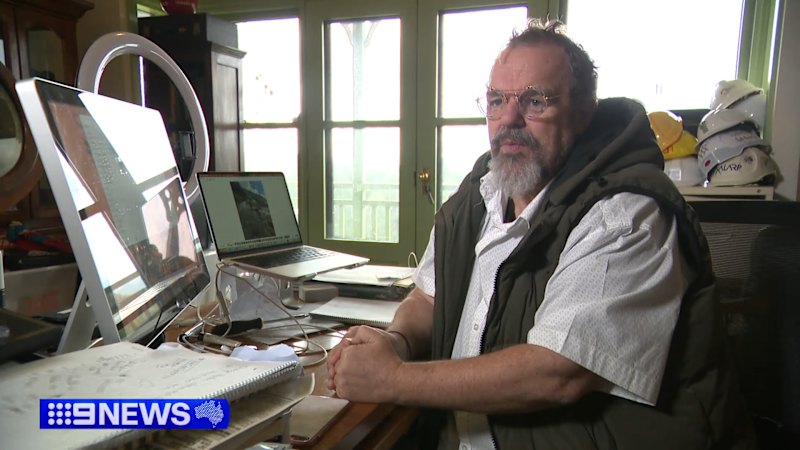
Every time a natural disaster hits the headlines, the media rushes to manufacture a specific type of hero. We get the standard, lazy narrative about the brilliant scientist stepping out of the academic bubble, packing a rock hammer, and charging into the Himalayan mud to save humanity.
When reports surfaced of a Melbourne geologist parachuting into the chaos of a devastating Nepal flood rescue, the internet swooned. It fits the cinematic trope. The ivory tower meets the rushing river. The brilliant academic swooping in to read the rocks and save the day.
It is a comforting fairy tale. It is also completely backwards.
I have spent two decades looking at how emergency response actually operates on the ground, and I have watched millions of dollars flow into symbolic academic deployments while local infrastructure crumbles. We treat geologists like action heroes during climate crises because we desperately want to believe that intellectual prowess can outsmart gravity and cubic meters of surging water.
It cannot. And romanticizing academic intervention during an active flash flood is actively dangerous.
The Fatal Flaw of Academic Heroism
Let us look at what a geologist actually does. Their training is historical. They read deep time. They look at strata, tectonic plates, and sediment loads that accumulated over millennia. They are phenomenal at telling you why a slope collapsed thirty years ago or why a valley is inherently unstable over a geological epoch.
Do you know what a geologist cannot do while a monsoon surge is tearing through a Himalayan village? They cannot calculate river discharge velocity in real-time fast enough to outrun a wall of water. They cannot perform swift-water rescues without specialized tactical training.
When we celebrate a geologist for assisting in a flood rescue, we conflate long-term earth science with short-term tactical logistics. It is the equivalent of calling in an astrophysicist to fix a flat tire because they understand rotational physics.
The Local Knowledge Vacuum
The lazy consensus in these news cycles always frames the foreign expert as the enlightened savior arriving to bring order to primitive chaos. This trope erases the only people who actually matter in the first twelve hours of a disaster: the locals.
Indigenous communities living along river basins in Nepal do not need a guy from Melbourne to tell them that the hillside is unstable. They have lived with seasonal monsoon volatility for generations. They possess empirical, generational knowledge of micro-topography, local eddy currents, and safe high-ground routes that no seismic sensor or satellite map can replicate in real-time.
When international media focuses on the visiting academic, the narrative steals oxygen from the indigenous mountain guides, local civil defense volunteers, and regional authorities who pull people out of the rapids before the first helicopter even warms up its engine.
We suffer from a chronic bias toward credentialism. If a person has a university prefix attached to their name, we assume their presence in a disaster zone is inherently more valuable than the farmer who has watched that specific river bend shift every single monsoon since childhood.
What We Should Be Funding Instead
If you care about saving lives in regions prone to glacial lake outburst floods and monsoon landslides, stop cheering for symbolic media stunts. Stop treating geologists like emergency rescue squads.
Geology has a vital role to play, but it happens months before the rain starts or years after the water recedes. Mitigation is unglamorous. It looks like boring zoning laws, reinforced retaining walls, telemetry sensors placed quietly upstream, and decentralized early-warning communication networks handed directly to village elders.
That kind of work does not make a great human-interest feature. You cannot easily package a spreadsheet of seismic telemetry into a heartwarming profile about a daring rescue. But it actually keeps people alive.
The next time a headline tells you about an academic swooping into a crisis zone to play the hero, do not applaud the spectacle. Ask why the local infrastructure was fragile enough to need them, and ask why we continue to value the narrative of the visiting expert over the survival instincts of the people who live there.
The mountain does not care about your degrees. It only cares about where you are standing when the slope gives way.


