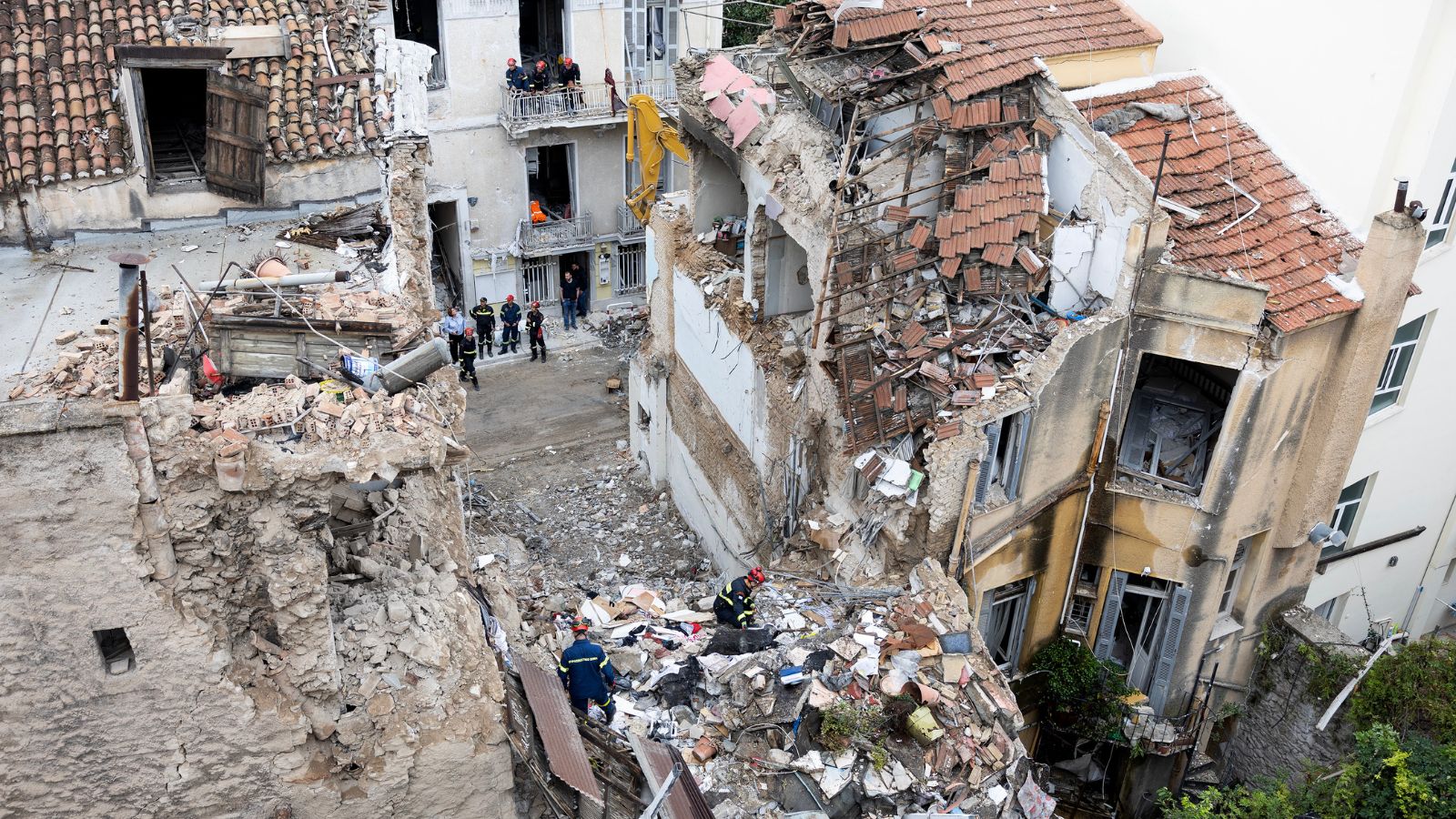
Another pile of rubble. Another set of body bags pulled from the grey dust of Athens. Another cycle of national shock followed by immediate, collective amnesia.
The standard news script rolls out with clockwork precision. Reporters stand before the gray-brown scar of a collapsed facade, microphones trembling slightly for effect. Politicians arrive in dark suits, faces carved into expressions of manufactured grief, promising swift investigations and tighter regulations. The public shakes its head, mutters about corrupt contractors, and waits for the next disaster to prove that nothing has changed.
It is comforting nonsense. It is a comforting narrative because it allows everyone—from municipal bureaucrats to property owners to the casual observer—to file the disaster away under the heading of a tragic, unforeseeable anomaly. A freak accident. An unfortunate alignment of bad luck and rogue actors.
Let us stop lying to ourselves.
Buildings do not wake up one morning and decide to pancake into the street. Concrete does not turn to powder by accident. Steel does not snap under normal load without a long, predictable chain of systemic failures preceding the snap. When six human beings are crushed to death beneath tons of masonry in a European capital, it is not a surprise. It is the mathematical output of a broken system that prioritizes speed, paperwork, and cost-cutting over the immutable laws of physics.
I have spent decades watching urban development from the inside. I have seen developers slice budgets on foundational reinforcement while praising their own architectural vision. I have watched municipal inspectors sign off on structural integrity reports from coffee shops without stepping foot inside the building. The rot is not hidden in the dark recesses of ancient history; it is stamped, signed, filed, and celebrated in city halls every single day.
To understand why buildings collapse, we must first dismantle the lazy consensus that governs modern urban infrastructure.
The Great Illusion of Regulatory Compliance
Ask any average citizen how buildings are kept safe, and they will point to building codes, municipal inspectors, and official permits. They imagine a rigorous gauntlet of engineering tests where cold, hard science dictates whether a structure stands or falls.
The reality is far more mundane and far more terrifying.
Modern building oversight is not an engineering safeguard; it is a bureaucratic insurance policy. The entire process is designed to protect municipalities and developers from legal liability, not to protect citizens from gravity. When a developer submits structural plans, they are evaluated by overworked municipal clerks who check boxes against administrative codes. Does the form have the right stamp? Yes. Are the fees paid? Yes. Does the contractor have a valid license? Yes.
Notice what is missing from that checklist: Empirical verification of material quality under actual load.
Inspectors rarely test the compressive strength of poured concrete on site. They rarely run ultrasonic tests on reinforcing steel to check for internal micro-fissures or corrosion. They rely on trust, self-reporting, and a mountain of bureaucratic paperwork that looks pristine on paper while the physical structure rots from the inside out.
When a building fails, the investigation always follows the same predictable script. Authorities discover that substandard materials were used, or that unauthorized alterations were made to a load-bearing wall on the ground floor to accommodate a new shopfront. Everyone acts shocked. Everyone points fingers.
Nobody admits the obvious truth: The inspection system is built to catch paperwork errors, not structural defects. If your safety protocol can be bypassed by a bribe, a forged certificate, or a contractor cutting corners to save five thousand euros, you do not have a safety protocol. You have a suggestion box.
The Economics of Deferred Decay
Athens is a city caught in a perpetual time warp between ancient glory and modern economic fragility. Much of the urban core is built on aging residential stock constructed during the rapid, frantic post-war construction booms of the mid-twentieth century.
Back then, speed was everything. Buildings went up fast, cheap, and without the benefit of modern material science or rigorous oversight. Fast-forward fifty or seventy years, and those structures are reaching the end of their design lifecycles.
Enter the economics of deferred decay.
Maintaining an aging urban building is expensive. It requires stripping away plaster, inspecting internal ties, reinforcing footings, and replacing degraded structural elements. It is messy, invasive, and yields zero immediate financial return for property owners.
In a stagnating economy with high taxation and low property liquidity, owners face a brutal choice: Spend tens of thousands of euros on structural maintenance that nobody can see, or slap a fresh coat of paint on the exterior, rent out the units, and hope the walls hold together for another decade.
For decades, the math has favored hope over maintenance.
When property values fluctuate and profit margins shrink, structural integrity is the first thing that gets cut from the budget. Landlords ignore the damp spots on the ground floor ceiling. They ignore the hairline cracks snaking up the stairwell. They tell themselves that concrete is permanent, eternal, indestructible.
Concrete is none of those things. Concrete is a dynamic, porous composite material that breathes, absorbs moisture, carbonates over time, and reacts violently to corroding internal steel rebars. Water gets in. Rust forms. Rust expands to six times the volume of steel. The internal pressure shatters the concrete from within.
By the time the damage becomes visible to the naked eye on the exterior facade, the structural core has already hollowed out. A building does not collapse when it gets old; it collapses when the people inside refuse to pay the tax that gravity collects every single day.
The Myth of the Freak Accident
Media coverage of structural collapses relies heavily on language that obscures responsibility. We hear about sudden failures, unexpected tremors, freak occurrences, and tragic acts of fate.
This vocabulary is dangerous because it treats structural engineering like a weather forecast—something unpredictable that happens to us rather than something we engineer.
Physics does not do freak accidents.
When a bridge fails, when a roof caves in, when a residential block pancakes into the street, it is the result of a precise, calculable accumulation of physical stress exceeding ultimate material strength. Every single variable can be measured: the grade of the steel, the mix ratio of the aggregate, the load distribution across floor plates, the seismic history of the region.
When six people die in Athens, it is because human beings decided to ignore those variables to save time, money, or face.
Imagine a scenario where every single structural failure is investigated not as a civil dispute between insurance companies, but as a case of criminal negligence on the part of everyone who touched the blueprint, the pour, and the inspection stamp. Watch how quickly the quality of construction skyrockets when engineers and municipal officials face mandatory prison sentences for structural incompetence instead of a polite reprimand and a quiet retirement.
We do not do this because it would expose the rot at the center of our urban planning models. It would reveal that our cities are held together by luck and legal loopholes rather than engineering excellence.
What Actually Needs to Change
If we are serious about stopping the body count, we need to completely scrap the current paradigm of urban safety oversight. And yes, embracing this shift means admitting that our current approach is an abject failure.
First, we must digitize and decentralize structural monitoring. We live in an era of cheap internet-connected sensors. We can monitor acoustic emissions, micro-vibrations, tilt, and moisture levels in real time for a fraction of the cost of a single major reconstruction project. Every building over a certain age in high-density seismic zones should be fitted with baseline sensor arrays that flag internal stress before a crack even appears on the plaster.
Second, we must separate municipal building departments from local political influence. When building inspectors answer to local politicians who rely on real estate developers for campaign contributions, safety always loses to development speed. Inspectors should be independent federal or regional auditors with absolute authority to red-tag any building immediately, backed by law enforcement that answers to no local mayor or vested interest.
Third, we must shatter the cult of corporate anonymity in real estate. When a building collapses, ownership is often hidden behind layers of shell companies, offshore trusts, and fragmented family estates designed specifically to shield individuals from liability. That veil must be pierced. If a building kills someone due to deferred maintenance, the ultimate beneficial owners must face direct asset seizure and criminal prosecution. Make property ownership carry personal physical accountability, and watch how fast landlords start checking their foundations.
The Cost of Comfort
The bodies recovered from the rubble in Athens are tragic. But the real tragedy is that we will mourn them for a week, forget them by next month, and return to the exact same system that killed them.
We prefer the comforting lie of the freak accident because the alternative requires us to rebuild our entire approach to how we construct, inhabit, and govern our cities. It requires admitting that our paperwork-heavy, accountability-free urban management model is a lethal fraud.
Gravity does not care about your permits. Gravity does not care about your municipal budget shortfall or your bureaucratic red tape. Gravity waits patiently for us to cut one too many corners, and then it collects its due in blood and dust.
Stop blaming bad luck. Start demanding competence. The walls are already weakening.


