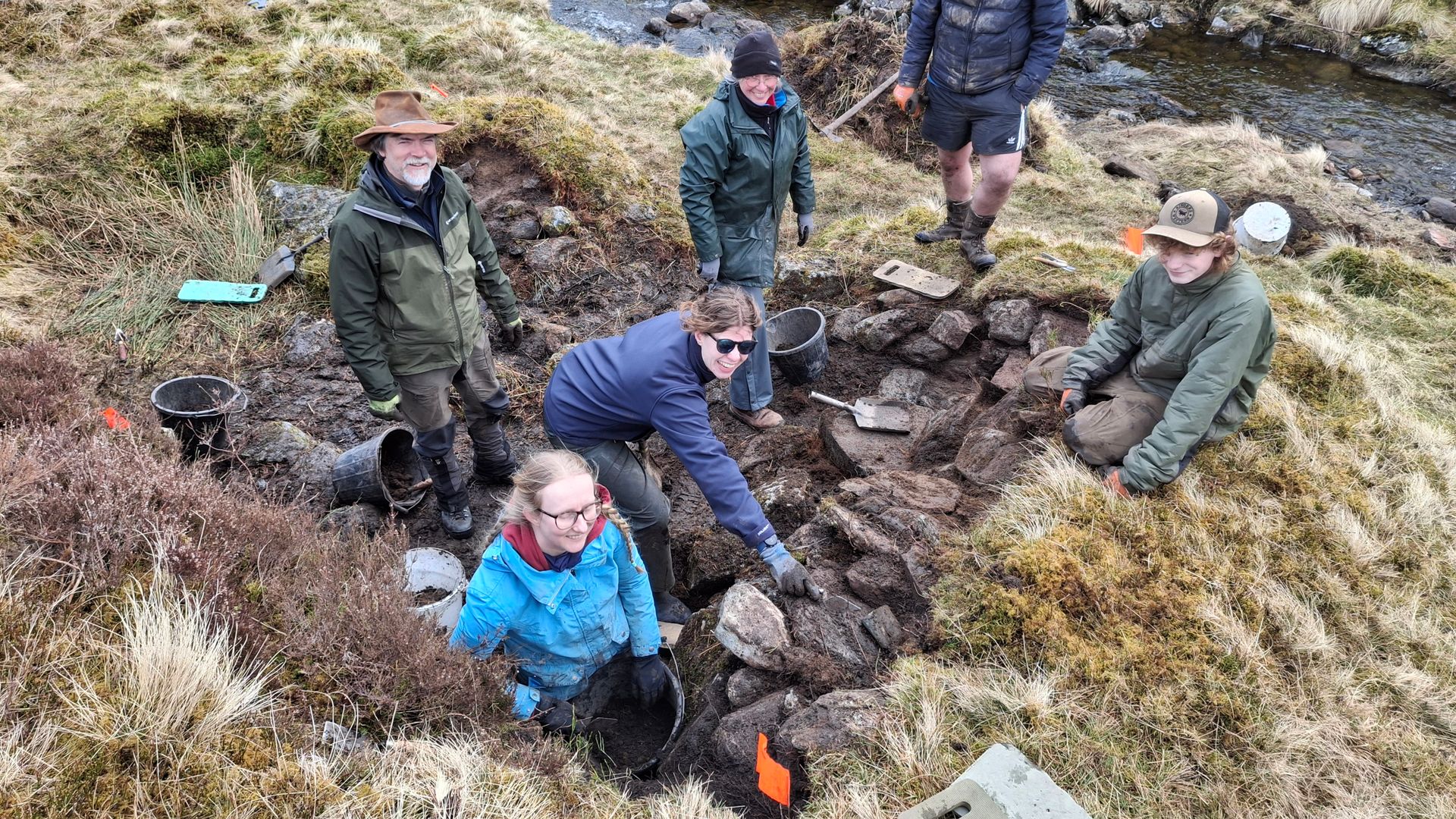
The recent "discovery" of an eighteenth-century illicit whisky still by a group of archaeologists is being framed as a quaint victory for heritage. The media wants you to see a story of rugged highlanders outsmarting the taxman in a misty glen. They are selling you a fairy tale of rebellion.
They are wrong.
What these archaeological digs actually reveal isn't a "secret" past. It is the birthplace of the modern global spirits industry. By labeling these sites as mere "illicit" curiosities, we ignore the fact that these bootleggers were the venture capitalists and chemical engineers of their era. They didn't just make booze; they perfected the supply chain, the distillation curve, and the branding that allows a bottle of Macallan to fetch five figures today.
The Myth of the Small Time Operation
Most coverage focuses on the "primitive" nature of these sites. Archaeologists point to a few broken shards of glass and a stone hearth and call it a desperate operation. That is a fundamental misunderstanding of the scale involved.
By the late 1700s, "illicit" distillation was not a hobby. It was the backbone of the Scottish rural economy. In 1787, it was estimated that over 500,000 gallons of spirits were produced illegally in the Highlands alone. This wasn't a guy in a hut. This was a decentralized factory system.
When you look at a site like the one recently unearthed in the Cairngorms, don't see a crime scene. See a startup. These distillers were forced to innovate because they couldn't rely on the heavy, inefficient copper pots used by the "legal" (and often terrible) lowland distilleries. They used smaller stills, which allowed for more surface area contact and a faster, cleaner "wash" to spirit conversion.
The illicit distillers were the ones who discovered that slow distillation in small batches produced a superior product. The government-sanctioned distilleries of the time were producing rotgut—industrial-grade grain spirit that was barely potable—because the tax laws of the era (specifically the Wash Act of 1784) incentivized speed over quality.
The Quality Gap the Taxman Created
The standard narrative suggests that legal whisky won because it was safer or better regulated. History tells a different story. Legal whisky in the 18th century was garbage.
Because taxes were levied on the capacity of the still and the time it was in use, legal distillers raced to finish their runs. They pushed their equipment to the breaking point, scorched the grains, and produced a fiery, metallic liquid.
The "smugglers," meanwhile, had all the time in the world. They hid in the hills, used peat fire (because it was smokeless and didn't alert the excise officers), and inadvertently created the flavor profile that defines Scotch today. They weren't trying to be "artisanal." They were trying not to get caught. In doing so, they pioneered the very peat-heavy, slow-distilled character that modern marketing departments now spend millions to "recreate."
Archaeology Is Looking at the Wrong Things
Archaeologists spend months brushing dirt off a stone foundation, looking for "evidence of illegality." This is a waste of time. The evidence isn't in the stones; it’s in the chemical evolution of the spirit.
If we want to understand these sites, we need to stop looking at them through the lens of criminology and start looking through the lens of thermodynamics. These "illicit" sites were often strategically placed near specific thermal vents or water sources that allowed for superior cooling of the worm tub (the coil where the vapor turns back to liquid).
The Competitive Edge of the Outlaw
| Feature | Legal Distiller (1780s) | Illicit Distiller (1780s) |
|---|---|---|
| Goal | Volume and Speed | Quality and Stealth |
| Tax Burden | Massive, per gallon | Zero |
| Fuel | Coal (mostly) | Peat (smokeless) |
| Result | Harsh, unaged spirit | Smooth, peat-infused spirit |
The "outlaws" won the taste test so convincingly that King George IV famously demanded illicit Glenlivet whisky during his visit to Edinburgh in 1822. Think about that: the head of state, the man who signed the laws making the whisky illegal, refused to drink the "legal" stuff because the quality was so vastly inferior.
The Fraud of Modern "Heritage" Branding
Every time a major distillery releases a "Founder’s Reserve" or a "Smuggler’s Series," they are sanitizing a history of brutal economic warfare.
The 1823 Excise Act didn't "save" whisky. It killed the independent innovator. It forced these small-scale, high-quality producers to either go corporate or go bust. When we celebrate the discovery of an old still today, we are looking at the ruins of a defeated competitor.
The real tragedy isn't that these stills were "illegal." It’s that we’ve traded that decentralized, quality-focused model for a sanitized, corporate version that uses the aesthetic of the smuggler to sell mass-produced liquid.
Stop Asking "Was it Hidden?"
People always ask how they kept these sites secret. They didn't.
In many Highland communities, the local minister, the doctor, and the blacksmith were all in on it. It wasn't a secret; it was a community-wide middle finger to a Westminster government that didn't understand the geography or the culture of the north.
When an archaeologist finds a still today, they aren't finding a "hidden" gem. They are finding a monument to a community that refused to be taxed into poverty.
The Actionable Truth for the Modern Enthusiast
If you want to honor the legacy of the illicit still, stop buying bottles based on the "established since" date on the label. Most of those dates are marketing fluff anyway.
Look for the "disruptors" of today. Look for the small-scale distillers who are messing with grain types, floor maltings, and non-traditional cask finishes. Those are the spiritual descendants of the men and women who ran the stills in the 1700s.
The people who ran those "illicit" stills weren't looking back at the past; they were looking at how to maximize their yield and flavor with the tools they had. They were the tech bros of the glen. If they had access to modern refractometers and stainless steel, they would have used them in a heartbeat.
We need to strip away the romanticism. Stop treating these archaeological sites like holy shrines to a simpler time. They were high-stakes, high-reward industrial hubs.
The "illicit" label was just a matter of paperwork. The liquid was the only thing that was real.
The next time you see a headline about a "forgotten still," remember that it wasn't forgotten by the people who mattered. It was buried by a legal system that couldn't compete with a superior product.
Stop looking for ghosts in the heather. Start looking at the ledger.
Distillation is, and always has been, an act of defiance against the mediocre. The archaeologists found a pile of stones; I see the remains of a revolution that won the war but lost the branding rights.
Stop drinking the story. Drink the spirit.