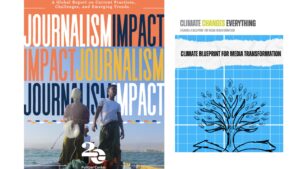
The media industry is drowning in a self-inflicted delusion. For years, executive panels, donor-funded foundation reports, and academic white papers have wrung their hands over the so-called impact crisis in journalism. The lazy consensus goes something like this: newsrooms publish brilliant investigative reporting, but because they fail to translate intention into action, the public remains passive. Audiences consume the outrage, scroll past the paywall, and the status quo chimes on uninterrupted.
The standard prescription is a predictable liturgy of buzzwords. News organizations are told to build better engagement funnels, launch impact producer roles, track behavioral metrics, and design interactive dashboards to prove their stories altered public policy.
It is a comforting fantasy. It allows editors to believe that their reporting failed not because it was boring, inaccessible, or commercially miscalculated, but because the connective tissue between truth-telling and societal transformation snapped.
I have watched legacy publishers and digital start-ups alike burn millions of dollars chasing this phantom metric of impact. They hire impact directors, build complex theory-of-change models borrowed from corporate philanthropy, and measure success by whether a city council member tweeted angrily about an investigation.
Here is the brutal truth nobody in the media bubble dares to utter out loud: journalism's impact crisis does not exist because transmission fails. It exists because the audience does not actually want their habits disrupted, and publishers do not genuinely want to risk their revenue models to force the issue.
The Myth of Passive Absorption
The foundational error of the impact movement is the belief that citizens are empty vessels waiting to be filled with righteous indignation. Hand them a 5,000-word exposé on zoning fraud, the theory runs, and they will march down to city hall with pitchforks.
This ignores basic human psychology. People do not use news to coordinate political revolutions. They use news to validate existing tribal identities, find entertainment, or calm anxiety. When a piece of investigative reporting lands with a thud, it is rarely because the distribution strategy lacked a community outreach phase. It is because the reader processed the information, weighed it against the cost of disrupting their personal comfort, and decided to do nothing.
Blaming an impact crisis on a lack of operational translation is a clever defense mechanism. It lets journalists pretend their work is inherently potent, absolving them of the hard work of writing stories that matter to people outside their immediate demographic bubble.
Imagine a scenario where a mid-sized investigative outlet spends six months uncovering systemic corruption in a regional public transit authority. They publish the multi-part series, syndicate it to local newsletters, host a community town hall, and track every click. Two weeks later, the transit director receives a mild reprimand behind closed doors, no ridership changes, and the outlet writes a self-congratulatory retrospective on their impact scorecard.
That is not impact. That is a feedback loop designed to make grant-makers feel good about their return on investment.
Why Publishers Love the Impact Trap
Foundations love funding impact frameworks because it gives them quantifiable metrics to put in annual reports. Editors love it because it shifts the burden of failure away from the quality and relevance of the writing and onto the mechanics of distribution.
If a story fails to move the needle, the standard excuse is that the impact strategy lacked funding or organizational alignment. Nobody ever raises their hand and suggests that perhaps the reporting was too inside-baseball, too wrapped in journalistic jargon, or completely disconnected from the economic anxieties of the people living through the crisis.
True accountability journalism is expensive, lonely, and terrifying for commercial entities. Real impact means burning advertiser relationships, alienating corporate sponsors, and alienating readers who prefer their comforting daily biases left unchallenged. When publishers talk about wanting impact, they usually mean they want the moral high ground of investigation without the collateral damage of market retaliation.
The Economics of Apathy
Let us look at the incentives. Modern digital journalism runs on attention economics, programmatic ad impressions, and subscription retention. Outrage drives clicks, clicks drive ad views, and subscription models thrive on the steady drip of existential dread.
None of these revenue streams reward actual, structural societal change. In fact, if a piece of journalism completely solved a systemic problem, it would eliminate the ongoing crisis that sustains the newsroom's business model. A news outlet that successfully cures local political corruption overnight has just written itself out of a recurring news cycle.
This perverse incentive structure explains why media organizations invest heavily in impact measurement tools while cutting investigative budgets. Tracking an impact metric is cheap. Doing the unglamorous, multi-year reporting required to unseat entrenched power costs money that boards refuse to allocate.
The Uncomfortable Alternative
If journalism wants to escape this cycle of hand-wringing, it must abandon the conceit that its job is to manage society's moral compliance.
The role of the press is not to manufacture public action. It is to record reality with absolute clarity, distribute it without fear or favor, and let the chips fall where they may. When journalists start acting as social engineers or community organizers with a designated impact quota, they compromise their primary function. They stop being watchdogs and start becoming lobbyists with a typewriter.
Stop hiring impact producers. Stop pretending that a well-crafted engagement funnel can bridge the gap between human apathy and structural reform. Pay your reporters better, let them ignore what the audience wants to hear, and accept that most of the time, your work will be ignored by the people who need to read it most. That is not a crisis. That is just reality.