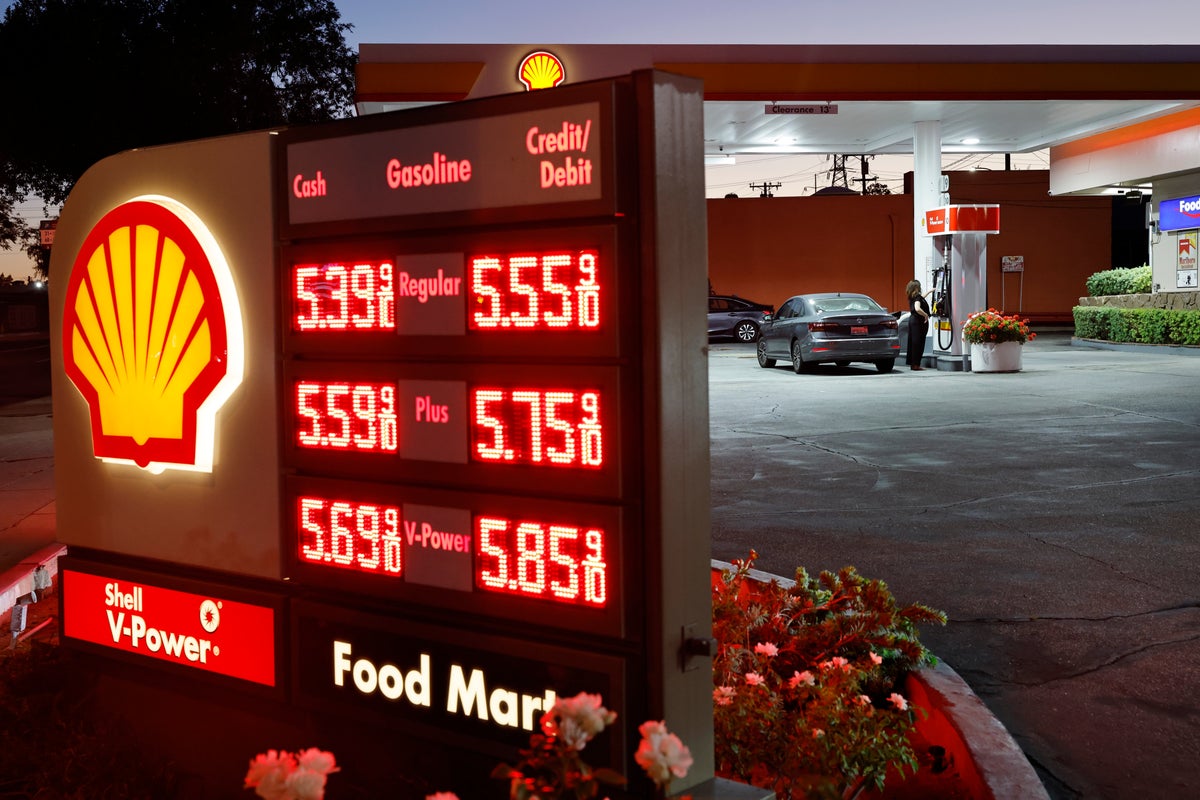
Oregon is panicking because its precious gas tax is dying. The hand-wringing in Salem over "potholes" and "budget shortfalls" is a masterclass in missing the point. The media narrative suggests that a transition to electric vehicles (EVs) is a tragic accident ruining our infrastructure.
That is a lie. The gas tax was always a flawed proxy for usage, and its collapse is the best thing that could happen to American transit.
We have spent seventy years subsidizing the most inefficient mode of transport known to man: the single-occupancy vehicle. Now that the funding mechanism is evaporating, the "status quo" crowd wants to patch the hull of a sinking ship. They are asking how to replace the revenue. They should be asking why we are still building roads we can’t afford to maintain.
The Myth of the Fair Share
The common argument is that EV owners are "freeloaders" because they don't pay at the pump. This logic is a dinosaur. The gas tax was never a fair user fee; it was a consumption tax on inefficiency.
If you drive a 1998 rusted-out pickup that gets 12 miles per gallon, you pay significantly more to fix the road than someone in a modern hybrid, despite both vehicles causing roughly the same amount of wear and tear. The system was broken long before the first Tesla rolled off the assembly line.
Worse, the gas tax hides the true cost of driving. According to data from the Tax Foundation, motor fuel taxes and user fees cover only about half of what we spend on highways. The rest comes from general funds—meaning people who walk, bike, or take the bus are already subsidizing the guy in the SUV.
The Pothole is a Feature Not a Bug
Oregon Democrats are worried about a "pothole" in the budget. I say let the pothole exist.
When you subsidize a product, you get more of it. We have subsidized asphalt for decades, leading to urban sprawl that is fiscally unsustainable. Most American cities are built on a Ponzi scheme of infrastructure: developers build new roads, the city takes them over, and 20 years later, the city realizes the tax base from those low-density neighborhoods isn't enough to cover the repaving costs.
The "funding gap" isn't a revenue problem. It’s a geometry problem. We have too much road for too few taxpayers. Trying to "fix" the gas tax with a Road Usage Charge (RUC) or a VMT (Vehicle Miles Traveled) fee just extends the life of a failed urban design.
Why a VMT Fee is a Privacy Nightmare and a Bureaucratic Sinkhole
The proposed "fix"—charging people per mile driven—is the favorite child of the "well-actually" policy crowd. It sounds logical on paper. You drive a mile, you pay a cent.
In reality, it is a disaster. To implement a VMT fee accurately, you need one of two things:
- A government-mandated GPS tracker in every vehicle.
- An annual odometer audit that costs more to administer than the revenue it generates.
I have seen state agencies spend millions on "pilot programs" that prove exactly one thing: the administrative overhead of collecting a VMT fee is astronomical compared to the gas tax. With the gas tax, you collect from a few hundred distributors. With a VMT fee, you are chasing millions of individual drivers. It is a logistical hall of mirrors.
The Heavy Vehicle Lie
If we actually cared about "fairness" in road wear, we wouldn't be talking about cars at all.
Road damage follows the Fourth Power Law. This engineering principle states that the damage caused by a vehicle is proportional to the fourth power of its axle weight.
$$D = \left( \frac{W_1}{W_2} \right)^4$$
If an 80,000-pound semi-truck has an axle weight 10 times that of a passenger car, it doesn't do 10 times the damage. It does 10,000 times the damage.
Yet, our tax structures rarely reflect this reality. We are nickel-and-diming a schoolteacher in a Nissan Leaf while the massive logistics fleets that actually pulverize the asphalt pay a fraction of their externalized costs. If Oregon wants to fix its roads, it should stop taxing movement and start taxing weight.
The Uncomfortable Truth About Congestion
We don't have a funding problem. We have a space problem.
Adding lanes to "fix" traffic is like loosening your belt to "fix" obesity. It is called Induced Demand. When you make it easier to drive, more people drive. The road fills up again. The cycle repeats.
The gas tax is a blunt instrument that doesn't account for when or where you drive. A gallon of gas burned at 3:00 AM on a rural highway costs the system almost nothing. A gallon of gas burned at 5:00 PM on I-5 in Portland costs the system thousands in lost productivity, pollution, and emergency services.
The "contrarian" solution that no politician has the spine to implement? Dynamic Congestion Pricing.
Stop Fixing and Start Pricing
If you want to manage a scarce resource—which road space is—you price it based on demand.
Instead of a flat gas tax or a clunky VMT fee, we should be using transponders to charge drivers for the space they occupy during peak hours. This isn't "punishing" drivers; it's giving them a choice. You want to use the premium lane at rush hour? You pay the premium price. You want to drive for free? Go at noon.
This would:
- Instantly eliminate the need for costly highway expansions.
- Provide a stable, digital revenue stream that doesn't care if you're burning gas or electrons.
- Incentivize businesses to shift hours and individuals to use transit.
The pushback is always "it hurts the poor." This is a classic straw man. The poor are already being hurt by a system that forces them to own, insure, and maintain a $15,000 depreciating asset just to get to a minimum-wage job. A transit system funded by congestion pricing on the wealthy is a far more progressive outcome than a "road for everyone" that nobody can actually afford to fix.
The Death of the Department of Transportation as We Know It
The current panic in Oregon is the result of "Agency Inertia." The ODOT (Oregon Department of Transportation) is built to build. They have engineers who want to pour concrete and planners who want to draw lines on maps.
They are terrified of a world where we stop growing the network.
But the "pothole" they are facing is actually a cliff. We are entering an era of "Infrastructural Triage." We cannot save every road. We should not save every road. Some rural highways should probably revert to gravel. Some urban arterials should be narrowed to accommodate bikes and buses that move 10 times the people in 1/10th the space.
The Actionable Pivot
If you are a policymaker or a taxpayer, stop asking "how do we replace the gas tax." Start asking:
- What is the minimum viable road network we can maintain without debt?
- How do we shift the tax burden to the 40-ton trucks actually breaking the pavement?
- Why are we subsidizing parking and sprawl while crying about a budget gap?
The gas tax isn't hitting a pothole. It is falling into a canyon of its own making.
Stop trying to bridge it. Let the old system die so we can finally build a transportation model that isn't based on 1950s physics and 1920s chemistry. The era of the "free" road is over. Pay up or get out of the way.