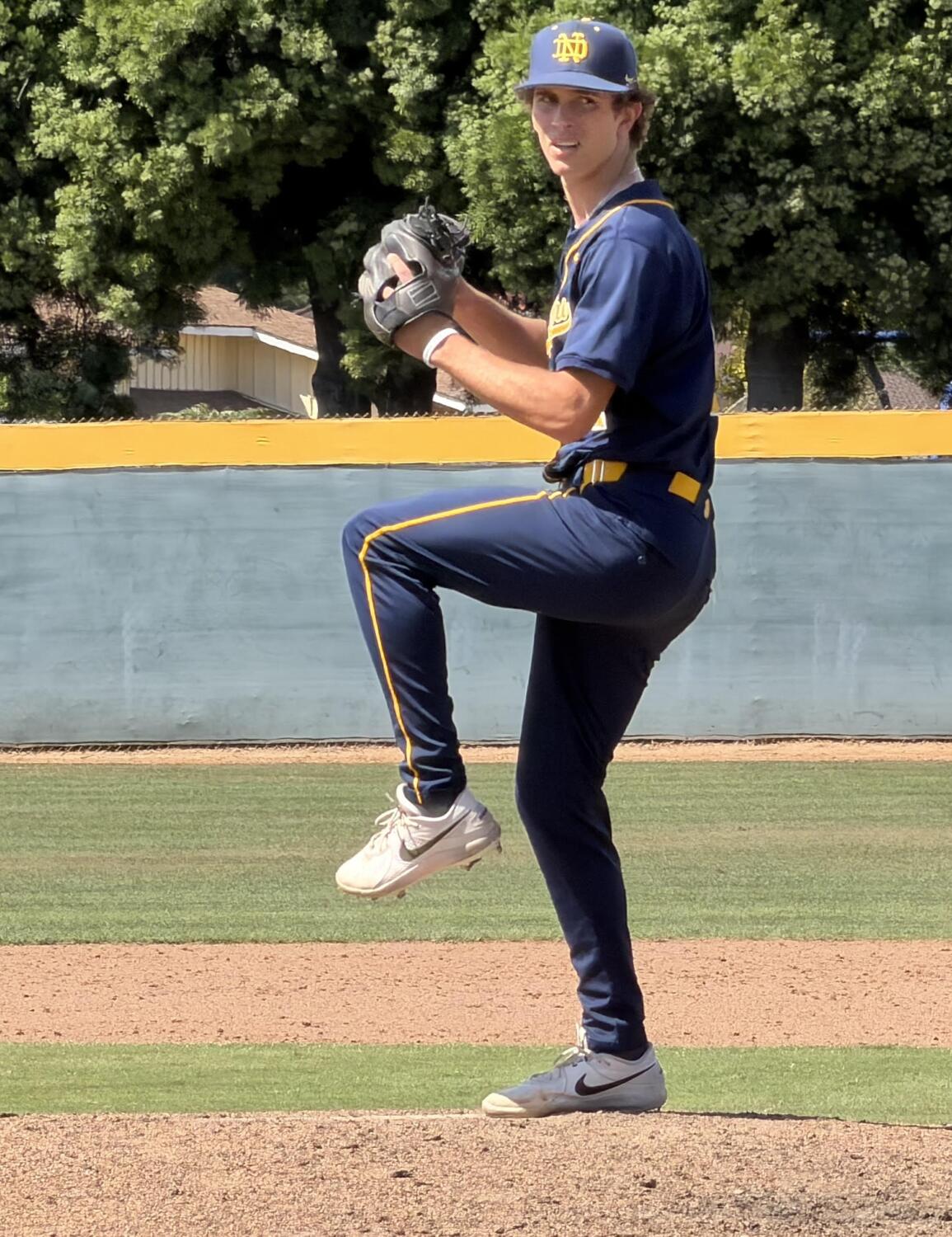
The headlines are currently screaming about Lachlan Clark’s shutout against Norco. The narrative is predictable. It’s the "David vs. Goliath" trope, the "ace finds his groove" story, and the standard high school sports worship of the "big win." Fans and scouts are tripping over themselves to celebrate a Sherman Oaks Notre Dame victory over the "No. 1 team in the state."
They’re missing the point.
If you think a single-game shutout in April tells you who the best team in California is, you’ve bought into a broken system of high school rankings that rewards scheduling over skill and momentum over mechanics. We need to stop treating prep rankings like the MLB standings and start seeing them for what they are: a marketing tool for private school recruitment and a psychological trap for teenage athletes.
The Myth of the "No. 1" Seed
High school baseball rankings are a house of cards. Unlike the pros, where 162 games provide a statistically significant sample size, or even college ball with its rigid conference structures, prep sports rankings are built on vibes and regional bias.
When a team like Norco is labeled "No. 1," it creates an artificial pedestal. When Clark shuts them down, the media treats it like a glitch in the Matrix. It isn’t. In baseball—especially at the high school level where wood bats are replaced by high-performance alloys—the variance is staggering.
- Sample Size: High school seasons are too short to determine true dominance.
- Arm Management: Top-tier teams often rotate pitchers to save "bullets" for the playoffs, meaning a "No. 1" team might not be throwing their best stuff on a Tuesday night.
- The Aluminum Factor: A single mechanical flaw in a pitcher's delivery is amplified by bats that turn fly balls into home runs.
I’ve sat behind home plate with scouts who yawn at shutouts. Why? Because they aren’t looking at the scoreboard; they’re looking at the $92$ mph fastball and the spin rate on the slider. A shutout against a top-ranked team often says more about the opposing hitters’ lack of discipline that day than it does about the pitcher’s inevitable greatness.
The Recruitment Industrial Complex
Why do we cling to these rankings so fiercely? Because they are the engine of the recruitment industrial complex. Sherman Oaks Notre Dame isn't just a school; it’s a factory. When a pitcher like Clark performs on this stage, the value of the "brand" increases.
We see this cycle every year. A private school pulls in elite talent from three counties away, climbs the rankings, and uses that "No. 1" or "Top 5" status to attract the next wave of eighth graders. The "roundup" articles in local papers serve as free brochures for these programs.
The "lazy consensus" says these wins are about "heart" and "grit." The reality is about resource allocation. When you have the best facilities, the best specialized coaching, and a roster of players who spend $10,000 a year on travel ball, a shutout isn’t an underdog story. It’s an expected return on investment.
Why the Shutout is a Distraction
A shutout is the most overrated stat in baseball. It’s a binary outcome that masks the process.
Imagine a scenario where a pitcher gives up zero runs but walks five batters and relies on three spectacular diving catches by his outfielders. Now imagine a pitcher who gives up three runs on solo homers but strikes out 12, walks zero, and maintains a consistent release point.
The box score rewards the first guy. Professional scouts and modern analysts reward the second.
By focusing on the "shutout of No. 1 Norco," we teach young players to value the result over the process. We encourage coaches to leave a 17-year-old in for 110 pitches just to "seal the win" and get the headline, potentially jeopardizing a rotator cuff for a trophy that will be covered in dust by September.
The Problem With Regional Dominance
California high school baseball is a fragmented mess of "sections" and "divisions." A No. 1 ranking in the Southern Section doesn't always translate to the best team in the state, let alone the country.
- Travel Fatigue: Top teams are often traveling for "showcase" tournaments that drain their bullpens.
- Scouting Reports: High school coaches rarely have the data to build a true shift or a pitch sequence plan against an opponent they see once a year.
- Psychology: The pressure of being "No. 1" is a weight that causes high schoolers to grip the bat too tight.
When Clark took the mound, he wasn't facing a juggernaut; he was facing a group of kids trying to defend a label they didn't ask for.
The Nuance of the Victory
Lachlan Clark is a talented pitcher. That is undeniable. But the "disruption" here is acknowledging that his performance shouldn't be framed as an upset. Notre Dame is a powerhouse. They have the pedigree.
The competitor article frames this as a shock to the system. It isn't. It’s a Tuesday in the Mission League. If we want to actually help these athletes, we need to stop the hyperbole. We need to stop acting like every win against a "No. 1" team is a miracle.
If you’re a parent or a player, ignore the rankings. They are designed to sell subscriptions and fill seats at private school open houses. Focus on the metrics that actually matter:
- First-pitch strike percentage.
- Exit velocity allowed.
- Swing-and-miss rate on secondary pitches.
Those numbers don't care if Norco is ranked No. 1 or No. 100.
The Danger of Peak Performance Too Early
There is a dark side to the "big win" narrative. I have seen countless "aces" burn out by May because they treated a regular-season game like Game 7 of the World Series.
The obsession with winning the "roundup" leads to:
- Overuse: Pitchers throwing through "soreness" to maintain the team's ranking.
- Specialization: Players being forced into one position too early to help the team win now, rather than developing as well-rounded athletes.
- Mental Burnout: The "No. 1" tag makes the game a job, not a sport.
The Norco loss is actually the best thing that could happen to them. It strips away the "undefeated" or "top-ranked" ego and allows them to focus on playing baseball again. For Clark and Notre Dame, the challenge is now avoiding the "hangover" of their own hype.
Stop Reading the Roundup
The sports media landscape is obsessed with these roundups because they are easy to write. You look at the scores, you see a big name lost, and you write a "shock" story. It requires zero deep analysis of the pitching mechanics or the tactical mistakes made by the losing team.
Did Norco struggle with Clark’s tunnelled delivery? Did they fail to adjust to a widening strike zone? The "roundup" won't tell you. It just gives you the score and a quote about "working hard."
We are doing a disservice to the complexity of the game by reducing it to these simplistic narratives. Baseball is a game of failure. Even the best hitters fail 70% of the time. Even the best teams lose 30% of their games.
Rankings are a flat-earth theory applied to a round-ball game.
Throw away the rankings. Stop celebrating the shutout as a definitive proof of superiority. Start looking at the mechanics, the data, and the long-term health of the players.
If you're still clicking on "Prep Sports Roundups" to find out who the best players are, you're already ten steps behind the people who actually run this game.