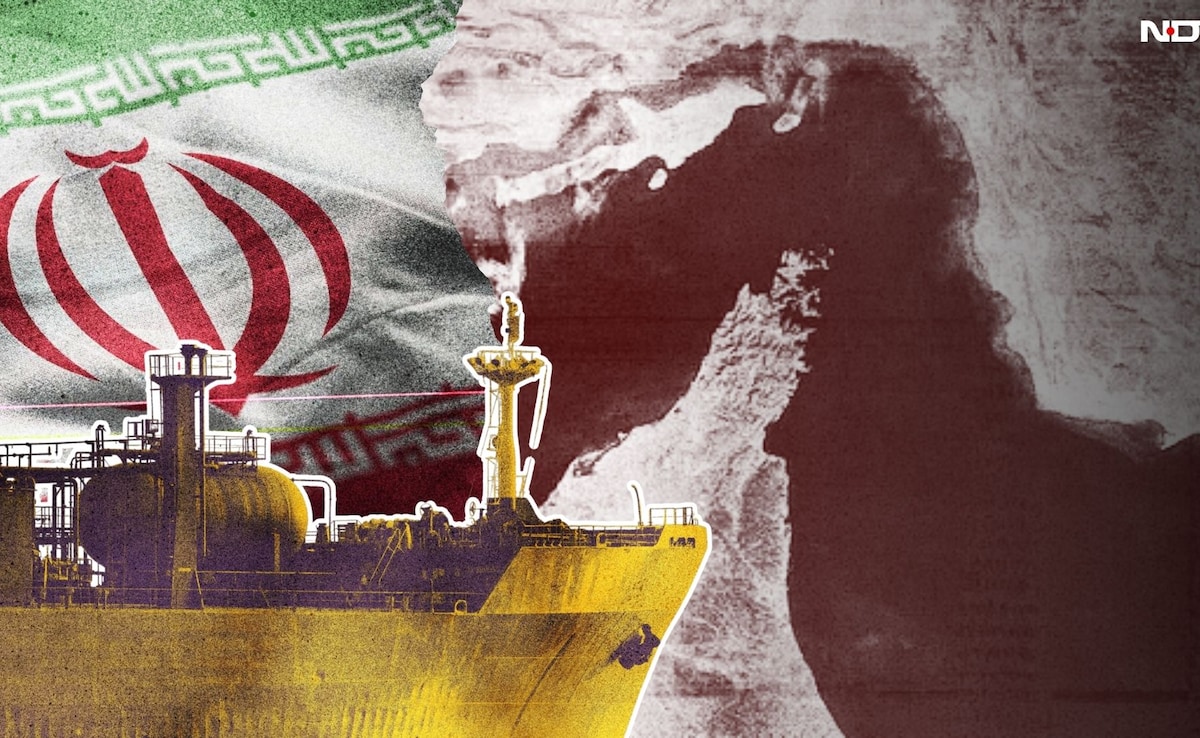
The narrative that the Strait of Hormuz is a "choke point" is a fairy tale told by analysts who haven't updated their mental maps since 1979. Every time an Iranian official breathes a word about "fresh conditions" for transit, the global media reacts with a Pavlovian twitch. Crude prices jump. Pundits speculate on a global shutdown. They are all chasing a ghost.
The Strait isn't a door that can be slammed shut. It's a sieve.
The "lazy consensus" suggests that Iran holds the world’s carotid artery. The logic follows that any disruption to the 20 million barrels of oil flowing daily through that 21-mile-wide gap would collapse the global economy. This is a fundamental misunderstanding of modern logistics, the psychology of naval warfare, and the shifting reality of energy independence.
The Illusion Of Control
When the Revolutionary Guards claim the Strait is "completely open" but with "conditions," they aren't flexing strength. They are projecting desperation. In naval terms, closing the Strait is an act of suicide, not a strategic victory.
If Iran were to physically block the passage—let’s say by sinking tankers or mining the depths—they don't just stop "Western" oil. They stop their own ability to eat. They stop their own exports. They invite a kinetic response from every major power including China, their primary customer.
The "conditions" mentioned in recent reports—demands for "legitimate" transit and sovereign oversight—are nothing more than bureaucratic theater. They are designed to create friction, not a blockage. Friction is a nuisance. A blockage is a war. There is a massive difference between a traffic jam and a demolished bridge.
The Math Of Redundancy
The common fear relies on the assumption that if Hormuz closes, the oil is trapped. That’s 20th-century thinking.
- The East-West Pipeline (Saudi Arabia): This 745-mile line can shift 5 million barrels a day directly to the Red Sea, bypassing Hormuz entirely.
- The Habshan-Fujairah Pipeline (UAE): This bypasses the Strait to the Gulf of Oman, handling 1.5 million barrels a day.
- Strategic Reserves: The U.S. and IEA members hold over 1.5 billion barrels in reserve.
When you do the math, a "closed" Strait doesn't mean zero oil. It means a temporary reshuffling of logistics. We have spent four decades building the infrastructure to make Hormuz irrelevant. We succeeded. The markets just haven't realized it because fear sells more subscriptions than stability.
The Failure Of The Tanker War Logic
History is the best antidote to hysteria. People point to the "Tanker War" of the 1980s as a blueprint for disaster. During that conflict, over 500 ships were attacked. The result? Global oil supply dropped by less than 2%.
Ships are harder to sink than you think. Modern VLCCs (Very Large Crude Carriers) are essentially floating fortresses of double-hulled steel. To actually "close" the waterway, you would need to sink dozens of these behemoths in the exact right locations. That requires a level of sustained, precision bombardment that no regional power can maintain under the weight of a coordinated international response.
The real threat isn't a blockade; it's the insurance premiums. The "crisis" in the Strait is a financial one, manufactured by Lloyd’s of London and speculative traders, not a physical one manufactured by the IRGC.
Stop Asking If The Strait Will Close
The question "Is the Strait of Hormuz open?" is the wrong question. It’s a distraction.
The right question is: "Why are we still pretending the Strait matters in a world of domestic shale, surging renewables, and African production?"
The U.S. is now a net exporter of petroleum. The dependency that defined the Carter Doctrine is dead. If Hormuz "closed" tomorrow, it would be a tragedy for the regional economies of the Gulf, but it would be a footnote in the history of American energy. We aren't in the 1970s. The leverage has shifted from the producer to the consumer.
The Hidden Risk Of The Status Quo
The danger isn't the "fresh conditions" Iran imposes. The danger is the "fresh conditions" we impose on ourselves by reacting to every headline.
By treating the Strait as a fragile bottleneck, we grant it power it doesn't actually possess. We allow regional actors to manipulate global markets with cheap rhetoric. When the IRGC says the Strait is "open but conditional," they are baiting the hook. Every time a Western news outlet runs a "breaking news" alert about a verbal threat in the Gulf, they are effectively doing the IRGC’s marketing for them.
The Strategy Of Intentional Friction
Iran knows it cannot win a naval engagement. Instead, they use "gray zone" tactics. They seize a ship here, harass a drone there, and issue cryptic statements about "oversight."
This is psychological warfare. They want to create an environment of "managed instability." If they can keep the price of oil $5 higher per barrel just by talking, why would they ever actually fire a shot?
The "conditions" are a bluff. They are testing the threshold of annoyance. If the international community treats these conditions as a legitimate legal shift, we validate the tactic. If we treat them as the desperate cries of a cornered economy, the power of the "choke point" evaporates.
The Logistics Of The New World
Imagine a scenario where the Strait is actually contested for 30 days.
- Global shipping routes would reroute to the Cape of Good Hope.
- Costs would rise.
- Transit times would increase by 10 to 14 days.
- The world would not stop turning.
The obsession with the Strait is a relic of "Just-In-Time" manufacturing anxiety. But the energy sector has moved toward "Just-In-Case" resilience. We have more oil in storage, more diversified transit routes, and more domestic production than at any point in human history.
The Strait of Hormuz is a geographic reality, but it is no longer a strategic absolute. It is a ghost of a bygone era, haunting the ledgers of traders who are too scared to look at the data.
Iran isn't imposing conditions on the Strait. They are imposing conditions on your mind.
Stop letting them. The Strait isn't a choke point; it’s a distraction from the fact that the Gulf’s monopoly on global energy ended years ago. The water is fine. The threats are hollow. The "conditions" are irrelevant.
The next time you see a headline about "Strait of Hormuz tensions," ignore the politics and look at the bypass capacity. The map has changed, even if the news cycle hasn't.
Burn the old maps.