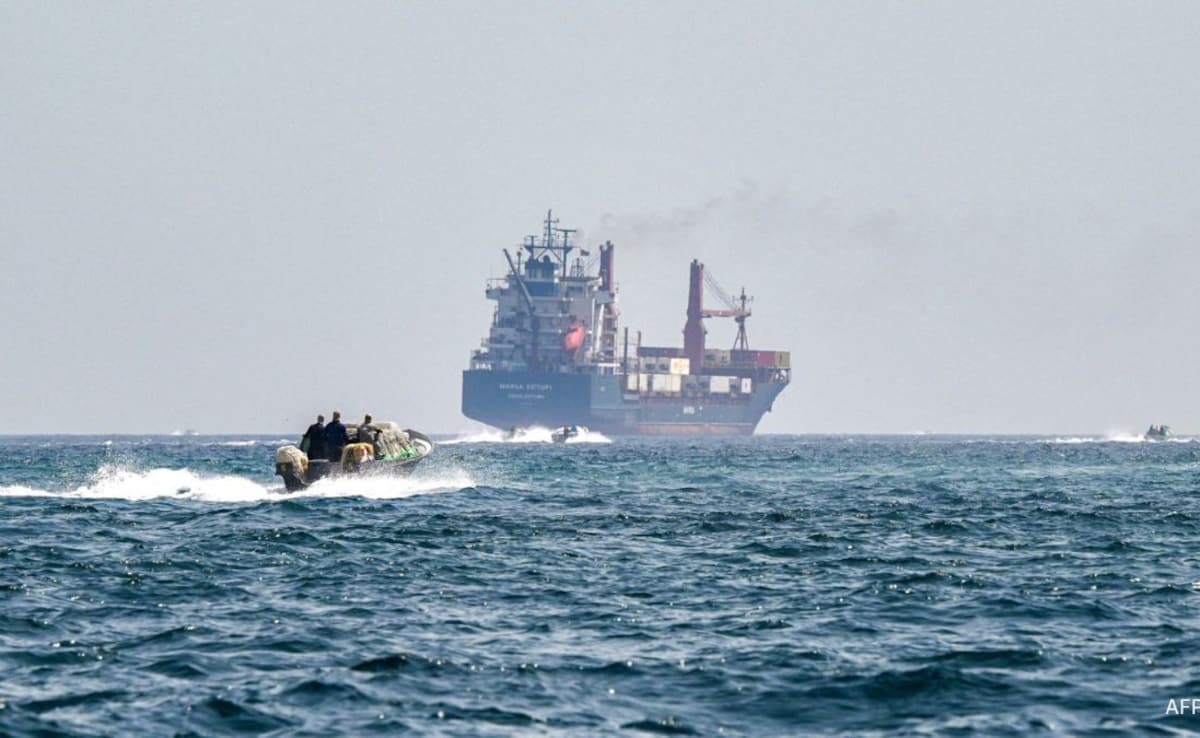
The Strait of Hormuz serves as the world’s most critical maritime chokepoint, with approximately 21 million barrels of oil—roughly 21% of global petroleum liquid consumption—transiting the 21-mile-wide navigable channel daily. Any disruption to this artery creates an immediate, non-linear shock to global energy markets. Solving a blockage in this geography is not a singular tactical event; it is a multi-dimensional optimization problem involving naval kinetic capabilities, insurance risk modeling, and the physical constraints of global energy infrastructure. The resolution of such a crisis depends entirely on the Mode of Blockage, categorized by the specific mechanism used to halt traffic.
The Taxonomy of Denial
Before a solution can be deployed, the nature of the denial must be categorized. A blockage in the Strait rarely involves a physical "plug" (like a grounded vessel in the Suez Canal) because the water is deep enough and wide enough to make such a feat technically improbable over the long term. Instead, the blockage is usually a Functional Denial—a state where the risk of transit exceeds the commercial or physical capacity to execute it.
- Kinetic Interdiction: The use of anti-ship cruise missiles (ASCMs), fast attack craft (FAC), or unmanned aerial vehicles (UAVs) to strike commercial vessels.
- Sub-surface Denial: The deployment of bottom-moored or rising mines. This is the most cost-effective way to close the strait, as it creates "phantom risk"—the fear of a threat where one may not exist.
- Legal and Regulatory Seizure: The use of state authority to board and detain vessels under the guise of environmental or maritime law violations, creating a "soft" blockage through administrative friction and soaring P&I (Protection and Indemnity) insurance premiums.
The Cost Function of Clearance
The primary barrier to clearing the Strait is the Asymmetry of Cost. A sea mine costing $15,000 can effectively neutralize a Very Large Crude Carrier (VLCC) valued at $100 million carrying $150 million in cargo. Solving this requires a shift from defensive posturing to active system restoration.
The Mine Countermeasures (MCM) Bottleneck
Mine clearance is the most time-intensive variable in the restoration equation. Modern MCM operations rely on a "Find, Classify, Identify, Neutralize" cycle.
- Acoustic and Magnetic Silencing: Response vessels must operate with minimal signatures to avoid triggering influence mines.
- The Search-to-Kill Ratio: In a high-debris environment like the Persian Gulf, sonar frequently identifies "minelike objects" (NOMBOs) that turn out to be discarded shipping containers or reef formations. Distinguishing these from actual threats slows the clearance rate to a crawl.
- Technological Shift: The solution lies in Autonomous Underwater Vehicles (AUVs) and Remotely Operated Vehicles (ROVs). By deploying "swarms" of disposable, low-cost UVs, a naval coalition can map the seabed in parallel rather than series, reducing the clearance timeline from months to weeks.
The Insurance Risk Threshold
A physical clearing of the Strait does not equate to a functional opening. Shipping will only resume when the Joint War Committee (JWC) of the London insurance market removes the "listed area" designation or when premiums stabilize.
- Sovereign Guarantees: If private insurers refuse to cover hulls, the solving state (e.g., the U.S., China, or a coalition) must provide sovereign indemnification.
- Conveyancing: The implementation of a "Convoy System" remains the most viable psychological solution. Even if the kinetic threat remains, the presence of guided-missile destroyers (DDGs) providing a localized "Aegis bubble" reduces the actuarial risk to a level where commercial operators will resume transit.
Infrastructure Redundancy and the "bypass" Fallacy
A common misconception is that existing pipelines provide a viable "solve" for a Hormuz blockage. Analyzing the math of export capacity reveals the limitations of this strategy.
| Pipeline | Origin/Destination | Capacity (Million bpd) | Utilization Margin |
|---|---|---|---|
| Petroline (East-West) | Abqaiq to Yanbu (Red Sea) | 5.0 | ~2.0 available |
| Abu Dhabi Crude Oil Pipeline | Habshan to Fujairah | 1.5 | ~0.5 available |
| Iraq-Turkey Pipeline | Kirkuk to Ceyhan | 0.6 | Highly volatile |
The total surplus capacity of bypass pipelines is approximately 3.5 to 4 million barrels per day. This leaves a deficit of over 15 million barrels per day. Consequently, the "Pipeline Solution" is an emergency buffer for essential services, not a replacement for the Strait. Solving the blockage requires Maritime Restoration, not terrestrial redirection.
The Kinetic Solution: Suppression of Enemy Air Defenses (SEAD)
If the blockage is maintained by shore-based ASCM batteries (such as the C-802 or Noor series), the solution is a high-intensity kinetic campaign.
- Establishing a Maritime Defensive Perimeter: Utilizing the Distributed Lethality concept, where every ship in the vicinity acts as a sensor and shooter. This creates a multi-layered defense-in-depth, starting with SM-6 interceptors for long-range threats and ending with CIWS (Close-In Weapon Systems) for point defense.
- Targeting the Kill Chain: Instead of chasing mobile missile launchers—which are notoriously difficult to find in rugged coastal terrain—the strategy must focus on the Targeting Architecture. This involves jamming the coastal radar, intercepting the data links between spotters and launchers, and utilizing EA-18G Growler aircraft to degrade the adversary’s electromagnetic spectrum.
- The Escalation Ladder: The risk here is "The Tanker War" logic of the 1980s. Attacks on land-based infrastructure (launchers) often trigger retaliatory strikes on oil processing facilities (like Abqaiq). Therefore, a kinetic "solve" must include a pre-emptive defense of terrestrial oil nodes, not just the ships themselves.
Strategic Re-routing and the Global Stockpile Release
In the immediate 72-hour window of a blockage, the "solution" is purely financial and logistical to prevent a global depression.
The International Energy Agency (IEA) maintains the Strategic Petroleum Reserve (SPR) requirements, where member countries hold 90 days’ worth of net imports. A coordinated release of the SPR acts as a "synthetic Strait." By flooding the market with paper and physical barrels, the price spike is dampened, reducing the political leverage of the entity causing the blockage. This buys the military and diplomatic teams the necessary time to conduct MCM and SEAD operations without the pressure of a $200-per-barrel oil price.
The Diplomatic-Economic pincer
The most effective long-term solution is the decoupling of the "Blockage Actor" from their primary revenue streams. Since most actors capable of closing the Strait (specifically Iran) rely on the very energy markets they are disrupting, the blockage is inherently self-defeating—a "Sampson Option."
The strategic play involves:
- Third-Party Intermediation: Utilizing non-Western buyers (specifically China and India) as the primary diplomatic leverage. Since 70% of the oil through the Strait moves to Asia, the blockage is an attack on Asian energy security.
- Sanctions Snapback: Any physical blockage triggers a total cessation of the "Gray Market" oil trade. By removing the revenue that funds the very naval assets used for the blockage, the opposing force faces a rapid degradation of operational readiness.
The resolution of a Hormuz crisis is never a return to the status quo ante. It is a transition to a "High-Friction Normal" where the cost of shipping permanently rises to account for the demonstrated vulnerability. To solve the blockage, one must focus on the Escort-to-Mine-Clearance Ratio: increasing the speed of autonomous mine detection while providing sovereign insurance guarantees to bypass the commercial market's hesitation.
The final strategic move is the deployment of Integrated Undersea Surveillance Systems (IUSS) across the strait’s floor during peacetime. This allows for real-time monitoring of seabed activity, ensuring that the "phantom risk" of unmapped mines can be debunked instantly, preventing the functional blockage from ever taking hold.
Would you like me to develop a detailed technical breakdown of current AUV mine-hunting swarms and their projected clearance rates per square nautical mile?