Geopolitical analysts love a good apocalypse. Every time a tanker slows down near the Musandam Peninsula, the headlines scream about a global energy collapse. They point to the "final deal" that never arrives and a Strait of Hormuz that is supposedly "closed."
They are wrong.
The Strait is not closed. It cannot be closed—not in the way the frantic 24-hour news cycle imagines. To believe that Iran is one bad negotiation away from permanently shutting the world’s most vital oil artery is to fundamentally misunderstand how power, physics, and global markets actually function. I have spent two decades watching these cycles of escalation, and the reality is far more cynical than the "impending war" narrative suggests.
The Myth of the Physical Blockade
The standard consensus claims that Iran can simply "shut the gates." This assumes that maritime geography works like a garage door. It doesn't.
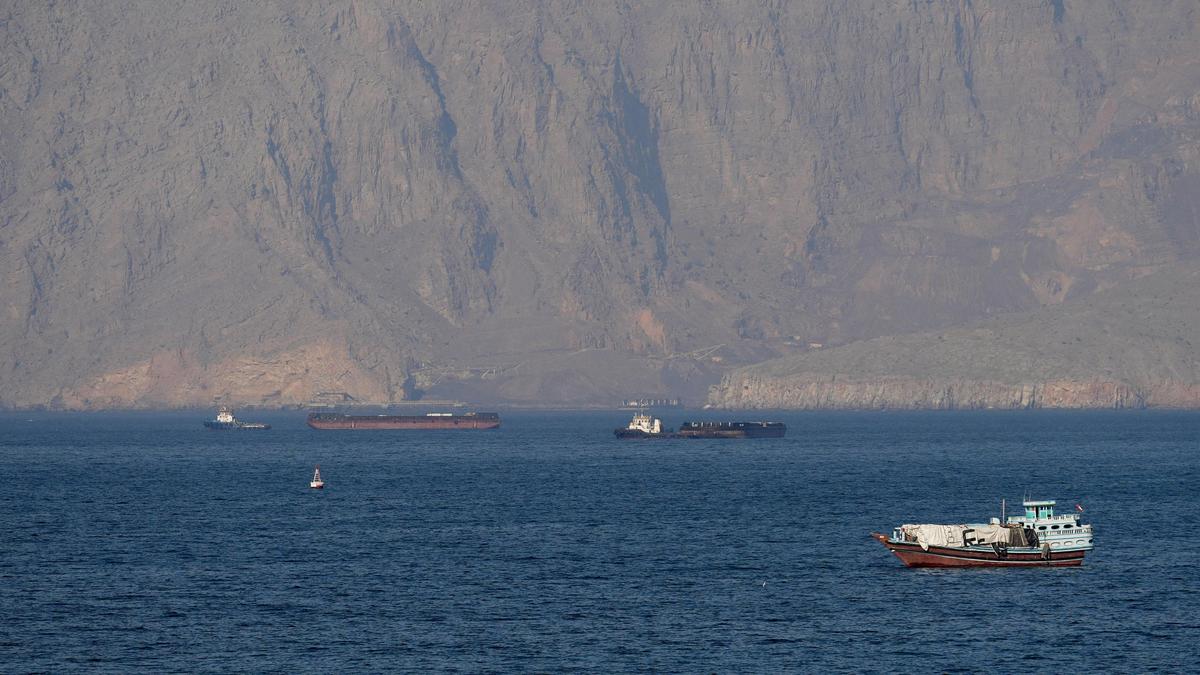
The Strait of Hormuz is roughly 21 miles wide at its narrowest point. However, the actual shipping lanes—the deep-water paths capable of carrying Very Large Crude Carriers (VLCCs)—are only two miles wide in each direction, separated by a two-mile buffer zone.
Closing this takes more than a few patrol boats. It requires a sustained, conventional naval presence that can withstand the combined retaliation of the U.S. Fifth Fleet and its allies. Iran knows this. They are not suicidal. The goal is not a blockade; the goal is friction.
Friction is cheap. A blockade is expensive. By maintaining the threat of closure without actually committing to the act, Tehran achieves maximum leverage with zero operational cost. They aren't waiting for a "final deal" because the tension itself is the commodity they are selling.
Why Oil Markets Stopped Fearing the Wolf
If the Strait were truly under threat, oil would be sitting at $150 a barrel today. Instead, we see the market yawning. Why? Because the "Strait of Hormuz Risk" has been priced into every algorithm on Wall Street since 1979.
The smart money knows three things that the pundits ignore:
- Redundancy is Real: Saudi Arabia’s East-West Pipeline and the UAE’s Habshan-Fujairah line can bypass the Strait to the tune of nearly 6.5 million barrels per day. It’s not enough to replace the entire flow, but it’s enough to prevent a total global seizure.
- China is the Secret Shield: Iran’s biggest customer is China. Shutting the Strait doesn’t just hurt "the West." It effectively declares economic war on Beijing. Iran will not bite the hand that feeds its shadowed economy.
- The Ghost Fleet: Iran has mastered the art of the "dark fleet." Thousands of transfers happen ship-to-ship, with transponders turned off. A "closed" Strait would kill Iran's own revenue streams before it even touched a U.S. gas station.
The Negotiating Table is a Stage
The media frames the "final deal" as a binary outcome: either we get a signature or we get a war. This is a false choice designed to keep diplomatic consultants in business.
In reality, the deal is a "Zeno’s Paradox." We are always halfway there, but we never arrive. For the Iranian leadership, a final deal is a risk. It demands transparency, it invites internal political opposition, and it removes the "Western Aggressor" boogeyman that keeps the domestic population in check.
For the U.S. and its allies, a final deal is equally terrifying because it forces a pivot to other, more complex regional issues they aren't ready to solve. The status quo—this state of permanent, simmering "almost-crisis"—is the most comfortable position for every player involved.
The "Final Deal" Logic Flaw
People ask: "When will we see the breakthrough?"
They are asking the wrong question. You don't look for a breakthrough in a system designed for stalemate.
The "final deal" is not a destination; it is a tool used to manipulate oil futures and domestic approval ratings. When Tehran says the deal is "far off," they aren't expressing frustration. They are signaling that the current price of oil and the current level of regional influence are exactly where they want them to be.
Imagine a scenario where a deal is actually signed tomorrow. Sanctions drop. Iranian oil floods the market. Prices crash. The very leverage Iran used to get to the table vanishes instantly. Why would they ever want that?
The High Cost of the "Safe" Perspective
If you are a business leader or an investor waiting for "clarity" in the Persian Gulf, you are going to lose. There is no clarity. There is only the noise generated by the "lazy consensus" of journalists who don't understand the difference between a tactical skirmish and a strategic shift.
The real risk isn't a closed Strait. The real risk is the slow erosion of maritime norms. We are seeing a rise in "grey zone" warfare—seizing tankers under legal pretenses, drone harassment, and cyber-interference. These don't trigger a world war, but they drive up insurance premiums and shipping costs.
This is the "nuance of the squeeze." It’s not a hammer blow; it’s a thousand tiny cuts.
Stop Watching the Headlines, Watch the Tonnage
The next time you see a headline about "Tensions Rising in the Middle East," don't check the news. Check the shipping registries. Look at the volume of crude moving through the Bandar Abbas port.
If the ships are still moving, the "crisis" is a fabrication.
The Strait of Hormuz is a psychological chokepoint, not just a physical one. As long as the world believes it can be closed, Iran holds the power. The moment we admit it won't be—because it would be a collective act of economic suicide for every nation involved—the leverage disappears.
The "final deal" isn't far off because of technical disagreements. It’s far off because the theater of the "far-off deal" is too profitable to end.
Stop waiting for the ending. This is the show.
Quit looking for the "game-changing" moment in the Middle East and start realizing that the stalemate is the strategy. Every "expert" telling you the Strait is about to shut is selling you fear because they don't have the data to sell you the truth.
The truth is that the Strait stays open because nobody, least of all Iran, can afford to live in a world where it’s closed. The noise you hear is just the sound of the machine working exactly as intended.