The idea that Donald Trump reopened the Strait of Hormuz solely because Saudi Arabia "got angry" simplifies a geopolitical chess match into a temper tantrum. While Riyadh’s dissatisfaction with American hesitation often drives headlines, the reality involves a much tighter knot of global energy pricing, insurance premiums for oil tankers, and the brutal math of the U.S. election cycle. Washington did not move because of a polite request or a stern phone call from the House of Saud. It moved because the global economy cannot survive a $150 barrel of oil, and the political cost of inaction had finally eclipsed the risk of military escalation.
The Strait of Hormuz is the world’s most sensitive artery. Roughly 20% of the world’s liquefied natural gas and oil flows through this narrow passage between Oman and Iran. When Tehran threatens to choke this point, or when proxy attacks on tankers increase, the "war risk" premiums charged by maritime insurers skyrocket. This cost is passed directly to the pump. For a U.S. administration, an open Strait is not just a matter of foreign policy; it is a domestic survival strategy.
The Friction Between Riyadh and Washington
For decades, the security-for-oil arrangement between the U.S. and Saudi Arabia functioned on a predictable loop. The U.S. provided the hardware and the security umbrella, and the Saudis ensured a steady flow of crude. However, that relationship fractured under the weight of shifting priorities. Riyadh began to suspect that the U.S. was no longer willing to spill blood for Gulf security, especially as the U.S. achieved energy independence through the shale revolution.
When the Strait became a theater for Iranian "shadow warfare," the Saudis didn't just get angry. They grew desperate. If the U.S. would not protect the ships leaving Saudi ports, the Saudi Vision 2030 economic plan—which requires massive foreign investment and stability—would effectively collapse. The pressure from Riyadh was not merely diplomatic. It was a clear signal that if Washington defaulted on its role as the regional policeman, the Kingdom would find a new one, likely in Beijing or Moscow.
The Mechanics of a Chokepoint Crisis
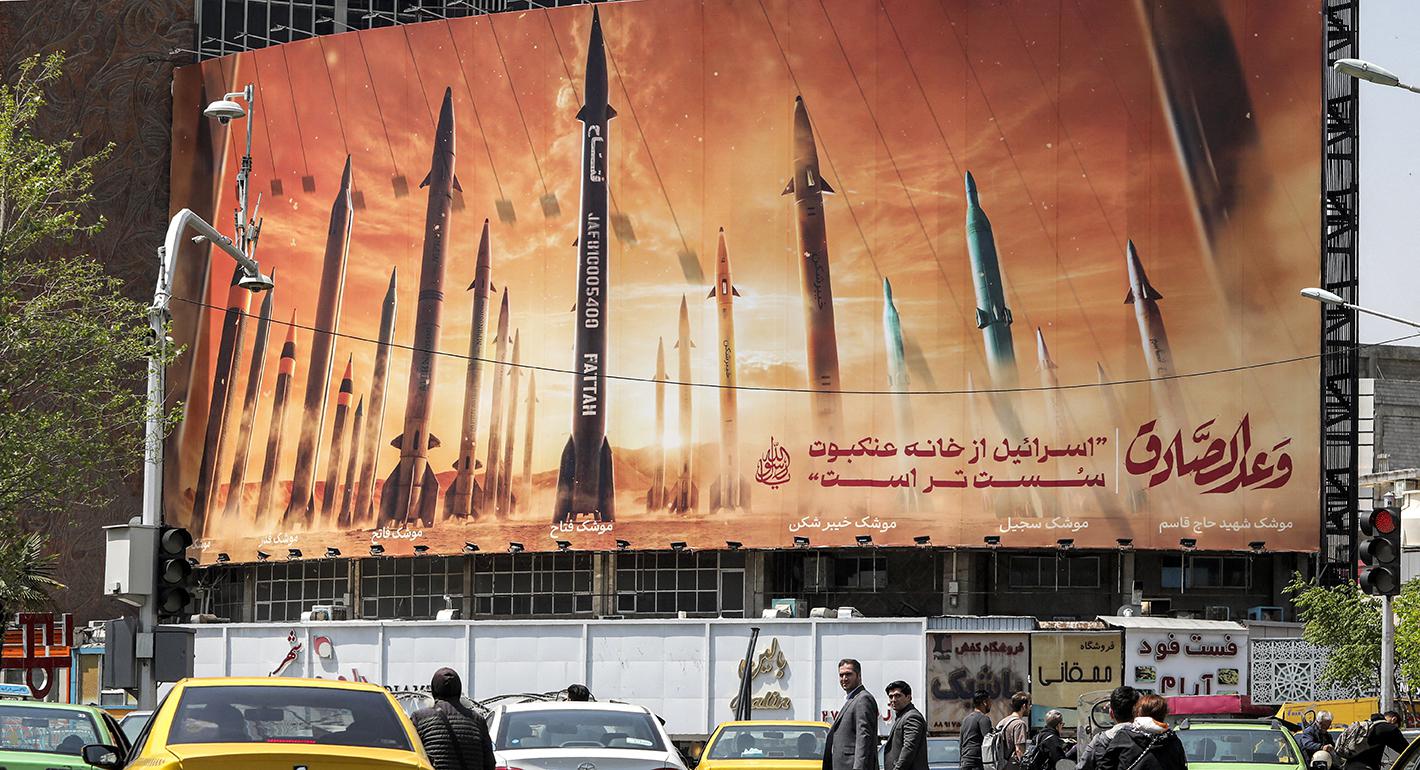
Closing the Strait of Hormuz is rarely about a physical blockade of ships. Iran lacks the naval capacity to hold the passage against a concentrated U.S. carrier strike group for long. Instead, the strategy is one of "asymmetric friction." By using mines, fast-attack boats, and shore-based missiles, Tehran creates a zone of high risk.
When a single tanker is hit, the insurance market reacts instantly. Imagine a hypothetical scenario where a Suezmax tanker carrying a million barrels of oil is damaged. The cost to insure that hull for a single voyage can jump from $30,000 to over $200,000 in forty-eight hours. If multiple ships are targeted, many shipping companies simply refuse to enter the Gulf. This creates a de facto closure without a single Iranian ship actually blocking the water.
The Role of Lloyd’s of London
The real power in the Strait of Hormuz doesn't just sit in the Pentagon or the Kremlin. It sits in the underwriting rooms of London. When the Joint War Committee (JWC) designates the Persian Gulf as a high-risk area, the economic pressure on oil exporters becomes unbearable. The Trump administration understood that to "reopen" the Strait, they didn't just need to clear mines; they had to restore the confidence of the global insurance market. This required a visible, overwhelming military presence that signaled the U.S. was back in the business of escorting commercial traffic.
Beyond the Saudi Narrative
Focusing entirely on Saudi "anger" ignores the broader coalition of panic that descended on Washington. Japan, South Korea, and India are far more dependent on Hormuz than the United States is. These nations represent some of the largest buyers of Middle Eastern crude. When the Strait is threatened, these economies face an existential threat.
The Trump administration’s decision to increase naval patrols and "reopen" the flow was a response to a global chorus of alarm. The Saudis provided the loudest voice because they had the most to lose in terms of regional prestige, but the impetus was a collective demand for energy security. The U.S. acted because the alternative—a global recession triggered by an energy spike—would have been a political death sentence for any sitting president.
The Intelligence Gap and Asymmetric Threats
One of the most overlooked factors in the Hormuz tension is the difficulty of attribution. During the height of the attacks, the U.S. struggled to provide the kind of "smoking gun" evidence that would satisfy a skeptical international community. This wasn't just a failure of PR; it was a tactical problem.
Iran’s Islamic Revolutionary Guard Corps (IRGC) perfected the art of the "limpet mine" attack. These are small explosives attached to the hull of a ship, often by divers or small boats under the cover of night. By the time the explosion occurs, the perpetrators are long gone. This creates a "gray zone" conflict where the U.S. is forced to choose between ignoring a provocation or launching a full-scale war over a dented tanker.
The Economic Weaponization of Geography
The Strait of Hormuz is only 21 miles wide at its narrowest point. This proximity allows land-based battery systems to cover the entire width of the shipping lanes. For the U.S. Navy, maintaining an "open" Strait means a constant, resource-heavy cycle of minesweeping and aerial surveillance.
Maximum Pressure was the defining policy of the Trump era regarding Iran. By strangling Iranian oil exports, the U.S. hoped to force a new nuclear deal. Iran responded by proving that if they couldn't sell their oil, no one else in the region would be able to sell theirs either. The "reopening" of the Strait was the moment the U.S. realized that while it could crush the Iranian economy, it could not do so without risking the stability of the entire global supply chain.
Structural Vulnerabilities in Global Shipping
The crisis revealed a terrifying truth about modern logistics: we are entirely dependent on a few nautical miles of water controlled by a hostile power. Even with the expansion of pipelines across Saudi Arabia to the Red Sea, the volume of oil that can bypass Hormuz is insufficient to meet global demand.
- East-West Pipeline (Petroline): Can carry about 5 million barrels per day, but currently operates under capacity.
- Abu Dhabi Crude Oil Pipeline: Terminates in Fujairah, bypassing the Strait, but handles only a fraction of UAE exports.
- Storage Buffers: Strategic reserves in consuming nations like China and the U.S. can only mask a total Hormuz closure for a few months.
None of these alternatives provide a permanent solution. The dependence on the Strait is structural. When the Trump administration moved to secure the area, they weren't just doing a favor for Riyadh; they were patching a hole in the global financial architecture that they themselves had helped to widen through the withdrawal from the JCPOA.
The Credibility Trap
Every time a U.S. president draws a red line in the Persian Gulf, they enter a credibility trap. If they do not respond to a provocation, they look weak to their allies (the Saudis). If they respond too harshly, they risk a "forever war" that the American public has no appetite for.
The 2019-2020 period was a masterclass in this balancing act. The "anger" from the Gulf states was rooted in the perception that the U.S. was all talk and no action. When the Abqaiq–Khurais drone attacks happened, effectively knocking out half of Saudi oil production, the U.S. response was notably restrained. This sent shockwaves through Riyadh. The subsequent reopening of the Strait and the formation of a maritime security coalition was an attempt to repair that damaged trust.
The Insurance of Last Resort
The U.S. Navy acts as the world's primary maritime insurer. This is a role that costs billions of dollars and yields no direct revenue. In a world where the U.S. is increasingly looking inward, the cost of "policing the commons" is being questioned.
Critics of the Hormuz intervention argue that if the world wants the Strait open, the world should pay for it. They point out that Chinese and Indian tankers benefit from U.S. protection while the U.S. taxpayer foots the bill. This argument gained significant traction within the "America First" wing of the Republican party. However, the counter-argument remains undefeated: the economic chaos of a closed Strait is far more expensive than the cost of a few destroyer patrols.
The Shift to Automated Defense
To maintain the Strait without a permanent, massive fleet presence, the U.S. began leaning into unmanned systems. Task Force 59, based in Bahrain, was a direct result of the need to have "eyes on the water" without the political baggage of a carrier strike group. Using solar-powered sea drones and AI-driven surveillance, the U.S. can now monitor the Strait 24/7. This technology bridges the gap between total withdrawal and an expensive, provocative military buildup.
The New Reality of Energy Geopolitics
The tension in the Strait of Hormuz is no longer just about oil. It is about the transition of global power. As China becomes the primary customer for Gulf oil, their influence over the Strait’s security grows. The Saudis know this. Their "anger" toward Trump was a warning: If you will not protect the flow, we will find someone who will.
The U.S. reopened the Strait because it had to prove that the dollar-denominated oil trade still had a protector. It wasn't about a single leader's ego or a specific ally's complaints. It was about the cold, hard fact that the Strait of Hormuz remains the single most important piece of real estate on the planet. Any power that allows it to be closed cedes their status as a global leader.
The shipping lanes are currently clear, but the underlying volatility remains. The "security" provided by naval patrols is a temporary fix for a permanent geographic problem. As long as the world’s economy runs on hydrocarbons, the narrow strip of water between Iran and the Arabian Peninsula will remain a trigger for global conflict. The next time the Strait is threatened, the response will likely be even more complex, involving not just carriers and destroyers, but cyber-attacks on port infrastructure and the weaponization of maritime insurance data.
The leverage has shifted. The Gulf states have learned that they can force Washington's hand by highlighting the fragility of the global energy market. The U.S. has learned that its energy independence does not insulate it from the shocks of a Persian Gulf crisis. The Strait remains open, but the price of keeping it that way has never been higher.
Maintain a permanent presence or risk a total collapse of the maritime order. There is no middle ground in the Strait of Hormuz.