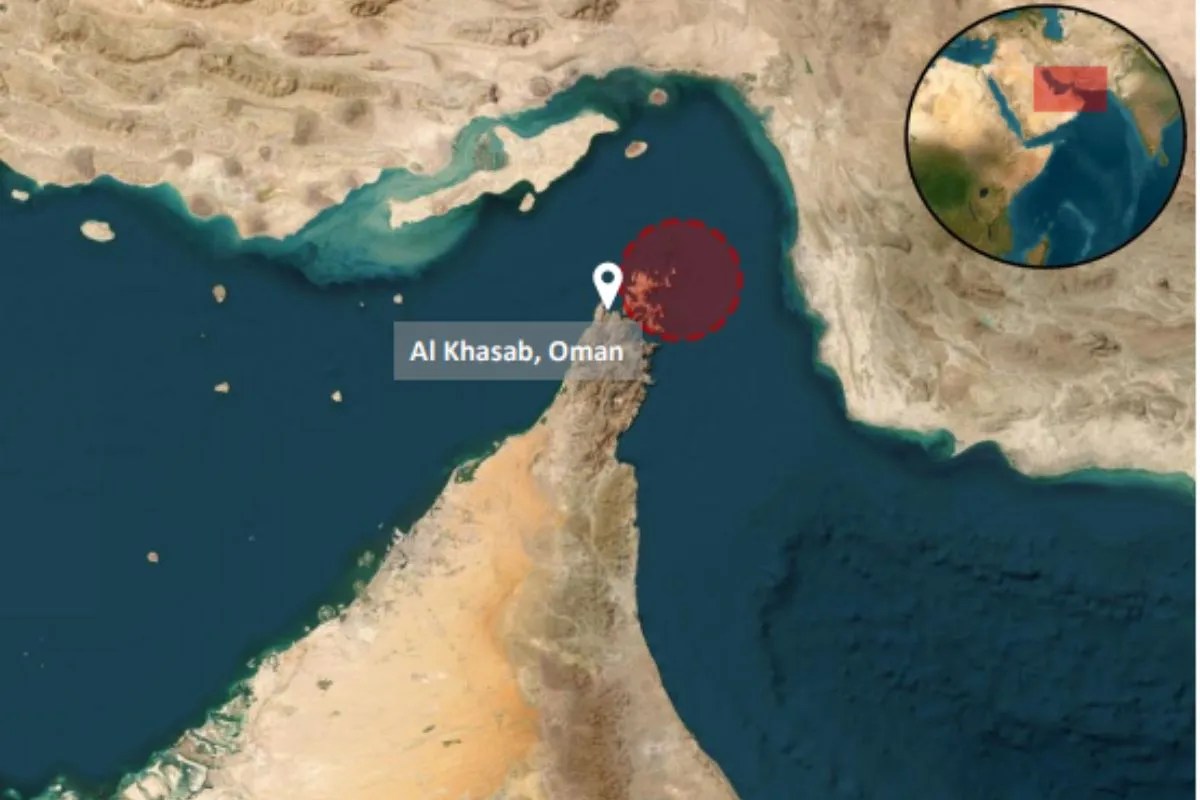
The maritime security architecture governing the Strait of Hormuz has entered a structural degradation phase. When the United Kingdom Maritime Trade Operations agency issues an alert regarding a targeted cargo vessel near the Omani coast, it signals more than an isolated tactical strike. It exposes a systemic failure in protecting critical global energy chokepoints from low-cost, asymmetric naval harassment.
Approximately twenty percent of the world's petroleum supply transits through a maritime corridor less than twenty-two miles wide at its narrowest point. This spatial constraint turns every commercial transit into a high-risk operation. The vulnerability of container ships and bulk carriers stems from a mismatch between traditional commercial shipbuilding standards and modern asymmetric warfare capabilities. Commercial vessels are optimized for cargo capacity and fuel efficiency, featuring low freeboard, minimal structural armor, and unarmed crews. When non-state actors or regional state proxies deploy loitering munitions, anti-ship cruise missiles, or fast attack craft, commercial hulls provide an undefended target set.
The Economic Cost Function of Maritime Disruption
Maritime risk operates on a strict economic calculus where insurance premiums and route alterations dictate the final landed cost of commodities. Security incidents off the coast of Oman immediately trigger upward pricing pressures across global supply chains through three distinct mechanisms.
First, hull and machinery war risk insurance rates spike instantly upon the issuance of a UKMTO advisory. Underwriters recalculate the probability of catastrophic loss for every vessel entering the Persian Gulf. Even a minor kinetic impact or near-miss shifts the risk profile from a standard operational hazard to a persistent active combat zone exposure. This shifts premiums from a fraction of a percent to multi-percentage points of the total vessel valuation per voyage.
Second, speed and routing adjustments impose severe efficiency penalties. To minimize exposure in high-threat sectors, vessel operators enforce maximum transit speeds, alter coordinates away from traditional traffic separation schemes, or delay departures entirely. Higher speeds consume exponentially more bunker fuel, compressing profit margins for charterers while stretching global fleet utilization metrics thin.
Third, crew retention and hazard pay mandates introduce operational friction. Seafarers operating through active threat zones demand combat zone compensation. When union representatives or maritime labor boards determine that safety thresholds have been breached, vessel operators face labor shortages or costly operational standstills in regional staging ports like Fujairah.
Structural Vulnerabilities in Regional Incident Reporting
The information pipeline from initial kinetic contact to public advisory illustrates the friction inherent in modern maritime domain awareness.
[Kinetic Event] -> [Vessel Bridge Alert] -> [UKMTO / Combined Maritime Forces] -> [Public Advisory Publication]
This transmission delay creates a vacuum where speculation outpaces verification. Commercial fleet managers must make routing decisions based on sparse telemetry and preliminary distress calls. The lack of real-time open-source intelligence forces risk-averse operators to pause transits preemptively, compounding port congestion across the wider Arabian Sea and the Gulf of Oman.
Furthermore, the geographical positioning of incidents near the Omani coast highlights an expansion of the traditional threat envelope. Attacks historically concentrated inside the Persian Gulf proper. Shifting operations to the approaches of the Gulf of Oman bypasses several inner-gulf monitoring systems and increases reaction times for defensive naval escorts operating out of regional coalitions.
The Operational Limits of Naval Escort Models
Defending civilian shipping in a constricted geography requires an unsustainable resource ratio. Escort models deployed by international navies operate on a reactive paradigm. A single naval destroyer or frigate can protect a limited cluster of vessels, but the sheer volume of daily commercial transits overwhelms available military assets.
Naval forces face a severe cost asymmetry. Intercepting a low-cost, surface-to-air missile or an expendable unmanned aerial vehicle requires firing multi-million-dollar interceptor missiles such as the Standard Missile-2 or Evolved SeaSparrow. Prolonged exposure to this expenditure rate drains strategic stockpiles of precision-guided munitions without addressing the root political or military causes of the attacks on the Omani coastline.
Strategic Asset Realignment and Supply Chain Adaptation
Mitigating long-term exposure to these transit risks requires a fundamental departure from traditional just-in-time maritime logistics. Energy importers and industrial manufacturers are systematically re-evaluating inventory holding strategies within the Gulf basin.
Capital allocation is shifting toward increased onshore storage capacity in consumer markets, reducing sensitivity to temporary shipping disruptions. Simultaneously, logistics providers are integrating advanced threat-monitoring telemetry directly into shipboard management systems, utilizing encrypted satellite links to bypass vulnerable public channels during crisis events. Long-term freight contracts now incorporate force majeure clauses specifically tied to regional maritime security alerts, effectively transferring the financial burden of geopolitical instability from the shipowner to the end commodity buyer.