The world treats the Strait of Hormuz like a textbook exercise in maritime law. It isn’t. While analysts waste breath debating the nuances of the 1982 United Nations Convention on the Law of the Sea (UNCLOS), they miss the brutal reality: the Strait is not a legal zone, it is a hostage situation.
Most commentary focuses on the technical friction between "transit passage" and "innocent passage." This is a parlor game for academics. In the real world, the legal status of these waters is whatever the person with the largest battery of anti-ship missiles says it is. We are watching a collision between a superpower that relies on a rules-based order it hasn't fully ratified and a regional power that treats international law as a menu rather than a mandate.
The Ratification Trap
Here is the first inconvenient fact that the "lazy consensus" ignores: the United States has never ratified UNCLOS.
Washington claims it follows the treaty’s provisions as "customary international law." This is the geopolitical equivalent of living in a house without paying the mortgage and then lecturing the neighbors on how to mow their lawns. Iran, meanwhile, signed the treaty but never ratified it.
The result? Both primary actors are operating in a legal gray zone by choice. The U.S. insists on "transit passage"—a high-standard right that allows submarines to stay submerged and aircraft to fly over the strait. Iran insists on "innocent passage," which gives them the right to suspend traffic if they deem it a threat to their security.
When a U.S. carrier strike group enters the Strait, it isn't "asserting international law." It is conducting a high-stakes dare. The law is just the script they read after the ships have already passed each other.
The Transit Passage Myth
The common argument is that because the Strait of Hormuz is an "international strait," everyone has an unfettered right to pass through. This is a dangerous oversimplification.
Under the 1958 Convention—which Iran did ratify—the standard was "non-suspendable innocent passage." This sounds similar to the modern "transit passage," but the differences are where ships go to sink. Innocent passage is restrictive. It forbids any activity not "innocent," which is a term Iran defines with incredible elasticity.
- Submarines: Under innocent passage, they must surface and show their flag.
- Aircraft: No overflight rights without permission.
- Weaponry: No training or drills.
The U.S. Navy ignores these restrictions because acknowledging them would mean conceding control of the world's most vital energy artery. If you think this is about "legal waters," you’re being sold a bill of goods. It is about the fact that 20% of the world’s liquid petroleum passes through a gap 21 miles wide. Laws don't keep those lanes open; the threat of total naval annihilation does.
Why Iran Loves the Legal Ambiguity
Stop asking "What does the law say?" and start asking "Who does the ambiguity benefit?"
Iran uses its unique legal position to create a "toll booth of friction." By maintaining that UNCLOS 1982 does not apply to non-ratifying states (like the U.S.), Tehran creates a justification for seizing tankers whenever they need leverage in a nuclear negotiation or a sanctions dispute.
When Iran seized the Stena Impero or the Advantage Sweet, they didn't just act as pirates. They wrapped their actions in the language of maritime "regulations" and "environmental concerns." They used the law as a kinetic weapon. They know that a legal dispute takes years to settle in The Hague, but a seized tanker changes the price of Brent Crude in twenty minutes.
The Fantasy of "Customary International Law"
The U.S. State Department loves the phrase "customary international law." It’s their favorite shield. The logic goes like this: even if we didn't sign the treaty, everyone has been acting like the treaty is real for so long that it has become law.
This is a fragile consensus. Customary law requires opinio juris—a belief by states that they are legally bound to act a certain way. Iran has spent forty years explicitly stating they do not feel bound by the transit passage rules of UNCLOS regarding the U.S.
You cannot have a "custom" when one of the two people walking the path is screaming that they don't recognize the path exists.
The Economic Delusion
Business analysts often claim that Iran would never close the Strait because it would be "economic suicide." This assumes that the Iranian Revolutionary Guard Corps (IRGC) operates on the same spreadsheet logic as a London commodities trader. They don't.
The IRGC views the Strait as a tactical asset, not a commercial one. In their view, if they cannot export oil due to sanctions, then no one should. The "legal waters" debate is irrelevant if the objective is to crash the global economy to force a seat at the table.
We have seen this play out. When the U.S. increased "Maximum Pressure" sanctions, Iran didn't file a lawsuit. They mined the hull of the Kokuka Courageous.
The Geography of Power
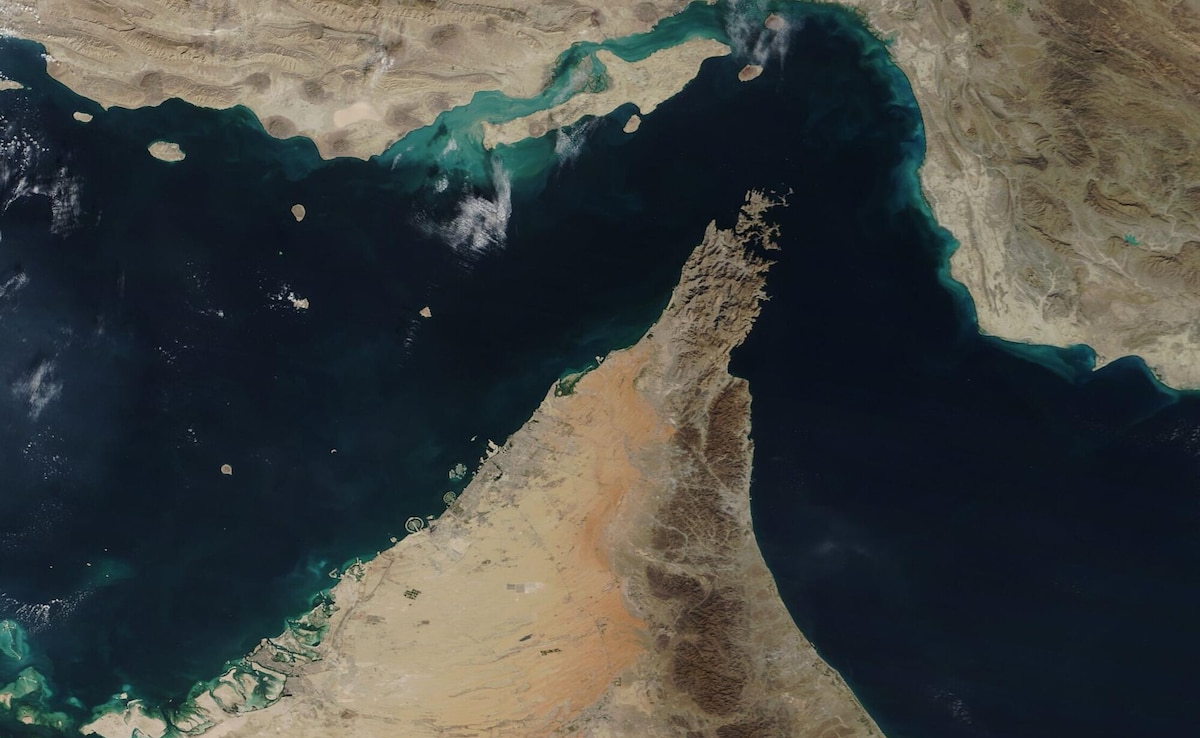
Look at the map. The deep-water channels suitable for ultra-large crude carriers (ULCCs) sit almost entirely within Omani and Iranian territorial waters. There is no "high seas" corridor in the Strait of Hormuz.
This means every drop of oil exported from Kuwait, Iraq, Qatar, and the UAE is technically "trespassing" through someone’s backyard. The U.S. Navy acts as the private security firm that ensures the neighbors don't lock their gates.
If we were to follow the strict letter of the laws Iran recognizes, the global energy market would effectively be under a permanent Iranian veto. This is why the U.S. cannot ratify UNCLOS now; doing so would require a level of diplomatic consistency that would strip away the tactical flexibility needed to bully its way through the Strait.
Dismantling the "Freedom of Navigation" Slogan
"Freedom of Navigation" is a marketing term. In the Strait of Hormuz, it is actually "Freedom of Power Projection."
When the U.S. conducts Freedom of Navigation Operations (FONOPs), they aren't checking boxes for a maritime clerk. They are conducting a stress test. They are checking to see if the Iranian shore-based Silkworm missiles are painting their targets.
The "legal waters" are a fiction maintained to keep the insurance markets from panicking. If Lloyd's of London truly admitted that the legal status of the Strait was an unresolved mess between two heavily armed non-signatories of the primary treaty, insurance premiums would make shipping oil through Hormuz cost-prohibitive.
The "rules" only exist because it’s too expensive for anyone to admit they don't.
The High Cost of the Status Quo
I have seen the Pentagon spend billions on "littoral combat ships" designed specifically for these types of environments—ships that ended up being floating scrap metal because they couldn't survive the reality of a "contested" strait. We talk about law because we are afraid to talk about vulnerability.
The U.S. is currently protecting a global trade system using a legal framework it refuses to join, against an adversary that uses that same framework as a garrote. It is a masterpiece of hypocrisy on both sides.
- Misconception: The Strait of Hormuz is governed by clear international law.
- Reality: It is governed by the 1958 Convention, the 1982 Convention, and "Customary Law," all of which contradict each other depending on who is steering the ship.
- Misconception: Closing the Strait is a legal impossibility.
- Reality: Closing the Strait is a physical certainty the moment the perceived cost of peace exceeds the perceived cost of war for Tehran.
Stop Reading the Treaties
If you want to understand the Strait of Hormuz, stop reading UNCLOS. Start reading the range charts of the IRGC’s anti-ship cruise missiles. Stop listening to State Department lawyers and start looking at the "Notice to Mariners" issued by the Iranian Navy.
The Strait is a geographic chokepoint that has been dressed up in a suit and tie to make it look like a civilized hallway. In reality, it’s a dark alley where the lights have been smashed and both guys have knives behind their backs.
The legal arguments are just the noise they make to distract the bystanders. The next time you hear a politician talk about "international law in the Strait," understand that they are either lying to you or they are the ones about to be robbed.
The law isn't the foundation of the order in the Persian Gulf. It's the debris left over from the last conflict.
Move your assets accordingly.