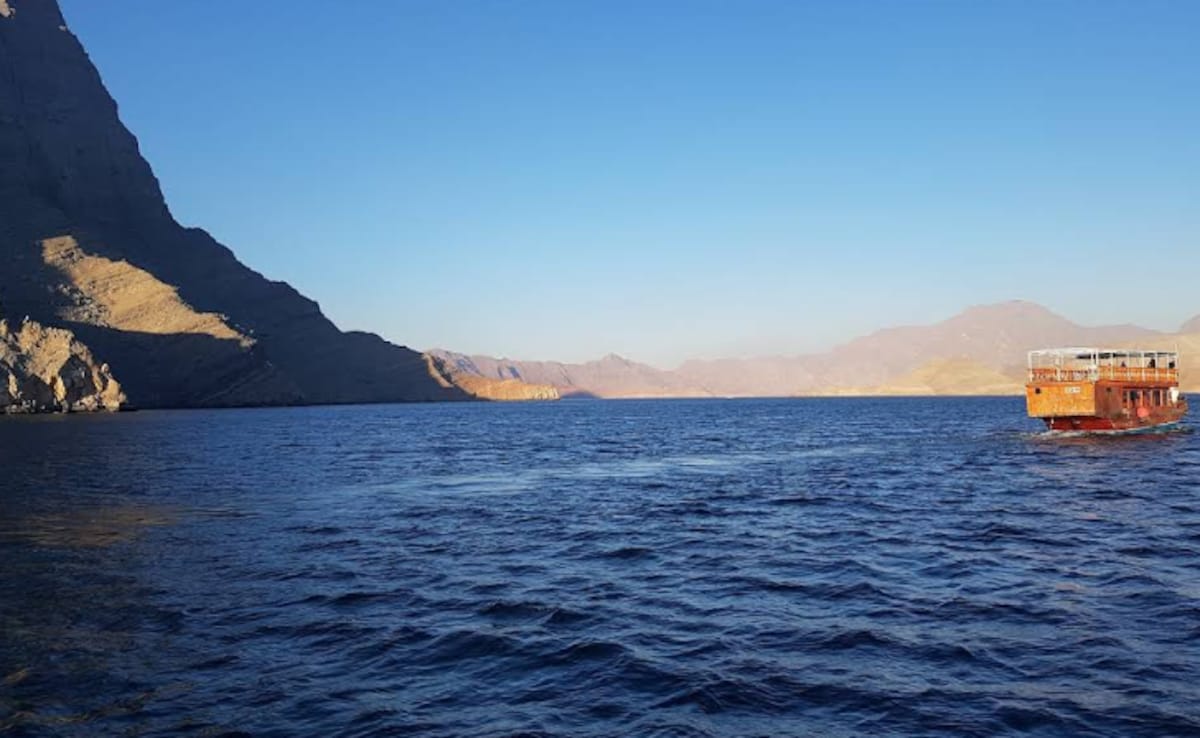
The days of a "business as usual" Strait of Hormuz are over. If you've been watching the headlines, you've seen the Iranian officials making it clear. The old rules are dead. For decades, this tiny strip of water—barely 21 miles wide at its narrowest point—has been the world's most sensitive jugular vein for energy. But as regional war intensifies, Tehran is signaling that the maritime status quo isn't just paused; it's gone for good.
You can't just flip a switch and go back to 2022. The naval landscape in the Persian Gulf has shifted toward a permanent state of high-friction "active defense." Iranian military leaders are now openly stating that the "pre-war norm" where tankers moved with relative impunity is a relic of the past. It’s a bold, terrifying claim for global markets that rely on the 20 million barrels of oil flowing through there every single day.
Why the old maritime rules died
The Strait of Hormuz has always been a theater of "shadow wars." We saw it in the 1980s during the Tanker War. We saw it again in 2019 with limpet mine attacks. But those were temporary spikes in tension. What we're seeing now is different because it's tied to a broader, multi-front regional conflagration that has no clear off-ramp.
Iran’s stance is basically a middle finger to the international "freedom of navigation" doctrine. They argue that if their own exports are sanctioned or if their regional allies are under fire, the "security" of the Strait becomes a subjective tool rather than a universal right. They’re moving from occasional harassment to a doctrinal shift where they view the waterway as a tactical lever they can pull at any moment. This isn't just about blocking ships. It’s about the uncertainty of passage.
For a captain steering a VLCC (Very Large Crude Carrier) worth $100 million, uncertainty is just as bad as a blockade. It drives up insurance premiums to astronomical levels. It forces companies to reconsider the entire geography of their supply chains. Honestly, the Iranians know that they don't have to sink a ship to win. They just have to make it too expensive for you to sail one.
The technology of the new normal
One reason the "pre-war norm" is gone is that the tools of the trade have changed. Ten years ago, Iran relied on fast boats and sea mines. Those are still there, but now we have the era of the "suicide drone" and long-range anti-ship cruise missiles that don't even need to be near the coast to hit a target.
The Islamic Revolutionary Guard Corps (IRGC) Navy has been busy. They’ve integrated AI-assisted tracking and swarming drone technology that makes traditional carrier strike group protection look a bit dated. When a shore-based battery can fire a missile from a hidden cave and hit a moving deck 150 miles away, the "safe" zones for commercial shipping vanish.
We’re also seeing a massive increase in electronic warfare. GPS jamming and "spoofing" are now common in the Strait. Ships suddenly find their navigation systems telling them they’re in the middle of a desert or miles off course. This creates a physical danger that didn't exist in previous decades. It makes the Strait a technical minefield even when no actual explosives are in the water.
Breaking the energy addiction
The world is trying to react, but it’s slow going. Look at the East-West Pipeline in Saudi Arabia or the Abu Dhabi Crude Oil Pipeline. These were built specifically to bypass the Strait of Hormuz. In theory, they can move millions of barrels to the Red Sea or the Gulf of Oman, avoiding the Iranian coastline entirely.
But there’s a catch. These pipes have limits. They can't handle the full volume of what moves through the Strait. Plus, as we’ve seen with recent events in the Red Sea, the "alternative routes" aren't exactly safe havens either. If the Strait of Hormuz is the front door, the Red Sea is the back door—and right now, both are being kicked in.
The reality is that China, India, and Japan are the ones most exposed here. While the U.S. has become a net exporter of oil, the Asian giants still depend on the Persian Gulf for the lion's share of their energy. Iran knows this. By threatening the "norm" of the Strait, they aren't just poking the U.S.; they're holding the economic engines of Asia hostage. It’s a geopolitical chess move that forces every major power to come to the table on Tehran's terms.
The insurance nightmare
Talk to any maritime insurer at Lloyd's of London and they'll tell you the same thing: the risk profile has been rewritten. In the "old days," you had a standard war risk premium. Now, those rates are being quoted on a voyage-by-voyage basis. Some insurers won't even touch certain flags or owners if they're transiting the Strait during a period of high tension.
This "risk tax" is permanent. Even if a ceasefire is signed tomorrow, the "trust" that the Strait is a neutral, safe highway is broken. It takes years to build that kind of institutional confidence and only one well-placed missile to destroy it. We’re looking at a future where shipping through Hormuz is permanently 10% to 15% more expensive just because of the "ghost" of what might happen.
The IRGC is calling the shots
It’s important to understand the internal politics in Iran. The regular Iranian Navy (Artesh) generally follows international protocols. But the Strait is primarily the playground of the IRGC Navy. They are more radical, more aggressive, and they don't care about diplomatic niceties.
The IRGC views the Strait as their sovereign territory, regardless of what international law says about "transit passage." They’ve spent the last decade building "floating bases" and fortified islands like Abu Musa and the Tunbs. These aren't just observation posts. They are unsinkable aircraft carriers. They’ve turned the Strait into a gauntlet.
When Iranian officials say things won't return to the pre-war norm, they’re listening to the IRGC commanders who have spent their entire careers preparing for this exact moment. They don't want a return to the old norm because the old norm favored the West. The new norm favors the guy with the most drones and the least to lose.
What happens to oil prices
Markets hate "new normals" that involve volatility. We’ve seen oil hover around $80 to $90 a barrel, but that includes a "risk premium" that hasn't gone away. If the Strait truly becomes a permanent zone of friction, $100 oil becomes the floor, not the ceiling.
Every time an Iranian commander makes a speech, the algorithms on Wall Street spike. This volatility is exactly what Iran wants. It gives them leverage in every negotiation, from nuclear deals to regional security pacts. They’ve realized that the threat of closing the Strait is more powerful than actually closing it. If they close it, they lose their own income and invite a global military response. If they just make it "unsafe," they keep the world on edge without the total cost of a full-scale war.
Identifying the point of no return
There was a moment where we could have gone back. Maybe five years ago. But the sheer volume of military hardware now packed into that tiny area makes an "accidental" war almost inevitable. Between the U.S.-led "Operation Prosperity Guardian" style patrols and the Iranian coastal defenses, the margin for error is zero.
The "pre-war norm" was built on a foundation of mutual restraint. That restraint is gone. Both sides are now operating under "hair-trigger" rules of engagement. If a drone gets too close to a destroyer, or a tanker strays into disputed waters, the response is immediate and kinetic.
Get ready for the fallout
If you're a business owner or an investor, stop waiting for the "peace dividend" in the Middle East. It’s not coming. The Strait of Hormuz is now a contested space, and it will remain so for the foreseeable future.
The next step for global players is diversification. We’re going to see a massive push for more pipelines through Oman and Saudi Arabia, even if they're expensive. We'll see more strategic petroleum reserves being built in Asia. And we'll see a permanent shift in how naval power is projected in the region. The era of the lone tanker sailing peacefully through the Gulf is a ghost story we’ll be telling for years.
Watch the insurance markets and the "War Risk" zones. When those zones expand and stay expanded, you know the new normal has officially arrived. Don't look at the diplomatic statements; look at where the ships are actually willing to go and what they’re paying to get there. That’s the only truth that matters in the Strait of Hormuz.
Start auditing your supply chain for Persian Gulf dependencies now. If your business relies on products that move through that 21-mile gap, you're effectively gambling on the restraint of the IRGC. Given their recent rhetoric, that’s a bad bet. Move your logistics, hedge your energy costs, and accept that the map of the world has changed. The "jugular" is constricted, and it isn't loosening up anytime soon.