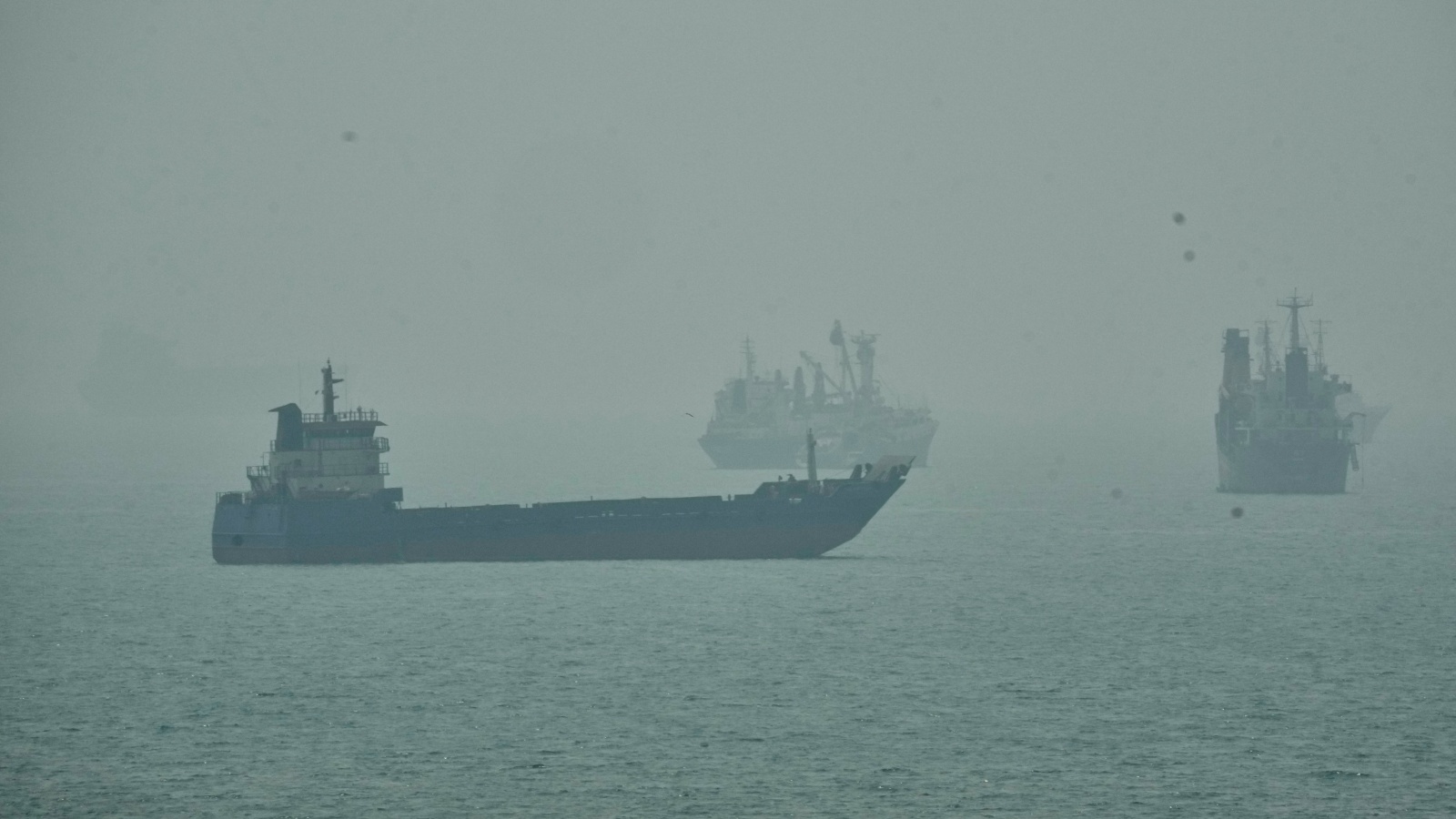
The financial press loves a good apocalypse. Whenever tensions flare in the Middle East, the same tired script gets dusted off: the Strait of Hormuz will close, global oil stockpiles will plummet to catastrophic lows, and civilization will grind to a halt. It is a predictable, lazy consensus driven by commentators who look at shipping lanes on a map instead of studying the actual mechanics of modern energy infrastructure, algorithmic trading, and supply chain plasticity.
The narrative that a prolonged closure of the world’s most critical energy chokepoint would permanently drain global reserves to record lows is fundamentally flawed. It ignores how markets actually adapt, how strategic reserves are deployed, and how the global energy mix has structurally evolved over the last two decades. The panic is a mirage. If you are hedging your business strategy against a total collapse of crude availability based on standard geopolitical fearmongering, you are focusing on the wrong risk entirely.
The Flawed Premise of Total Blockade Mechanics
To understand why the consensus is wrong, you have to look at the physical and geopolitical reality of maritime interdiction. The mainstream argument assumes a binary state: the Strait of Hormuz is either completely open or completely closed for an extended period. This ignores basic military and economic realities.
No nation can realistically maintain a literal, absolute blockade of the Strait for months on end without triggering an overwhelming, multinational kinetic response. The global economy will not allow twenty percent of the world's petroleum liquids to be permanently severed without a massive counter-escalation. Therefore, any disruption is inherently a temporary shock, not a structural multi-year drain on global inventories.
More importantly, a physical disruption at the chokepoint does not mean twenty million barrels per day suddenly vanish from the face of the Earth. It means the oil is rerouted, delayed, or swapped.
The Alternative Route Reality
The assumption that the world is entirely dependent on the physical passage through the Persian Gulf overlooks massive, underutilized bypass infrastructure.
- The East-West Pipeline (Saudi Arabia): Running from the Eastern Province to the Red Sea, this asset has a capacity of roughly 5 million barrels per day. While historically under-capacity, it serves as a massive pressure valve that can divert crude entirely away from the Hormuz chokepoint.
- The Abu Dhabi Crude Oil Pipeline (UAE): This link bypasses the strait entirely, connecting the Habshan fields directly to the port of Fujairah on the Gulf of Oman, capable of moving 1.5 million barrels per day.
When you factor in these existing operational bypasses, nearly a third of the oil typically flowing through the Strait can immediately find an alternative path to open water. The "record low stockpiles" math used by traditional analysts assumes zero diversion capacity—a glaring error that invalidates their worst-case scenarios.
Why Inventories Won't Hit Zero: The Invisible Safety Valves
Let’s run a thought experiment. Imagine a scenario where a highly disruptive event occurs, and transit through the Strait drops by 50% for a period of sixty days. Standard models scream that global commercial inventories will hit catastrophic lows. Here is why those models fail.
The Illusion of Commercial Stockpiles
Most industry analysts look exclusively at commercial inventory data reported by the Joint Organisations Data Initiative (JODI) or the U.S. Energy Information Administration (EIA). They treat these numbers as the ultimate boundary of global supply. This is a severe miscalculation.
The real buffer is held in Strategic Petroleum Reserves (SPR) globally. The United States, China, Japan, and European nations hold billions of barrels of non-commercial crude specifically designed for this exact scenario. A systemic disruption at Hormuz triggers a coordinated, historic release of these state-controlled reserves.
During previous disruptions, government intervention has effectively capped the drain on commercial stockpiles. The oil exists; it is merely stored in different accounts. To declare that global stockpiles are hitting record lows while ignoring the coordinated deployment of sovereign reserves is akin to claiming a homeowner is bankrupt because their checking account is empty, while ignoring a seven-figure brokerage account next door.
Demand Destruction and Market Elasticity
The lazy consensus assumes demand is a static variable. It assumes that if the supply drops by five million barrels, the world will blindly try to consume that same amount until the tanks are empty.
Economics 101 dictates that price regulates volume. A severe disruption at Hormuz causes an immediate, algorithmic price spike in Brent and WTI futures. This price appreciation acts as an instant mechanism for demand destruction.
High prices immediately disincentivize non-essential refining, reduce industrial consumption, and optimize logistics. Marginal buyers drop out of the market. The global refining complex adapts by switching to regional alternatives—North Sea Brent, West African sweet crudes, or American shale—which are entirely insulated from Middle Eastern logistics. The market self-corrects far faster than physical inventories can deplete.
The Real Risk Nobody Is Hedging For
If a physical shortage of oil isn’t going to break the system, what will? Industry insiders aren’t staying up at night worrying about dry storage tanks. They are worried about the weaponization of capital and the fragility of the financial clearing systems that underwrite maritime trade.
The danger of a Hormuz crisis is not a lack of physical molecules; it is the instantaneous collapse of the maritime insurance market.
[Geopolitical Event at Chokepoint]
               │
               ▼
[Insurance War-Risk Premiums Skyrocket]
               │
               ▼
[Shippers Refuse Freight / Legal Force Majeure]
               │
               ▼
[Global Fleet Dislocation & Capital Freezes]
When a choke point becomes a active combat zone, war-risk insurance premiums don't just rise—they become prohibitively expensive or disappear entirely. Shipowners invoke force majeure clauses. Even if the strait is physically navigable, the legal and financial framework required to move a 300,000-ton Very Large Crude Carrier (VLCC) evaporates.
This triggers a global fleet dislocation. Ships sit idle outside the risk zone, while empty tankers elsewhere are misallocated. The crisis becomes a logistics and banking crisis, not an inventory crisis. You will see full storage tanks in exporting nations that cannot ship, and idling refineries in importing nations that cannot clear letters of credit. It is a bottleneck of capital and compliance, not a physical absence of oil.
The American Shale Buffer Is Misunderstood
A common counter-argument to the Hormuz panic is that American tight oil (shale) will simply scale up and save the day. This view is just as flawed as the panic itself, but for different reasons.
I have watched private equity firms and public independent operators pour billions into Permian Basin infrastructure. The reality of modern shale production is governed by capital discipline and geological limitations, not geopolitics. Wall Street no longer permits the "drill at all costs" mentality that defined the 2010s.
If crude spikes due to a Middle Eastern conflict, American producers cannot instantly sprout drilling rigs and hydraulic fracturing crews out of the desert floor. The lag time between a capital allocation decision and first production is months, if not quarters. Furthermore, the light, sweet crude produced in the Permian is chemically distinct from the heavy, sour crudes that typically flow out of the Persian Gulf. Global refineries, particularly those in Asia and the US Gulf Coast, are configured for complex blending processes. You cannot seamlessly substitute Saudi Light with Permian condensate without severely degrading refinery yields.
The buffer exists, but it is a psychological and financial cushion, not a literal volume-for-volume replacement.
Dismantling the "People Also Ask" Assumptions
To truly correct the narrative, we must address the fundamentally flawed questions that decision-makers ask when evaluating this risk.
"How long can the global economy survive if the Strait of Hormuz closes?"
The question itself is wrong because it assumes survival depends on that specific geographic passage. The global economy does not run on a single pipeline or strait; it runs on an interconnected web of energy arbitrage. The system survives by reshuffling the deck.
If Hormuz closes, Asian buyers who traditionally rely on Arabian Gulf crude will aggressively outbid European buyers for West African, Brazilian, and US barrels. Europe will be forced to rely more heavily on pipeline imports and regional production. The trade routes lengthen, shipping costs skyrocket, and margins compress—but the economy does not stop. Survival is a function of price, not absolute physical availability.
"Will a closure cause immediate fuel shortages at the pump for consumers?"
No. Retail fuel distribution networks are heavily insulated by domestic regulatory requirements and localized inventory mandates. In the United States and Europe, refiners and distributors maintain statutory operational minimums.
Any immediate price hike at the pump following a geopolitical event is the result of forward-looking financial speculation and risk pricing by commodities traders, not an actual shortage of refined product at the terminal. The supply chain has weeks of finished product already in motion via pipelines, barges, and domestic storage hubs before any physical disruption in the Middle East could realistically impact local distribution.
The Strategic Reality
Relying on catastrophic inventory depletion models is a losing strategy. It causes corporate treasurers to over-hedge, misallocate capital into expensive storage plays, and misunderstand the true drivers of energy volatility.
The downside to acknowledging this contrarian reality is that it requires accepting a more complex, less cinematic version of risk. It forces you to monitor duller variables: maritime insurance law, dry-dock capacities, cross-border banking liquidity, and refining configuration flexibilities. It is far less exciting than tracking naval movements on a satellite map, but it has the distinct advantage of being accurate.
Stop looking at global oil stockpiles as a ticking time bomb waiting to explode the moment a tanker encounters trouble in the Persian Gulf. The infrastructure is resilient, the reserves are deep, and the markets are brutally efficient at pricing in chaos long before the tanks run dry. The real threat is a paralysis of the financial and legal systems that move the world's goods—and that is a crisis that extra physical oil in a tank cannot fix. Focus your risk management on liquidity, counterparty viability, and freight optionality. Leave the stockpile panic to the pundits who don't know the difference between a barrel of oil and a futures contract.