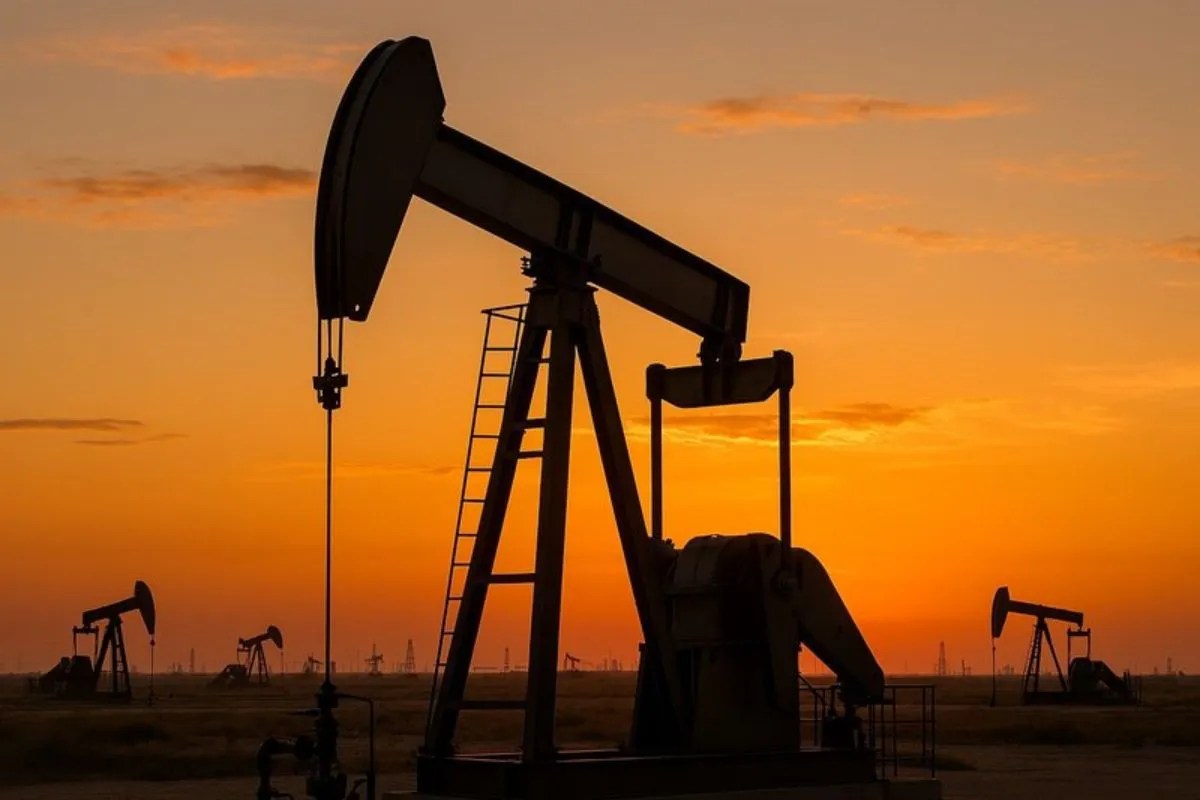
The sea smells of salt and old iron when you stand on the deck of a tanker idling off the coast of Corpus Christi, watching the heavy pumps heave black gold from the earth into the steel belly of a sleeping beast. To the crew on that vessel, the world is reduced to dials, gauges, and the heavy thrum of a diesel engine that never truly sleeps. But half a world away, a narrow channel of water barely twenty-one miles wide is holding that engine—and millions like it—hostage.
We call it the Strait of Hormuz. For most of us, it is a line on a map, a thin blue thread between Oman and Iran where a staggering percentage of the planet’s daily petroleum drifts past shores bristling with missile batteries and restless patrol boats. When the air turns sharp with diplomatic threats in the Middle East, the tension does not stay in the Persian Gulf. It travels through the fiber-optic cables of trading floors, hits the tickers in London and New York, and eventually manifests as a sickening knot in the stomach of a commuter filling up a rusted sedan at a roadside pump in Ohio or peering at a heating bill in winter.
Panic has a specific weight. It smells like sulfur and refined gasoline, and it moves faster than sound.
Consider Tariq, a fictional name for a very real kind of man—a logistics dispatcher sitting in a windowless room in Dubai, staring at a bank of monitors tracking supertankers moving through the choke points of the Gulf. When the news crawls across his screen about escalating skirmishes near the Strait, his coffee grows cold. He knows what the charts mean. Every ship forced to slow down, every captain ordered to divert around the Cape of Good Hope instead of cutting through the throat of the Middle East, adds weeks of transit time and millions of dollars in insurance premiums. The invisible gears of global commerce grind to a painful, expensive halt.
The market does not wait for bullets to fly. It reacts to the possibility of a spark.
When the Strait grows tight, oil prices surge. It is an ancient reflex of fear. Consumers bear the brunt, paying an invisible tax at the grocery store, at the mechanic, at the local bakery where the price of flour climbs because the trucks that delivered it burned expensive diesel. We have lived through this cycle before. We know the script.
Yet, history has a strange habit of opening a side door just as the front entrance slams shut.
While the eyes of the financial world were locked on the smoldering horizon of the Middle East, a different kind of deal was quietly taking shape thousands of miles away in the humid shadows of South America. For years, Venezuela sat on the largest proven oil reserves on Earth, an ocean of heavy crude trapped beneath a nation strangled by economic sanctions, crumbling infrastructure, and political isolation. Its oil wells were monuments to neglect, rusted pumps standing silent in the jungle while the population stood in breadlines.
Then came the pragmatism born of desperation.
Washington, staring down the barrel of persistent energy inflation and the volatile politics of the Middle East, made a calculated pivot. Sanctions were eased, just enough to let major energy corporations step back onto Venezuelan soil. Tankers that had been rotting in port began to clear their rusty decks. Crude started to flow again toward American refineries designed specifically to process Venezuela’s heavy, viscous oil—refineries that had spent years starving for the exact type of feedstock the country produces.
This is where the grand chess match of geopolitics intersects with the price of your morning commute.
Can an influx of Venezuelan barrels truly offset the nightmare scenario of a closed Strait of Hormuz? The answer is messy, complicated, and entirely dependent on time. Venezuela cannot simply flip a switch and flood the global market with millions of barrels overnight. The fields are bruised. The pipelines are cracked. Investment takes months to translate into barrels, and barrels take weeks to reach a refinery.
Think of it not as a flood, but as a slow drip of relief. It is a psychological counterweight. When traders see crude moving out of South America, the panic loses its absolute grip. It whispers to the market that there is an alternative, a pressure valve on a boiler that was threatening to explode.
Still, the skeptics are right to narrow their eyes. Venezuelan production is fragile. Political winds shift with the violence of a tropical storm. A single executive order in Washington or a sudden domestic crackdown in Caracas can slam the valve shut just as quickly as it was opened. Relying on Venezuela to save the global consumer from a Middle Eastern shock is like building a house raft on a river during flood season. It might keep you afloat for a while, but you never stop watching the sky.
So what does this mean for the person holding the gas pump handle, watching the numbers spin past twenty, thirty, forty dollars and climbing?
It means we are living in a delicate equilibrium. The price of crude oil is no longer determined by simple supply and demand, if it ever truly was. It is a barometer of human anxiety. It rises on the breath of a threat in a narrow Asian strait and falls on the promise of a compromised deal in a troubled South American republic.
The global energy market is a vast, interconnected organism. Pull a tendon in the Persian Gulf, and the spasm echoes all the way to the coast of the Caribbean. We are all passengers on this tanker, whether we understand the mechanics of sour crude and heavy distillates or not.
The next time you watch the numbers tick upward on a digital display, remember the invisible geography behind them. Remember the narrow strip of water where captains navigate through shadows, and the silent jungle pumps waking up to a second chance. The world is smaller than we think, and the fuel that moves us is never just a commodity. It is the lifeblood of our fragile, interconnected modern life, pulsing through arteries that are always, somehow, on the verge of constriction.