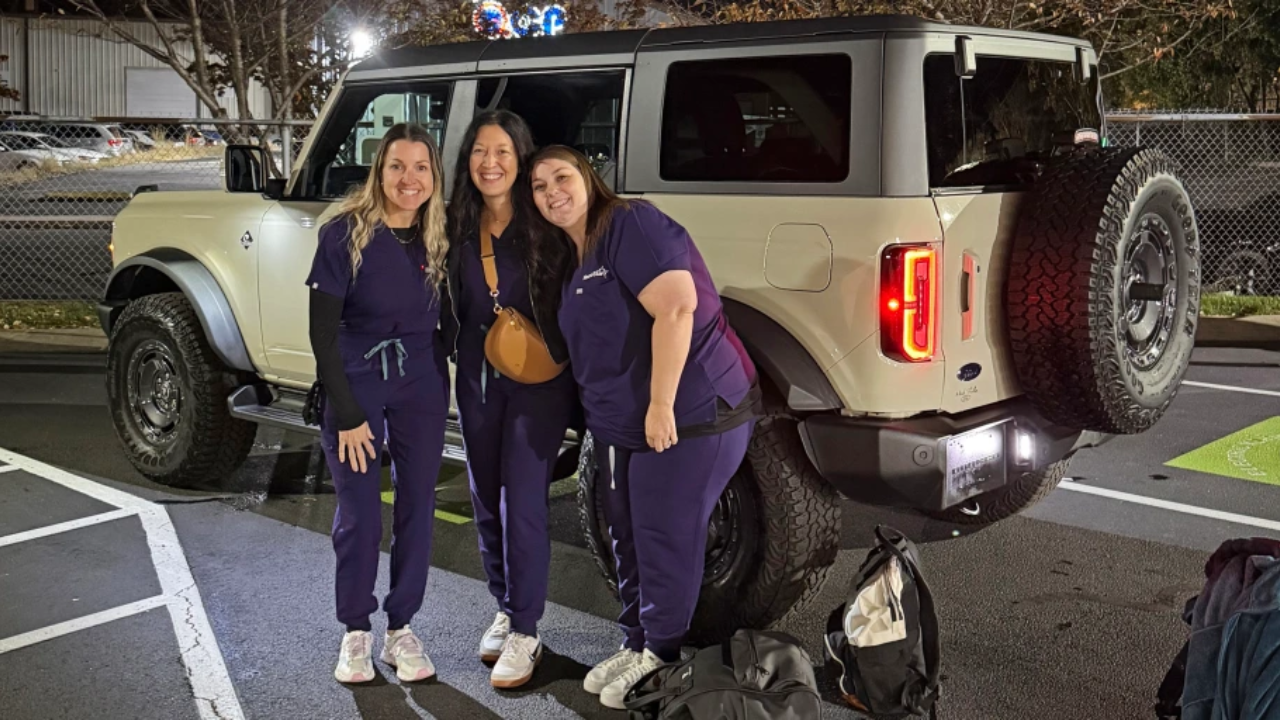
When a major U.S. flight shutdown strands tens of thousands of travelers, a strange economic calculation takes over the terminal. Faced with multi-day rebooking delays, zero rental car inventory, and surge-priced last-minute fares, three stranded women famously bypassed the airport chaos altogether by walking onto a dealership lot, purchasing a $48,000 Ford Bronco, and driving 27 hours home. It sounds like an impulsive viral stunt. In reality, it is a rational consumer response to a broken aviation infrastructure that routinely shifts the financial burden of systemic failure onto the paying passenger.
The Economics of Desperation at the Terminal
Commercial aviation operates on razor-thin margins and maxed-out load factors. Airlines routinely fill over 85 percent of their seats on domestic routes. That efficiency keeps base ticket prices low during normal operations, yet it leaves zero slack in the system when weather, staffing shortages, or air traffic control outages bring operations to a halt.
When a hub goes down, the recovery math breaks instantly. A single canceled widebody flight dumps 300 people into a terminal where the next ten flights on that route only have four empty seats combined. Automated rebooking algorithms push passengers out by days, not hours.
For travelers who need to get home for jobs, medical appointments, or family obligations, waiting four days in an airport hotel is not an option. They immediately pivot to ground transportation. Unfortunately, rental car fleets at major airports operate on the exact same lean-inventory model. Within thirty minutes of a mass cancellation event, every compact sedan, minivan, and cargo van within a twenty-mile radius is gone.
This brings travelers to the dealership lot. When you weigh a $48,000 depreciating asset against the immediate loss of income, missed obligations, and the sheer indignity of sleeping on terminal carpet, buying a vehicle stops looking crazy. If the buyer already needed a car, or plans to sell it immediately upon returning home, the actual net cost of the emergency transport isn't $48,000. It is merely the sales tax, registration fees, fuel, and immediate off-the-lot depreciation—often totaling between $3,000 and $5,000. Split three ways, that math starts to rival last-minute first-class tickets on competing airlines, assuming those tickets even exist.
Why Aviation Meltdowns Are Becoming Structural
To understand why passengers are resorting to extreme measures, you have to look at how the U.S. airspace system is held together. The problems plaguing modern air travel are rarely isolated freak accidents. They are the predictable outcomes of three converging failures.
- Air Traffic Control Staffing Deficits: The Federal Aviation Administration has struggled for years with a chronic shortage of certified controllers, particularly in high-traffic corridors like the New York TRACON and Jacksonville centers. When staffing drops below minimum thresholds, the FAA mandates ground delay programs and airspace closures to maintain safety margins.
- Aging Crew Scheduling Software: Several major carriers still rely on legacy backend systems built decades ago to track pilot and flight attendant locations. During a cascading weather event, these systems lose track of where crews are, forcing airlines to cancel perfectly good aircraft with full fuel tanks simply because the software cannot legally pair a crew to the plane.
- The Hub-and-Spoke Bottleneck: By funneling almost all domestic traffic through a handful of mega-hubs like Atlanta, Dallas, Chicago, and Denver, airlines maximize route connectivity. However, a thunderstorm in one hub creates a domino effect that strands crews and aircraft thousands of miles away in clear weather.
The Hidden Legal Trap of Airline Refunds
Many stranded travelers assume that if an airline cancels their flight, the carrier is legally obligated to put them on a competitor's plane, pay for their hotel, and cover their meals. That assumption is mostly wrong.
Under U.S. Department of Transportation rules, if your flight is canceled for any reason and you choose not to travel, the airline must give you a full cash refund for the unused portion of your ticket. Notice the catch. Taking the refund immediately terminates the airline's obligation to get you to your destination.
If you paid $250 for a round-trip ticket booked three months in advance, and the airline cancels the return leg during a meltdown, taking a $125 refund does nothing to get you home when walk-up fares on rival airlines are selling for $1,400. You are financially stranded.
Furthermore, airlines strictly categorize delays as either "controllable" or "uncontrollable." Controllable delays include maintenance issues, crew scheduling errors, and fueling problems. Uncontrollable delays include severe weather and air traffic control directives. Even when a delay is clearly the airline's fault, federal law does not strictly mandate cash compensation for your wasted time, unlike the strict EC 261 passenger rights regulations enforced in the European Union. Carriers make voluntary commitments regarding hotel vouchers and meal stipends, and those commitments evaporate the moment an airline blames the weather for a delay that was actually caused by its own crew mismanagement.
How to Actually Buy a Car in an Emergency
Pulling off an emergency vehicle purchase during a travel crisis is far harder than simply walking into a showroom and swiping a credit card. Dealerships are bound by strict state tax laws, anti-money laundering regulations, and lender requirements that actively resist out-of-state impulse buyers.
If you ever find yourself considering the dealership exit strategy, you will hit several immediate friction points.
First, payment verification becomes a massive hurdle. Dealerships rarely accept personal checks from out-of-state buyers due to fraud risk, and credit card limits usually cap out at $3,000 to $5,000 for vehicle down payments because dealers refuse to eat the 3 percent merchant processing fee on a $48,000 transaction. You either need immediate access to wire transfer capabilities during banking hours, or you must finance the vehicle on the spot to secure a temporary drive-away tag.
Second, insurance binders are non-negotiable. No reputable dealer will let you drive a financed or cash-purchased vehicle off the lot without proof of active, comprehensive insurance coverage listing that specific Vehicle Identification Number. You will have to call your insurance provider from the showroom floor and add the vehicle to your policy before you get the keys.
Third, cross-border sales tax creates a bureaucratic headache. States have varying reciprocity agreements. If you buy a car in Texas to drive home to Illinois, the dealer has to calculate Illinois state and local sales taxes, issue a temporary transit permit, and mail the title paperwork to your home DMV. If the finance manager at the dealership is unfamiliar with your home state's titling laws, the deal can stall for hours.
Smarter Escape Routes Before You Buy an SUV
Before committing to a five-figure automotive transaction, experienced road warriors use a specific sequence of moves to break out of a stranded hub.
- Search Co-Terminals Immediately: Never limit your search to the airport you are currently standing in. If you are stuck at Newark, check flights out of Philadelphia, Baltimore, or even Boston. A two-hour Amtrak ride or a one-way Uber to a secondary airport outside the immediate weather zone often reveals wide-open flight inventory that stranded hub passengers are ignoring.
- Use the Phone While Standing in Line: Always get in the physical customer service line at the gate, then immediately call the airline's reservation desk. While waiting on hold, open the airline's mobile app and use the chat function. You are running three parallel races. Whichever agent answers first wins. If you hold elite status or hold the airline's co-branded credit card, call the dedicated support number on the back of the card rather than the general public line.
- Check Off-Airport Rental Locations: Airport rental counters run out of cars first because they rely on a closed loop of returning flyers. Open a maps app and call neighborhood rental branches located in suburban strip malls or auto body shops ten miles away from the runway. Take a $30 rideshare to a suburban branch, secure a sedan, and drive out of the storm zone.
- Book One-Way Moving Trucks: When traditional rental cars hit zero inventory, commercial truck rental companies like U-Haul, Penske, and Budget Truck Rental often still have pickup trucks and cargo vans sitting in local lots. Driving a 10-foot box truck across three states isn't luxurious, and the fuel economy is terrible, but a $150 daily rate plus mileage beats buying a Ford Bronco you didn't want.
The Real Cost of Passenger Apathy
The viral story of three women buying an SUV to escape an airport shutdown resonates because every modern flyer recognizes that exact feeling of helplessness. We have been conditioned to accept sudden cancellations, opaque rebooking rules, and disappearing customer service as the unavoidable price of modern travel.
Airlines have spent billions optimizing their networks for maximum profit during good weather while treating catastrophic meltdowns as an acceptable cost of doing business. Until federal regulators tie airline executive compensation directly to operational reliability—or enforce European-style mandatory cash penalties for controllable delays—carriers have zero financial incentive to build slack back into their schedules. The next time the departure boards turn red, the only people guaranteed to get home on time are the ones willing to walk out the terminal doors and take the wheel themselves.