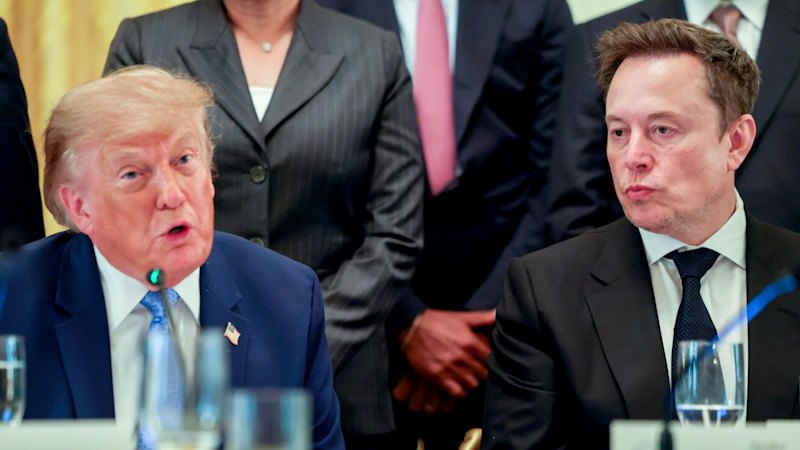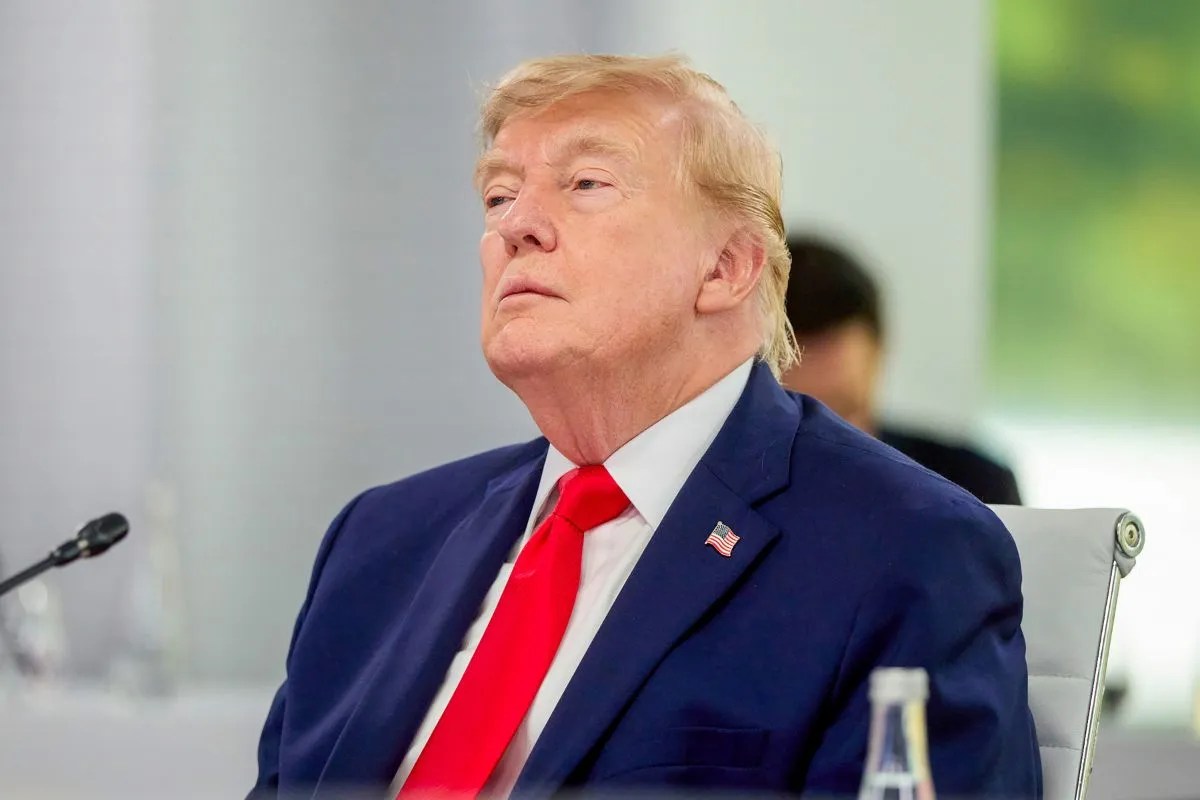
Strategic ambiguity is a deliberate bargaining tactic designed to maximize diplomatic flexibility while forcing an adversary into a defensive posture. When Donald Trump states regarding Iran that revealing his plans would "become big news" and asserts that the "matter will be over soon," he is not offering a casual media soundbite. He is deploying a calculated information-asymmetry mechanism rooted in game theory and coercive diplomacy. By withholding specific operational parameters while projecting imminent resolution, the speaker shifts the cognitive and financial burden of preparation onto the opposing state.
The Architecture of Coercive Ambiguity
Standard media coverage treats statements like "if I tell you, it will become big news" as mere theatrical evasion. That interpretation misses the structural function of opacity in international relations. In high-stakes negotiations, particularly those involving nuclear proliferation, regional proxy networks, and economic sanctions, explicit declarations create rigid commitments. Once a leader draws a public red line or announces a specific timeline, backing down incurs severe domestic and international audience costs.
By contrast, structured ambiguity achieves three operational objectives simultaneously:
- Preservation of Option Value: Keeping tactical choices hidden allows the executive branch to pivot between economic pressure, covert operations, diplomatic backchannels, or military posturing without appearing inconsistent.
- Adversarial Resource Drain: When Tehran cannot determine whether "the matter will be over soon" refers to a sweeping diplomatic grand bargain, an intensified sanctions regime, or a kinetic strike, Iranian planners must allocate resources across all contingencies. This spreads their defensive bandwidth thin.
- Market and Coalition Signaling: Uncertainty forces third-party actors—such as European allies, Gulf states, and global energy markets—to hedge their positions, often aligning closer to Washington's preferred baseline out of risk aversion.
The limitation of this mechanism lies in its diminishing returns over time. If the promised resolution fails to materialize within a perceived reasonable window, the credibility of future ambiguous threats degrades rapidly, transforming perceived strategic genius into dismissed bluster.
Game Theory and the Madman Hypothesis
To understand the mechanics behind projecting an imminent, undisclosed resolution, one must examine Thomas Schelling’s work on the "threat that leaves something to chance" alongside Richard Nixon’s Madman Theory. In classical rational-actor models, a state only executes a threat if the expected utility of doing so outweighs the cost. Because large-scale conflict in the Middle East carries massive economic and human costs for the United States, a purely rational actor struggles to make threats of rapid, decisive action fully credible.
Trump’s rhetoric circumvents this credibility trap by cultivating unpredictability. When a leader signals that they possess a definitive, undisclosed mechanism to end a protracted geopolitical standoff quickly, the adversary must calculate the probability that the leader is willing to absorb costs that a conventional politician would reject.
This creates a specific asymmetric payoff matrix:
- If Tehran assumes a bluff: They maintain current enrichment levels and proxy support, risking a sudden, severe escalation if the undisclosed plan is actually kinetic or economically catastrophic.
- If Tehran assumes resolve: They are incentivized to enter backchannel negotiations early to secure better terms before the "big news" breaks on Washington's terms.
The structural flaw in relying on unpredictability is miscalculation. If the opposing leadership misinterprets the ambiguous signal as an imminent existential threat rather than a prelude to a deal, they may initiate a preemptive strike to seize the initiative, triggering the exact escalation the rhetoric was meant to prevent.
Information Asymmetry and Media Amplification
The explicit acknowledgment that a disclosure "would become big news" demonstrates an acute awareness of modern media ecosystems as a force multiplier in statecraft. In traditional diplomacy, leaks are treated as operational failures. Here, the threat of a headline is weaponized as a substitute for policy detail.
Media networks operate on attention economics, naturally amplifying hints of imminent, transformative geopolitical shifts. By teasing a major development without providing verifiable substance, the speaker co-opts global news cycles to broadcast a message of impending dominance directly to the adversary's domestic audience and leadership. This bypasses traditional diplomatic cables and creates psychological pressure within the target regime.
However, this reliance on media amplification introduces severe noise into intelligence assessments. Foreign ministries must separate genuine operational security from domestic political messaging. When a leader speaks frequently to press pools without prepared remarks, distinguishing between a finalized National Security Council directive and an extemporaneous negotiation ploy becomes exceedingly difficult for foreign intelligence services.
The Mechanics of "Ending It Soon"
The assertion that a decades-long geopolitical conflict "will be over soon" relies on a transactional view of international relations. Institutional foreign policy establishments typically view the U.S.-Iran standoff as a structural, ideological, and generational struggle requiring containment and incremental diplomacy. A transactional framework rejects this premise, assuming instead that every state actor has a specific pain threshold and a price at which they will capitulate or deal.
Under this transactional model, bringing the matter to a rapid close requires altering the adversary's cost-benefit calculation through concentrated, overwhelming leverage rather than gradual pressure. Historically, this points toward two primary pathways:
- Maximum Economic Strangulation: Enforcing secondary sanctions so strictly that the target regime faces immediate internal liquidity crises, currency collapse, and domestic unrest, forcing them to the negotiating table to ensure regime survival.
- Decisive Kinetic Deterrence: Executing a rapid, high-impact military operation that degrades critical infrastructure or leadership nodes, followed immediately by an offer to cease hostilities in exchange for structural concessions.
Both pathways carry substantial operational risks. Economic strangulation often strengthens hardline factions within the target country who control black-market networks, while marginalizing moderate elements. Kinetic deterrence risks trapping the intervening power in a protracted war of attrition if the adversary refuses to capitulate after the initial blow.
Tactical Reality Versus Rhetorical Velocity
A sharp divergence always exists between the speed of political rhetoric and the friction of operational execution. Declaring that an international crisis will conclude rapidly ignores the logistical, legal, and geopolitical realities that govern state action.
Diplomatic treaties involving nuclear verification, ballistic missile restrictions, and regional security guarantees require months or years of technical drafting. Even a unilateral withdrawal of sanctions or an executive agreement faces immediate institutional friction from legislative bodies, allied governments, and financial compliance systems. Banks and multinational corporations do not re-enter high-risk markets simply because a political leader declares a matter resolved; they require durable legal frameworks and years of stability before committing capital.
Similarly, military options cannot be executed in a vacuum. Moving carrier strike groups, positioning air defense assets to protect regional allies, and securing overflight rights from neighboring states require visible, time-consuming logistical chains. Intelligence agencies monitor these physical movements continuously. When physical force posture does not match rhetorical urgency, adversaries immediately recognize that the timeline is political rather than operational.
Evaluating Geopolitical Signals
Analysts, investors, and policy practitioners cannot trade or plan based on unverified rhetorical teases. When confronted with high-profile statements promising imminent, undisclosed breakthroughs, decision-makers must filter out the noise by tracking physical and institutional indicators rather than press transcripts.
To accurately assess whether an ambiguous statement precedes a genuine shift in U.S.-Iran relations, monitor these four concrete metrics:
- Force Posture and Logistics: Track naval deployments in the Persian Gulf, aerial refueling tanker movements, and the positioning of missile defense batteries in allied territories. Genuine kinetic readiness leaves an undeniable physical footprint.
- Treasury and Sanctions Enforcement: Observe the Office of Foreign Assets Control (OFAC) licensing actions and maritime enforcement against shadow-fleet oil tankers. A sudden spike in seizures indicates imminent economic escalation; quiet waivers signal backchannel de-escalation.
- Third-Party Intermediary Travel: Monitor high-level diplomatic traffic in traditional neutral conduits such as Oman, Qatar, and Switzerland. Unannounced visits by senior intelligence or national security officials to these hubs precede almost every genuine diplomatic breakthrough.
- Proxy Force Behavior: Measure the tempo of attacks by regional militias in Iraq, Syria, Lebanon, and the Red Sea. A sudden, synchronized stand-down among proxy groups indicates that Tehran has received a credible warning or an attractive diplomatic offer through private channels.
Treat the rhetoric itself strictly as an opening bid in a continuous bargaining game. Do not adjust capital allocation or strategic posture until at least two of the four physical indicators confirm that the undisclosed plan is moving from a talking point into operational reality.