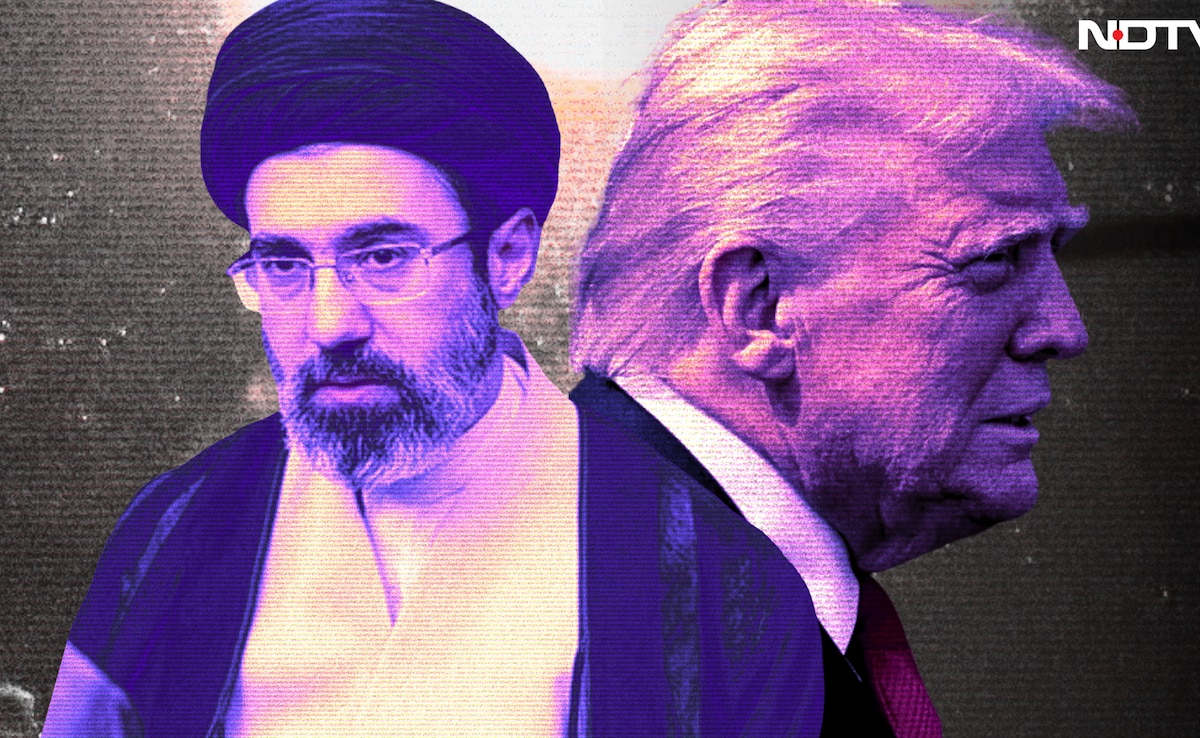
The resumption of diplomatic engagement between the United States and Iran is not a matter of shared intent, but a calculation of shifting geopolitical costs. Current U.S. policy dictates that any return to the negotiating table is contingent upon two non-negotiable structural requirements: the verifiable de-escalation of regional proxy activities and a return to strict compliance with nuclear enrichment ceilings. These conditions function as a strategic filter, designed to ensure that talks serve as a mechanism for regional stabilization rather than a platform for Iranian nuclear hedging.
The Bifurcated Framework of U.S. Prerequisites
To understand the current impasse, one must categorize the U.S. demands into two distinct functional silos: the Nuclear Compliance Vector and the Regional Stability Constraint. If you enjoyed this article, you might want to read: this related article.
1. The Nuclear Compliance Vector
The primary technical hurdle remains Iran’s stockpile of highly enriched uranium (HEU). The U.S. position treats nuclear enrichment levels as a binary switch for legitimacy. Under the Joint Comprehensive Plan of Action (JCPOA), enrichment was capped at 3.67%. Current estimates suggest Iran has significantly surpassed these levels, reaching 60% purity at certain facilities. From a strategic perspective, the U.S. views this not just as a violation of previous terms, but as a reduction in "breakout time"—the duration required to produce enough weapons-grade material for a nuclear device.
The U.S. requirement for a "return to compliance" involves three specific technical actions: For another angle on this story, check out the recent coverage from USA Today.
- Downblending or Exporting HEU: Iran must physically reduce its inventory of uranium enriched beyond the 3.67% threshold.
- Centrifuge Decommissioning: The removal of advanced IR-6 centrifuges which accelerate enrichment beyond the capacities allowed in 2015.
- IAEA Transparency: Restoring "continuity of knowledge" via unhindered access for International Atomic Energy Agency inspectors to surveillance data and physical sites.
2. The Regional Stability Constraint
The second condition is less technical but more politically volatile: the cessation of "malign regional activity." This encompasses the funding, training, and arming of non-state actors across the "Resistance Axis," including Hezbollah in Lebanon, various militias in Iraq and Syria, and the Houthis in Yemen.
The U.S. logic operates on a Linkage Theory. If the U.S. provides sanctions relief solely for nuclear concessions, it effectively subsidizes Iran’s conventional and proxy warfare capabilities. Therefore, the U.S. seeks a "longer and stronger" deal that integrates regional behavior into the primary diplomatic architecture—a demand Tehran has historically rejected as a violation of its sovereign defense policy.
The Cost Function of Sanctions vs. Enrichment
The negotiation is essentially an equilibrium problem between two competing pressures: the Economic Attrition felt by Tehran and the Proliferation Risk felt by Washington.
Iran’s economy remains constricted by the "Maximum Pressure" legacy. High inflation, currency devaluation of the Rial, and restricted oil export channels create a domestic imperative for sanctions relief. However, Iran uses its nuclear advancement as a counter-leverage tool. Every kilogram of 60% enriched uranium increases the "cost" of U.S. inaction. This creates a dangerous feedback loop where both parties believe time is on their side, yet the margin for error shrinks.
Structural Bottlenecks in the Diplomatic Path
Three specific structural barriers prevent a simple return to the status quo:
The Verification Gap
Trust is a defunct variable in this equation. The U.S. requires "verifiable" compliance, but the infrastructure for such verification has been degraded. Since Iran restricted IAEA access to certain sites, a "black box" period exists. Reconstructing a baseline of Iran’s nuclear progress since 2021 is a prerequisite that requires months of technical auditing before a formal agreement can even be signed.
Domestic Political Volatility
Both administrations face internal constraints that limit their bargaining space.
- In Washington: The Biden administration must navigate a divided Congress where any deal perceived as "weak" triggers legislative maneuvers to block sanctions relief.
- In Tehran: The conservative-dominated Ebrahim Raisi government (and the broader clerical establishment) views any concession not preceded by a total removal of sanctions as a strategic defeat.
The Regional Security Dilemma
U.S. allies—specifically Israel and Saudi Arabia—view a bilateral U.S.-Iran deal as a threat to their security. Israel’s "Begin Doctrine" (the policy of preemptive strikes to prevent regional rivals from acquiring nuclear weapons) remains an active wild card. If the U.S. pursues a deal that Israel deems insufficient, the risk of a kinetic strike on Iranian nuclear infrastructure increases, which would immediately collapse any diplomatic progress.
The Mechanism of De-escalation
For talks to move from "intent" to "execution," a phased sequencing model is the only viable path. This is often referred to as "Less for Less" or "Freeze for Freeze."
In this model, the U.S. would allow limited access to frozen assets or provide specific waivers for humanitarian trade. In exchange, Iran would halt enrichment at the 60% level and stop the installation of advanced centrifuges. This does not resolve the underlying conflict but creates a "Stability Floor" that prevents the situation from spiraling into a regional war.
The second phase involves the "Grand Bargain" logic: a comprehensive lifting of secondary sanctions in exchange for permanent caps on nuclear activity and a verifiable reduction in missile technology transfers to proxy groups. The bottleneck here is that Iran views its missile program and proxies as its "strategic depth," making them non-negotiable, while the U.S. views them as the primary source of Middle Eastern instability.
Strategic Recommendation for Regional Actors
The U.S. insistence on these two conditions signals a shift toward a "containment plus" strategy. Washington is signaling that it is comfortable with the current sanctions regime indefinitely unless Iran significantly alters its trajectory.
For stakeholders, the most probable outcome is not a comprehensive new JCPOA, but a series of unwritten, informal "understandings." These will likely focus on:
- Maintaining the 60% Enrichment Ceiling: A "red line" for U.S. and Israeli military intervention.
- Proxy De-confliction: Informal agreements to limit attacks on U.S. personnel in Iraq and Syria in exchange for a reduction in U.S. naval pressure in the Persian Gulf.
The strategic play is to monitor the Breakout Clock. As the time required for Iran to reach 90% enrichment (weapons-grade) nears the two-week mark, the U.S. will be forced to choose between a significant diplomatic concession or a kinetic military intervention. The current conditions are an attempt to stall that clock without paying the political price of a full treaty.