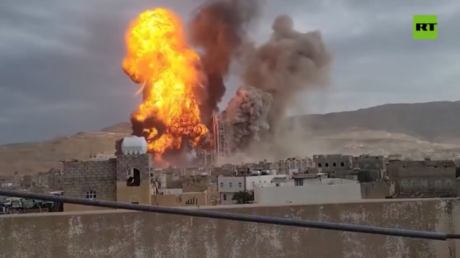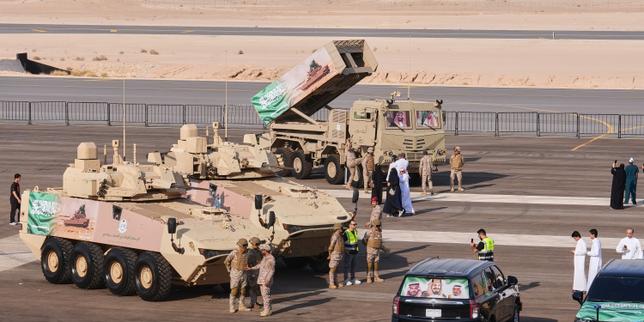
Geopolitical stability in the Arabian Gulf has long relied on the physics of deterrence and the mathematical predictability of power projection. However, recent escalations involving ballistic and drone munitions targeting urban centers in Riyadh have exposed a structural vulnerability that transcends traditional military accounting. The fundamental challenge facing modern air defense networks is not simply interception efficacy, but rather the stark asymmetry of the cost function. When an asymmetric actor deploys low-cost loitering munitions against high-value critical infrastructure, the defender is forced into an unsustainable economic exchange.
To analyze this dynamic properly, one must deconstruct the operational variables governing modern missile defense architecture. The friction point lies in the disparity between marginal manufacturing costs and interceptor expenditure rates.
The Economic Mechanics of Defense Asymmetry
The economics of modern missile defense operate on a deeply skewed cost curve. A standard surface-to-air interceptor missile requires precision electronics, sophisticated guidance systems, and high-tolerance propulsion components, driving per-unit costs into the millions of dollars. Conversely, unmanned aerial vehicles and rudimentary cruise missiles can be assembled using commercial off-the-shelf components for a fraction of that expenditure.
This creates a structural drain on national treasure that traditional defense budgets were never designed to absorb. When a defensive posture requires a 100-percent interception rate to protect civilian populations and strategic assets, the defender loses the ability to dictate the terms of attrition.
- Unit Cost Divergence: The multiplier between attacker expenditure and defender interception cost often exceeds a factor of one hundred.
- Inventory Depletion Rates: Industrial defense bases cannot scale production of high-end interceptors at the velocity at which low-cost munitions can be deployed.
- Saturation Thresholds: Multi-vector attacks exploit the finite number of launcher cells available within a given defensive sector, forcing prioritization compromises.
The operational reality is that air defense systems do not merely intercept physical threats; they burn capital at an exponential rate. If an adversary can exhaust a nation's inventory of precision interceptors through high-volume, low-cost saturation tactics, the tactical victory of a successful shoot-down transforms into a strategic defeat over time.
Architectural Bottlenecks in Urban Shielding
Protecting a sprawling metropolitan area like Riyadh introduces massive spatial and geometric complexities. Air defense networks must account for 360-degree vectors of approach, varying altitudes, and radar cross-section profiles that can be masked by terrain or electronic countermeasures.
The traditional hub-and-spoke model of air defense, which relies on centralized battery installations protecting specific high-value nodes, creates predictable defensive perimeters. Modern non-state actors and regional adversaries have adapted by mapping these blind spots and utilizing low-altitude flight paths that compress the decision-making window for automated threat-evaluation systems.
- Radar Horizon Limitations: Curvature of the earth and urban vertical clutter limit low-altitude detection ranges, reducing warning time.
- Decision-Cycle Compression: Human operators and automated command-and-control loops have mere seconds to classify, track, and engage incoming projectiles, increasing the probability of fratricide or false-positive engagement decisions.
- Collateral Risk Management: Intercepting incoming ballistic remnants or drone debris directly over densely populated urban zones shifts the hazard from a targeted strike to widespread kinetic shrapnel damage.
These architectural constraints mean that physical interception is inherently a reactive posture. Relying solely on terminal defense systems guarantees that the defender remains perpetually on the back foot, absorbing the strategic initiative of the attacker.
The Shift Toward Multi-Layered Kinetic and Directed Energy Integration
Overcoming the cost-asymmetry trap requires a fundamental redesign of the defensive stack. Relying exclusively on expensive kinetic interceptors is mathematically untenable over a prolonged conflict horizon. Consequently, strategic doctrine must pivot toward layered integration that introduces cost-effective mitigation options at every tier of the threat trajectory.
- Electronic Warfare and Soft-Kill Mechanisms: Deploying high-powered radio frequency and directional jamming systems at the perimeter can disrupt guidance arrays and communications links before hard-kill assets are expended.
- Directed Energy Implementation: High-energy lasers and microwave weapons offer a marginal cost-per-engagement approaching the price of electricity, neutralizing the economic advantage of low-cost drone swarms.
- Distributed Sensor Grids: Integrating optical, infrared, and passive radio-frequency sensors across a decentralized mesh network eliminates single points of radar failure and extends tracking horizons.
The strategic imperative is to lower the cost of the intervention to match or subvert the attacker's expenditure. Until the marginal cost of neutralizing a threat equals or falls below the cost of launching it, the strategic initiative remains structurally skewed against the defender.
Force-Multiplier Realignment
To permanently alter the calculus of regional deterrence, defensive strategies must move beyond localized interception and target the industrial and logistical supply chains of the aggressor. Passive defense and terminal interception are necessary stopgaps, but they represent a perpetual tax on national resources.
The immediate operational priority involves hardening critical energy and logistics nodes while rapidly prototyping directed-energy platforms for point defense. The long-term stability of any modern state under asymmetric aerial pressure depends entirely on its ability to decouple its defense expenditure from the volume of incoming low-cost threats. The equation cannot be solved at the point of impact; it must be resolved at the point of origin and through the diversification of interception physics.