The G7’s decision to release record volumes from the Strategic Petroleum Reserve (SPR) is not a simple act of "calming the market"; it is a massive intervention in global energy liquidity intended to decouple physical supply constraints from speculative price discovery. To analyze this maneuver, one must look past the headlines and evaluate the move through the lens of intertemporal substitution—the shifting of consumption from the future to the present to neutralize a supply-side shock.
The Triad of Strategic Petroleum Reserves
To understand the scale of the G7 intervention, we must categorize the function of these reserves into three distinct operational pillars. Most surface-level analysis treats the SPR as a monolithic "emergency fund," but its utility is actually divided by specific economic objectives.
- The Physical Buffer: The primary purpose is to maintain a high-inventory floor to prevent physical "dry-outs" at refineries. If a refinery cannot access crude, the resulting shutdown causes a non-linear spike in downstream product prices (gasoline, diesel, jet fuel) that far exceeds the increase in crude prices.
- The Price Signal Anchor: By announcing a "record" release, the G7 targets the "risk premium" embedded in oil futures. Speculators price in the probability of future scarcity; a massive, coordinated release lowers that probability, forcing a liquidation of long positions and suppressing the "backwardation" in the market.
- The Geopolitical Lever: This is the use of energy stocks as a diplomatic tool. By flooding the market, the G7 reduces the marginal revenue of competing oil-producing nations, effectively using domestic inventory as a financial weapon to erode the pricing power of adversarial cartels.
The Mechanics of Market Rebalancing
When the G7 releases oil, it does not simply "lower the price." It changes the Cost of Carry for every participant in the market. In a normal market (contango), it is profitable to store oil because future prices are higher than spot prices. In a supply-indexed crisis (backwardation), the spot price is higher than the future price because immediate delivery is at a premium.
A massive SPR release flattens the forward curve. By injecting millions of barrels into the immediate spot market, the G7 artificially satisfies the "hunger" for prompt delivery. This narrows the gap between the spot price and the 12-month forward price.
The Elasticity Problem
The effectiveness of this release is capped by the Price Elasticity of Demand. In the short term, oil demand is notoriously inelastic. People still need to drive to work, and cargo ships still need to move goods, regardless of a 10% price swing. Because demand does not drop quickly when prices rise, the G7 must provide a volume of oil that is large enough to move the needle on a global scale.
If global demand is roughly 100 million barrels per day (mb/d), a release of 1 mb/d represents only a 1% shift in supply. To truly "calm" a market, the release must be large enough to offset the specific volume lost from the disrupted source (e.g., a sanctioned state or a conflict zone). If the disruption is 3 mb/d and the release is only 1 mb/d, the market remains in a structural deficit, and the price relief will be transient.
The Operational Friction of Large-Scale Releases
Strategic reserves are not a "digital" supply that can be switched on instantly. There are significant logistical bottlenecks that dictate the speed and efficacy of a G7-led intervention.
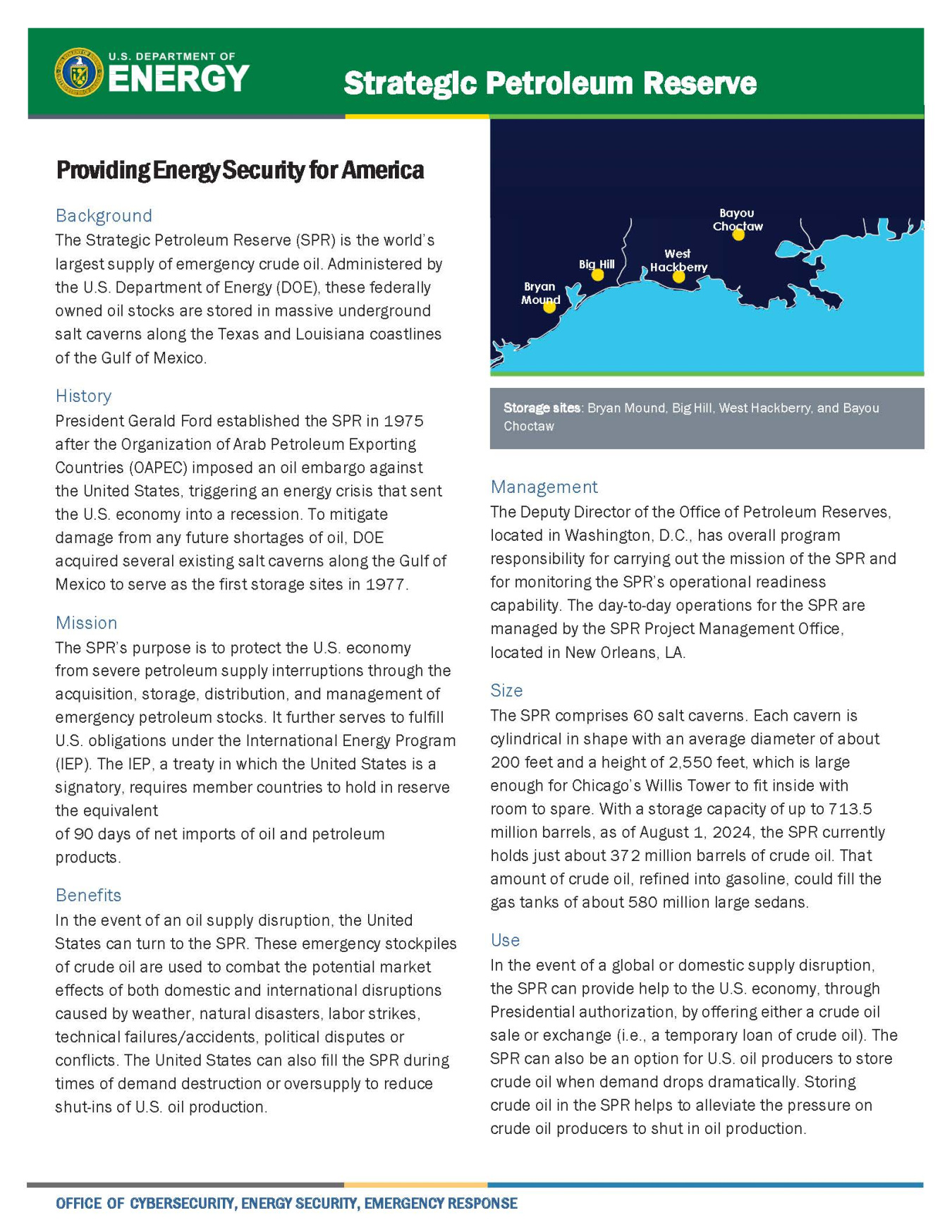
- Drawdown Capacity: Every SPR site has a maximum physical limit on how many barrels can be pumped out per day. This is governed by the diameter of the pipelines and the pressure of the salt caverns or tanks.
- Grade Mismatch: Refineries are calibrated for specific types of crude—Light Sweet or Heavy Sour. If the G7 releases Light Sweet crude when the market is missing Heavy Sour, the impact is dampened. Refineries cannot simply swap one for the other without losing efficiency or increasing maintenance costs.
- Refining Bottlenecks: Even if the G7 puts 200 million barrels of crude onto the market, it does nothing if the world's refineries are already running at 98% capacity. The "bottleneck" moves from the oil well to the refinery gate. In this scenario, crude prices might drop, but gasoline prices—what the public actually feels—will remain high because the "crack spread" (the profit margin for turning oil into fuel) widens.
The Refill Dilemma and Long-Term Risk
The most significant logical gap in standard reporting on SPR releases is the "Refill Requirement." Every barrel released today is a barrel that must be repurchased later to maintain national security. This creates a Shadow Demand in the future.
Market participants know that the G7 will eventually have to go back into the market to buy 100+ million barrels to replenish their caverns. This creates a "floor" under future prices. If the G7 releases oil at $100 and plans to buy it back at $70, they are essentially shorting the market. However, if they cannot drive the price down to $70, they face a fiscal loss and a weakened strategic position.
The Risk of Exhaustion
The G7 is essentially trading "Security for Stability." By depleting reserves to lower prices, they reduce their ability to respond to a second shock. If a major hurricane or a new geopolitical conflict occurs while the SPR is at a 40-year low, the market will react with extreme volatility because the "safety net" is gone. The market's perception of "buffer capacity" is a key component of the price. When the buffer is high, volatility is low. When the buffer is low, every minor supply hiccup causes a price spike.
Evaluating the Success Metrics
To determine if the G7's record release is actually working, analysts must track three specific metrics rather than just the "headline price":
- The Prompt Spread: Is the difference between the current month's oil price and next month's oil price shrinking? If yes, the release is successfully providing liquidity.
- Commercial Inventory Levels: Is the SPR release actually leading to an increase in total commercial stocks, or is the oil just being consumed immediately? If commercial stocks don't rise, the "calm" is an illusion.
- Refinery Throughput: Are refineries increasing their intake of the released oil? If throughput is flat, the SPR release is merely replacing other supply rather than adding to it.
The Strategic Path Forward
The G7 must shift from a policy of "emergency reaction" to a "systemic liquidity provision." A one-time record release is a blunt instrument. A more sophisticated approach involves a Price-Contingent Release Mechanism, where volumes are automatically released when the 30-day volatility index exceeds a certain threshold, and automatically repurchased when prices dip below the marginal cost of production for the world's swing producers.
Instead of targeting a specific price (which is impossible in a global market), the G7 should target a Volatility Band. By signaling to the market that they will defend a certain level of supply availability, they can discourage the speculative hoarding that drives the most aggressive price spikes. The goal is not "cheap oil," but "predictable oil."
The current intervention provides a temporary ceiling on prices, but it does not address the underlying lack of CAPEX (Capital Expenditure) in global upstream production. Without a corresponding increase in long-term drilling and infrastructure, the G7 is merely burning through its insurance policy to buy time. The real strategic move is to use the temporary price stability provided by the SPR release to accelerate the transition to diversified energy sources, thereby reducing the "Oil-Intensity" of the global GDP and making future supply shocks irrelevant.
Direct the Department of Energy and G7 counterparts to publish a transparent, multi-year refill schedule. This removes the "uncertainty discount" from future contracts and allows producers to hedge their own long-term investments against the guaranteed demand of the government, incentivizing the very production growth that makes future SPR releases unnecessary.