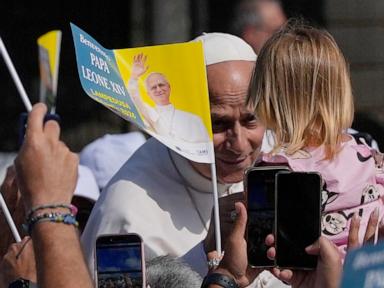
When the Bishop of Rome steps away from public audiences for his summer rest, the media routinely frames it as a simple vacation. It is not. The modern papal summer break serves as the tactical aftermath of a massive, intentional assertion of absolute monarchical power that leaves theological and administrative opponents completely flat-footed. By executing sweeping institutional purges, doctrinal mandates, or financial structural overhauls right before the traditional July lull, the papacy effectively paralyzes resistance. Opponents are left with a closed bureaucracy and no immediate avenue for appeal while the central authority rests.
The Mechanics of Absolute Monarchy
The public often forgets that the Holy See is Europe’s last absolute monarchy. Outside observers look at the Vatican through the lens of modern corporate governance or democratic politics, searching for consensus and board-level compromises. This is a fundamental mistake.
Under Canon 331 of the Code of Canon Law, the Pope possesses power that is supreme, full, immediate, and universal. He answers to no earthly court. There is no supreme court to strike down a papal decree, nor is there a parliament to override his veto. When a pontiff decides to alter centuries of liturgical practice or strip a cardinal of his housing and stipend, he does not need to build a coalition. He simply signs a document called a motu proprio, meaning "of his own accord."
This concentration of authority becomes weaponized when combined with the unique rhythm of the Roman calendar. For centuries, the intense heat of the Roman summer has dictated a complete shutdown of formal administrative machinery during July and August. Consistories end. Weekly general audiences are suspended. The various dicasteries—the Vatican ministries—operate on skeleton staffs, processing only the most urgent paperwork.
When a decisive exercise of papal power occurs in late June, it drops into this impending void. The timing is deliberate. An archbishop who has been suddenly removed from his diocese or a traditionalist community whose liturgical permissions have been revoked cannot easily mobilize an effective institutional counter-offensive when the offices responsible for hearing grievances are empty. The bureaucrats who would normally handle the blowback are at the beach.
The Illusion of Shared Governance
For the past decade, the dominant narrative surrounding the governance of the Catholic Church has focused on decentralization. Terms like collegiality and synodality dominate official communications, suggesting a shift toward a more democratic, consultative model of management.
The structural reality tells a completely different story. While global committees meet to discuss the future of the institution, the actual execution of policy has remained intensely centralized, often narrowing down to a small circle of trusted advisors operating outside the traditional channels of the Roman Curia.
Consider how major policy shifts are implemented. In a typical corporate environment, a major restructuring involves months of consultation, impact studies, and phased rollouts designed to minimize internal friction. The Vatican operates on an entirely different timeline. A decree is drafted in secret, often bypassing the very dicastery tasked with overseeing that specific portfolio. It is published with immediate effect.
This creates an environment of permanent uncertainty within the Vatican bureaucracy. Officials arrive at their offices in the morning unsure if their departments still exist in the same form, or if their responsibilities have been transferred to another entity by a sudden decree overnight. This unpredictability is a classic governance tool. It prevents the formation of entrenched internal fiefdoms that can block reform. When the bureaucracy is constantly off-balance, it cannot mount effective resistance to the throne.
The Financial Consolidation Behind the Scenes
While theological debates capture the headlines, the most brutal exercises of papal power invariably involve money. The ongoing consolidation of the Vatican’s sprawling financial assets represents the most significant structural shift in the institution's modern history.
For decades, individual Vatican departments managed their own investment portfolios. The Secretariat of State, the Congregation for the Evangelization of Peoples, and various minor offices held separate bank accounts, real estate holdings, and sovereign bonds scattered across the globe. This decentralized system was a recipe for incompetence and corruption. It allowed rogue actors to enter into disastrous London real estate deals and opaque speculative investments without central oversight.
The cleanup has been swift and merciless. Through a series of decrees, the central authority stripped these individual departments of their financial independence. All liquid assets, investments, and discretionary funds were ordered to be transferred to a single entity: the Administration of the Patrimony of the Apostolic See.
[Traditional Decentralized System]
Secretariat of State ----> Independent Portfolio
Propaganda Fide     ----> Independent Portfolio
Minor Dicasteries   ----> Scattered Asset Accounts

[Modern Centralized System]
All Departments ----> MANDATORY TRANSFER ----> APSA (Central Control)
This was not a popular move within the walls of the Vatican. It destroyed the financial leverage that individual cardinals used to maintain their independence from the central apparatus. The resistance was quiet but fierce. Bureaucrats delayed transfers, cited legal technicalities, and claimed that specific donations were bound by donor restrictions that prevented centralization.
The response from the top was unyielding. Deadlines were set, and those who missed them found their departments subjected to external audits or their leadership replaced. By the time the summer pause arrived, the financial keys had been firmly handed over to a small group of trusted technocrats. The old guard was left to spend their summer vacations contemplating a future where they had to ask permission for every euro spent on office supplies.
The Weaponization of the Liturgical War
No issue illustrates the raw exercise of papal muscle better than the ongoing conflict over the traditional Latin Mass. For years, a delicate truce existed within the Church. A previous decree had granted broad permission for priests to celebrate the older form of the liturgy without needing explicit permission from their local bishops. This move was designed to heal old wounds and accommodate a small but highly vocal minority of the faithful.
That truce was shattered with a single document. The central authority reversed those permissions, restoring the local bishop's role as the moderator of the liturgy but heavily restricting where and when the traditional Mass could be celebrated. More importantly, the decree made it clear that any new priest wishing to celebrate the older rite must receive explicit authorization from Rome itself.
The blowback was immediate and global. Traditionalist groups organized letter-writing campaigns, conservative commentators launched furious broadsides online, and several sympathetic bishops attempted to use loopholes in canon law to delay implementation in their dioceses.
Then came the summer.
As the heat settled over Rome and the public audiences stopped, the initial fury ran into a brick wall of administrative silence. The decree was already law. The machinery to grant exceptions was closed for the season. Those who sought to fight the decision found themselves shouting into an empty canyon. The message was unmistakable. The old truce was dead, and the new reality was non-negotiable.
The Human Cost of Corporate Restructuring
Behind the grand theological statements and administrative decrees lies a human toll that is rarely discussed in open forums. The Vatican employs thousands of lay people and clerics who depend on the institution for their livelihood, housing, and healthcare.
In a traditional state, labor unions and civil service regulations protect workers from sudden dismissals or arbitrary changes to their employment terms. In the Vatican, the Pope is the ultimate employer. When structural changes occur, jobs disappear with little warning. Clerics who have spent decades climbing the ranks of the diplomatic corps or the Curia can find themselves suddenly reassigned to remote dioceses or dismissed from service entirely without a formal explanation.
This creates a culture of compliance driven by fear. Employees know that speaking out against a policy, even in private, can result in immediate professional exile. The lack of due process is not an accidental flaw in the system; it is a structural feature that ensures total execution of the monarch's will. When a leader exercises this level of control right before stepping back for a period of rest, it reinforces the reality that no one within the system is indispensable.
The Strategy of the Long Game
A veteran analyst looks past the immediate shock of a papal decree to examine the long-term structural impact. The objective of these decisive exercises of power is rarely just about solving an immediate crisis. It is about shaping the institution for decades to come.
By packing the College of Cardinals with like-minded figures, rewriting the rules of the Roman Curia, and centralizing financial control, a pontiff ensures that his legacy cannot easily be undone by his successor. The men who will choose the next Pope are no longer just the traditional European elite; they are bishops pulled from the global periphery, many of whom owe their red hats directly to the current administration.
This is how an absolute monarchy perpetuates itself. It does not rely on the survival of a specific political party or the outcome of an election. It relies on the deliberate transformation of the institution's DNA. The summer break is not a sign of retirement or a retreat from the field of battle. It is the pause of a chess player who has just moved his queen into an unassailable position and is now waiting for his opponent’s clock to run down.
The doors of the Apostolic Palace remain closed for the summer. The halls are quiet. But the decrees signed in the weeks leading up to the shutdown continue to reverberate through every diocese in the world, a reminder that even when the monarch rests, his power remains absolute.