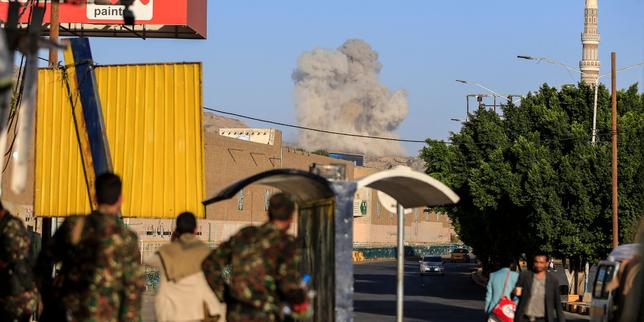
Air raids near Sanaa and Houthi threats against Riyadh follow a grim script. Both sides know the stakes. Neither side wants to look weak.
When a coalition strike hits near Sanaa, the reaction in Riyadh and across regional energy markets happens fast. Headlines focus on immediate explosions and angry speeches, yet the real story sits in deterrence, air defense math, and diplomatic fatigue. I have watched conflict coverage across the Arabian Peninsula long enough to know that breaking news alerts often flatten complex military arithmetic into simple tit-for-tat stories. Honestly, if you read a strike near Sanaa as just another isolated skirmish, you miss why threats against Riyadh carry weight far beyond Yemen's borders.
Why a Strike Near Sanaa Triggers Threats on Riyadh
Sanaa sits high in Yemen's northern mountains and functions as the political nerve center for the Houthi movement. When coalition aircraft hit targets in or around the capital, Houthi spokespeople almost always answer with warnings aimed at Saudi cities, infrastructure, or shipping lanes. That link isn't accidental. It's a deliberate signaling loop designed to impose political and economic costs on the kingdom whenever pressure mounts inside Yemen.
From a strategic standpoint, threats against Riyadh serve two purposes at once. First, they rally domestic support in Houthi-controlled areas by framing external strikes as aggression against ordinary Yemenis. Second, they remind foreign capitals and investors that calm in the Gulf isn't guaranteed, even during periods of quieter diplomacy or informal ceasefires.
Still, threats and actual launches aren't the same thing. Over the years, regional analysts at institutions like the International Crisis Group and the Center for Strategic and International Studies have repeatedly noted that Houthi escalations tend to calibrate risk rather than throw everything into one reckless gamble. A warning about Riyadh can rattle nerves immediately without crossing every red line at once.
What People Miss About Escalation Between Sanaa and Riyadh
Most quick summaries treat air strikes and cross-border threats like a simple action-reaction button. Hit Sanaa, expect a warning toward Riyadh. That's tidy, and it's also incomplete.
1. Air Defense Costs and Interception Realities
Defending a sprawling capital like Riyadh against drones and missiles is expensive and technically demanding. Even when air defenses intercept incoming threats, every interception consumes costly munitions and strains radar coverage over wide geographic areas. Researchers at organizations such as the Stockholm International Peace Research Institute have long highlighted how asymmetric missile and drone warfare alters cost ratios between attackers and defenders.
At the same time, claiming a target in Riyadh is one thing; penetrating layered air defenses is another. Houthi forces have expanded their range and drone or missile capabilities over time, which is why threats to Riyadh are taken seriously by security planners. Yet capability doesn't automatically equal decisive impact, and public threats often blend real operational reach with psychological pressure.
2. Diplomatic Backchannels Rarely Vanish Overnight
Public rhetoric can sound absolute while quiet conversations continue behind closed doors. Regional mediators, Gulf states, and international envoys have spent years trying to keep channels open around Yemen, because everyone involved knows how quickly unrestrained escalation spirals. When strikes happen near Sanaa and Riyadh is threatened, diplomats scramble to read whether the move is a bargaining chip or a genuine breakdown of restraint.
Here's a mistake I see readers make all the time: treating harsh statements as proof that talks are completely dead. In Middle Eastern crisis politics, tough language often peaks right when leverage is being tested. You have to separate television rhetoric from actual troop movements, ceasefire violations, and diplomatic contacts.
How Regional Security and Markets Feel the Shockwaves
You don't have to live in Riyadh or Sanaa to feel the spillover when tensions flare. Energy markets, shipping insurers, and regional airlines watch every incident closely. Even when physical damage stays limited to specific sites, risk premiums move on uncertainty alone.
For businesses and travelers, the practical impact usually shows up in three places:
- Aviation and routing: Flight paths over parts of the Middle East can shift quickly when air defense alerts or strike reports spike, adding flight time or causing sudden schedule adjustments.
- Maritime and trade risk: Shipping in the Red Sea and surrounding waters remains sensitive to regional security flare-ups, affecting transit times and war-risk insurance calculations.
- Policy and aid shifts: Humanitarian operations in Yemen face extra hurdles whenever airstrikes hit near major hubs like Sanaa, complicating logistics for agencies tracked by the United Nations Office for the Coordination of Humanitarian Affairs.
I've noticed that people often wait for a massive oil price spike before paying attention to Yemen-Saudi tensions. By the time markets price in a major shock, early warning signs—like renewed strikes near Sanaa paired with explicit threats toward Riyadh—have usually been flashing for days or weeks.
What to Watch Closely When Tensions Spike
When you're trying to make sense of a fresh round of strikes near Sanaa and threats aimed at Riyadh, don't get pulled along by the loudest rumor on social media. Unverified claims spread fast during moments of fear and anger, especially when languages get translated and shared out of context.
Look for concrete signals instead. Check whether independent monitors or major humanitarian agencies confirm strike locations near Sanaa. Pay attention to whether Saudi officials issue formal statements or stay measured while quiet diplomacy runs in the background. Watch if Houthi warnings stay rhetorical or translate into verified launches and maritime incidents.
If you track regional security for work, travel, or investing, build a simple habit: cross-check breaking claims against established conflict trackers, read primary statements carefully rather than relying on second-hand summaries, and keep a realistic buffer in travel or supply-chain plans whenever Gulf tensions rise. Calm headlines don't mean underlying grievances disappeared, and loud threats don't automatically mean total war—reading the gap between the two is where real clarity lives.