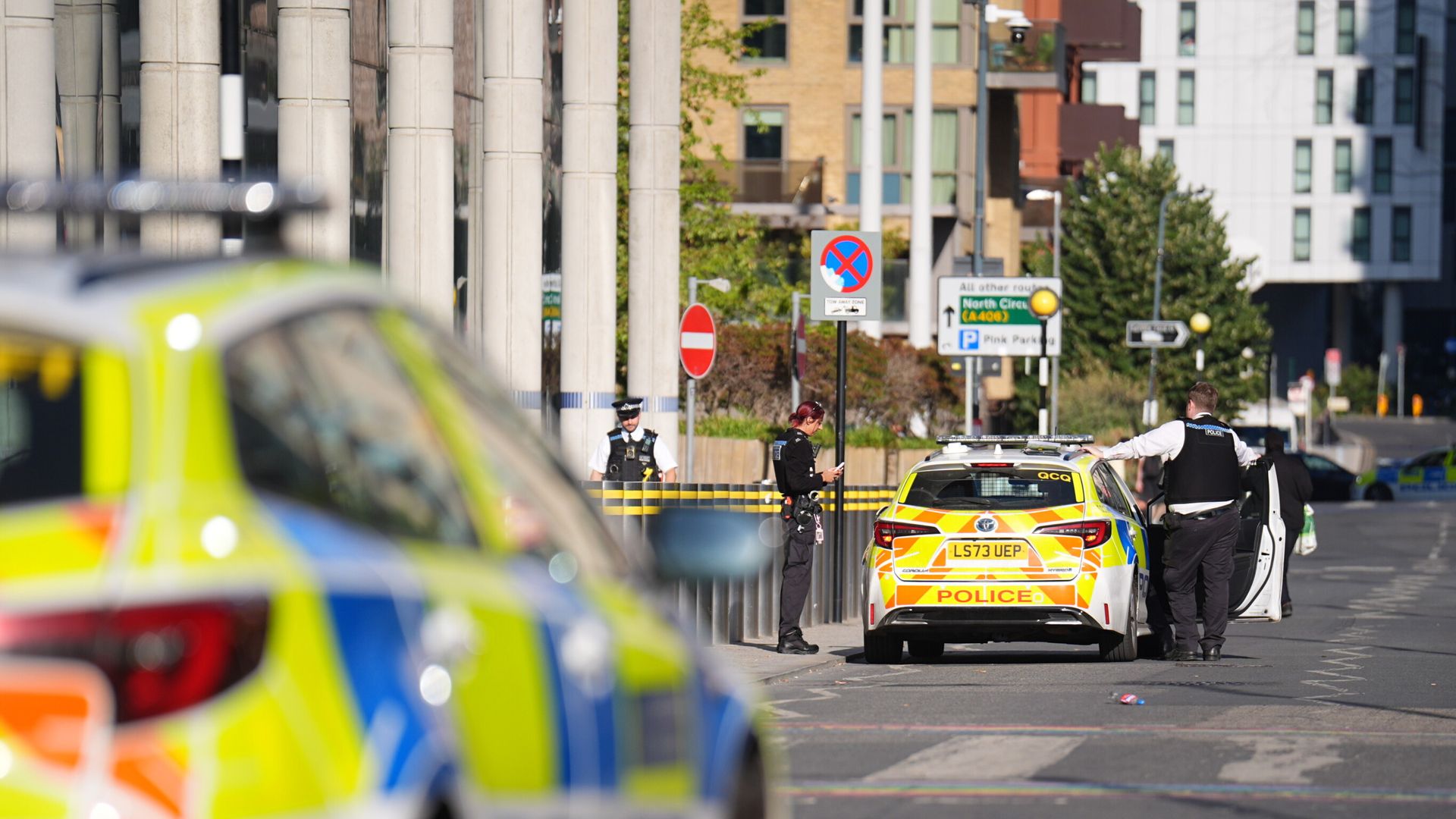
Municipal architecture is deliberately designed to project permanence, civic order, and safety. When a fatal violent crime occurs directly within the administrative perimeter of a local government headquarters, the event exposes a foundational fracture in municipal security architecture. This analysis deconstructs the systemic vulnerabilities that permit fatal knife crime to penetrate public municipal facilities, examining the operational mechanisms of public access control, the economics of municipal resource allocation, and the predictable failure modes of institutional perimeter defense.
The Operational Vulnerability Matrix of Open Civic Facilities
Public sector administration buildings operate under a conflicting mandate. They must remain accessible to the citizenry to maintain democratic legitimacy and operational transparency, yet they function as high-value administrative targets containing concentrated populations of municipal employees, records, and often elected officials. This tension creates a distinct vulnerability profile that differs fundamentally from private corporate real estate or high-security federal installations.
Security failures in municipal headquarters typically stem from three structural deficits in the access control lifecycle:
- Permeable Perimeter Thresholds: The architectural design of municipal buildings frequently prioritizes civic openness through wide, unmonitored atriums and multiple public entry points, rendering hard access control cost-prohibitive or politically unpalatable.
- Asymmetric Response Latency: Security personnel stationed in municipal environments are usually contracted guards trained primarily in observation and reporting rather than active threat mitigation, creating a critical time gap between incident initiation and sworn law enforcement intervention.
- Vector Blindness: Public buildings process unpredictable volumes of foot traffic for routine civic services, making behavioral profiling and anomaly detection difficult for personnel managing high-throughput entry queues.
When a young man is fatally stabbed inside such a facility, the incident is rarely an isolated anomaly caused by individual negligence. Instead, it represents the statistical convergence of deferred municipal security investment, inadequate threat assessment protocols, and the physical reality of urban knife crime intersecting with unprotected public spaces.
The Economic Mechanics of Municipal Security Allocation
Local government resource allocation operates under severe budgetary constraints governed by zero-sum fiscal planning. Security expenditures are categorized under administrative overhead rather than direct revenue generation or essential service delivery, making them prime targets for budget compression during fiscal contractions.
To understand why a municipal headquarters remains vulnerable to lethal assault, one must examine the cost function of municipal risk management:
$$\text{Total Risk Exposure} = \sum_{i=1}^{n} (\text{Probability of Threat}_i \times \text{Impact}_i) - \text{Mitigation Investment}$$
Because the perceived probability of a lethal stabbing occurring inside a local council building is historically low, the calculated risk exposure value has traditionally justified minimal mitigation investment. Local authorities optimize budgets for frequent, low-impact administrative failures—such as data breaches or minor property theft—rather than low-frequency, catastrophic acts of interpersonal violence.
Consequently, security infrastructure is underfunded. Electronic visitor management systems are substituted for physical bag checks and metal detectors; security staffing is minimized to single-guard posts; and staff training is restricted to basic fire safety rather than situational awareness and active threat neutralization.
Incident Lifecycle and the Failure of Reactive Containment
A violent encounter involving a bladed weapon operates on an extremely compressed temporal scale. Unlike firearms, which introduce standoff distance, knife attacks rely on sudden, close-quarter engagement where the decision-making window for victims and security personnel is measured in fractions of a second.
The progression of an interior municipal stabbing follows a distinct, rapid degradation sequence:
- Phase One: Pre-Incident Latency. The perpetrator enters the facility under the guise of a standard civic visitor, carrying concealed contraband through a permeable threshold.
- Phase Two: Kinetic Escalation. Verbal disputes or targeted altercations escalate rapidly into physical violence, bypassing traditional security checkpoints due to geographic displacement inside the building.
- Phase Three: Institutional Response Failure. Existing staff rely on passive alarms or emergency services dispatch, resulting in a response window where the critical injury has already been sustained before first responders arrive on site.
- Phase Four: Post-Incident Forensic and Political Triage. Focus shifts immediately to crisis communication, public relations damage control, and immediate ad-hoc security hardening that often degrades once public scrutiny wanes.
This sequence highlights the fundamental flaw of reactive containment models. By the time security protocols are activated, the physiological damage has already occurred. True risk mitigation requires shifting the operational paradigm from post-incident response to pre-incident deterrence.
Systemic Interventions for High-Density Civic Infrastructure
Mitigating the risk of lethal violence in municipal environments requires a structural redesign of how local governments balance openness with physical security. Incremental adjustments—such as adding a single security camera or issuing mild advisories—fail to address the root systemic vulnerabilities.
To achieve structural resilience, municipal leadership must execute three core operational changes:
First, transition from perimeter permeability to tiered access control. Public-facing service counters must be physically isolated from internal administrative workspaces through secure airlocks or credential-restricted zones. This ensures that transient visitors cannot freely traverse the building interior without authorization or electronic tracking.
Second, re-engineer the security workforce model. Relying on low-cost, passive guarding contracts creates a false sense of security. Municipalities must upgrade guard force qualifications to include active threat detection, conflict de-escalation, and standardized emergency medical response capabilities, particularly trauma care protocols designed to manage catastrophic hemorrhage prior to ambulance arrival.
Third, integrate threat intelligence sharing mechanisms with local law enforcement agencies. Many violent incidents inside public buildings are preceded by prior documented threats, harassment of council staff, or escalating neighborhood disputes. Establishing a direct telemetry pipeline between municipal customer service logs and law enforcement threat assessment units allows security teams to identify volatile individuals before they physically access civic facilities.
The ultimate security posture of a municipal headquarters is not determined by the severity of its public reaction following a tragedy, but by the rigor of its pre-emptive system architecture. If local governments treat safety as an optional overhead cost rather than an operational prerequisite, municipal spaces will remain structurally vulnerable to the baseline realities of urban violence.