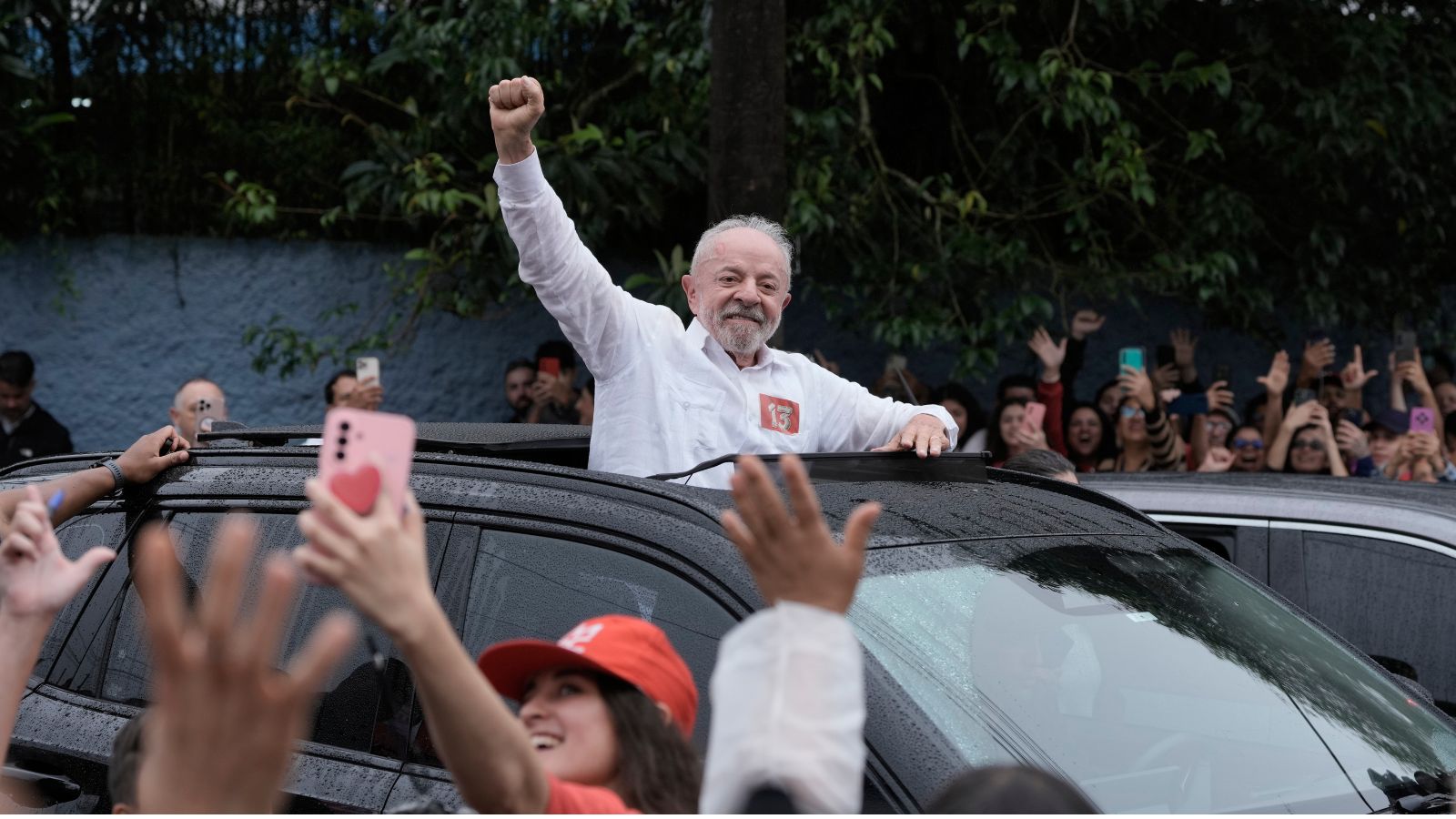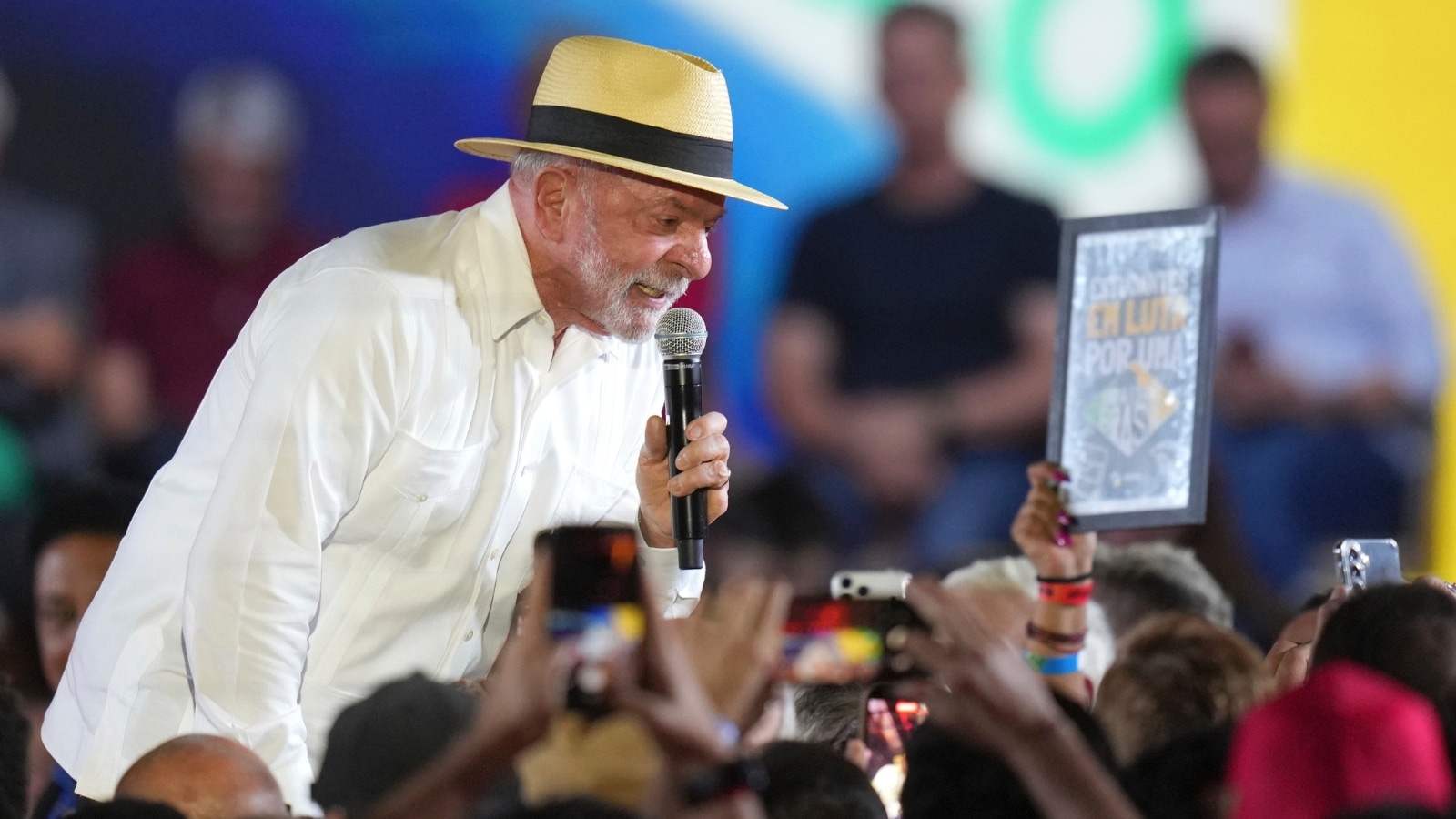
Governing Brazil in a fourth presidential term—assuming electoral victory in the October 2026 cycle or analyzing the structural reality of an extended mandate following his 2003–2010 and 2023–2026 tenures—is fundamentally an exercise in managing compounding institutional friction. Unlike Luiz Inácio Lula da Silva’s first two terms, which were buoyed by the early-2000s commodity supercycle and a fractured opposition, a fourth term operates within a rigid fiscal architecture, a hyper-fragmented and transactional Congress, an aging demographic profile, and an intensely polarized electorate. The core analytical mistake in standard political commentary is treating these challenges as isolated policy hurdles rather than an interconnected system of constraints. To understand the viability of a fourth Lula administration, one must examine the mechanics of its four primary bottlenecks: the fiscal-monetary trilemma, legislative coalition inflation, the structural limits of state-led industrial policy, and the asymmetric pressures of climate geopolitics.
The Fiscal-Monetary Trilemma and Debt Dynamics
The central operational constraint of the Brazilian executive branch is the incompatibility between three simultaneous objectives: expanding social transfer programs, stabilizing the gross debt-to-GDP ratio, and lowering the benchmark Selic interest rate. In macroeconomics, this functions as a domestic policy trilemma. The administration can achieve any two of these outcomes, but pursuing all three triggers immediate market repricing, currency depreciation, and inflationary pass-through.
Brazil’s fiscal framework, known as the arcabouço fiscal (the sustainable fiscal framework enacted in 2023 to replace the 2016 spending cap), permits real expenditure growth between 0.6% and 2.5% per year, capped at 70% of the previous year’s real revenue growth. On paper, this mechanism imposes counter-cyclical discipline. In practice, mandatory spending items—specifically constitutional floors for health and education, alongside pension obligations indexed to the minimum wage—consume well over 90% of the federal budget.
When the executive branch raises the minimum wage in real terms to fulfill core campaign promises, it automatically triggers a non-linear expansion in pension and social assistance liabilities (such as the Continuous Cash Benefit, or BPC). This creates a structural compression of discretionary spending, leaving minimal fiscal space for public infrastructure investment without breaching the primary balance target.
The cause-and-effect relationship between fiscal expansion and monetary policy is direct:
- Fiscal Dominance Risk: When markets perceive that primary deficit targets will be repeatedly watered down or bypassed via extraordinary credits, long-term inflation expectations unanchor.
- Central Bank Reaction Function: The Banco Central do Brasil (BCB), operating under formal statutory autonomy since 2021, responds to unanchored expectations by maintaining a restrictive real interest rate. Even as leadership transitions at the BCB occur—such as the appointment of Gabriel Galípolo—institutional credibility requires the monetary authority to lean against fiscal looseness to protect the Brazilian Real (BRL) and prevent imported inflation.
- Debt Service Compounding: Because a substantial portion of Brazil’s domestic public debt is indexed to the overnight Selic rate (via LFTs, or Letras Financeiras do Tesouro), every 100-basis-point increase in the policy rate immediately raises the government's nominal deficit.
In a fourth term, Lula faces a debt-to-GDP trajectory approaching or exceeding 80%, a threshold that carries severe risk premiums for an emerging market economy without reserve currency status. Without structural entitlement reform—a political non-starter for the Workers' Party (PT)—the administration is forced into a continuous search for revenue-side adjustments, such as taxing closed-end investment funds, offshore assets, or reducing corporate tax exemptions. However, revenue measures face diminishing marginal returns and stiff resistance from productive sectors, trapping the administration in a low-growth, high-interest-rate equilibrium.
Legislative Coalition Inflation and the Centrão Equilibrium
Standard political narratives frame Brazil’s governance problem as a clash between left and right. Operationally, the true conflict is between the executive branch and a deeply entrenched, ideologically agnostic parliamentary bloc known as the Centrão. Since the 2015–2016 constitutional crisis and the subsequent decentralization of budgetary power, Brazil has evolved from "coalitional presidentialism" (presidencialismo de coalizão) into a system bordering on "semi-parliamentarism without accountability."
In a fourth term, the cost of maintaining a legislative majority exhibits severe inflation. Historically, a Brazilian president secured congressional votes by distributing cabinet ministries and state-owned enterprise (SOE) directorships. Today, cabinet posts are no longer sufficient currency. Following the constitutionalization of mandatory parliamentary amendments (emendas impositivas)—including individual, bench, and committee amendments—Congress directly controls tens of billions of reais in discretionary public investment.
This structural shift alters the incentive matrix for legislators in three distinct ways:
- Loss of Executive Leverage: Because individual deputies and senators are legally guaranteed their budgetary allocations regardless of how they vote on key administration bills, the executive branch has lost its primary disciplinary tool: withholding pork-barrel funds from disloyal coalition partners.
- Asymmetric Veto Power: The presidents of the Chamber of Deputies and the Senate hold absolute gatekeeping authority over the legislative agenda. The executive cannot pass routine provisional measures (Medidas Provisórias) or constitutional amendments (which require a three-fifths supermajority in two rounds in both houses) without continuous, bill-by-bill negotiation.
- Policy Dilution: To pass flagship initiatives—such as the operational regulation of the consumption tax reform (VAT implementation) or income tax restructuring—the administration must accept extensive exemptions and sector-specific carve-outs demanded by powerful congressional caucuses, notably the agribusiness (bancada ruralista), evangelical, and security blocs.
Consequently, a fourth Lula term cannot govern through mass mobilization or executive decrees. Every major legislative victory requires surrendering fiscal or regulatory ground to conservative-leaning legislators, which in turn alienates the PT’s progressive base and dilutes the coherence of the administration's economic program.
The Structural Limits of Neo-Developmentalism
A defining feature of Lula’s economic worldview is neo-developmentalism: the belief that the state must act as the primary inductor of economic growth through public banks (specifically BNDES), local content mandates, and state-owned enterprises like Petrobras. While this model generated short-term stimulus during the 2000s, executing it in the late 2020s runs into severe productivity and capital allocation constraints.
Brazil suffers from chronic total factor productivity (TFP) stagnation. Over the past four decades, the country’s modest GDP growth has been driven primarily by demographic expansion—more workers entering the labor force—rather than gains in output per worker. That demographic dividend is rapidly exhausting itself as Brazil’s population ages faster than most developed nations did at comparable income levels.
Attempting to force growth through subsidized state credit and industrial policy (such as the Nova Indústria Brasil plan) introduces specific economic distortions:
- Misallocation of Capital: Directing subsidized credit through BNDES to favored domestic sectors—such as naval construction, green hydrogen, or domestic pharmaceuticals—crowds out private credit markets and artificially lowers the cost of capital for incumbent firms that may lack global competitiveness.
- Governance Friction at Petrobras: Using Petrobras as an instrument of macroeconomic stabilization—by holding domestic fuel prices below international parity to suppress inflation, or mandating investments in low-return refining and petrochemical projects—directly conflicts with the company's legal obligations under the 2016 State-Owned Enterprises Law (Lei das Estatais). While the administration can adjust dividend payout ratios to retain cash for capital expenditure, aggressive intervention triggers immediate capital flight from the B3 stock exchange and weakens the BRL.
- The Complexity Trap (Custo Brasil): Industrial subsidies do not resolve the underlying supply-side bottlenecks that make Brazilian manufacturing uncompetitive: a convoluted litigation environment, high logistics costs due to over-reliance on road transport, and an educational system that ranks consistently near the bottom of OECD PISA assessments in mathematics and science.
The limitation of the state-led strategy is clear: without microeconomic reforms that lower transaction costs and improve human capital, directed state investment produces temporary cyclical bumps followed by prolonged periods of fiscal hangover and stagnant productivity.
Climate Geopolitics and the Resource Extraction Paradox
Internationally, Lula’s fourth term relies heavily on environmental diplomacy to re-establish Brazil as a premier global mediator and attract green foreign direct investment. By drastically reducing deforestation rates in the Amazon compared to the 2019–2022 period and hosting major multilateral summits like COP30 in Belém, the administration seeks to monetize Brazil’s vast biodiversity and clean energy matrix (over 80% of Brazil’s electricity is generated from renewables, primarily hydro, wind, and solar).
However, this diplomatic positioning contains an acute internal contradiction: the administration’s fiscal and industrial survival depends on expanding hydrocarbon extraction and agribusiness exports.
This creates an operational paradox across three fronts:
- The Equatorial Margin Dilemma: Petrobras is actively pursuing exploration licenses in the Equatorial Margin (off the coast of Amapá and Pará, near the mouth of the Amazon River) to replenish reserves before the pre-salt fields peak in the early 2030s. Blocking this exploration satisfies international climate allies and the Ministry of the Environment, led by Marina Silva, but deprives the Brazilian state of billions of dollars in future royalties and special participations needed to fund social programs and the energy transition itself.
- Infrastructure vs. Conservation: Paving federal highways like the BR-319 (connecting Manaus to Porto Velho) or constructing the Ferrogrão railway to lower grain transport costs for Mato Grosso soy producers is economically rational for export competitiveness. Yet, infrastructure expansion in the Amazon basin historically acts as the primary vector for illegal land grabbing (grilagem), logging, and deforestation, threatening the exact environmental metrics Lula uses as diplomatic leverage.
- Green Protectionism: The European Union’s Deforestation Regulation (EUDR) and Carbon Border Adjustment Mechanism (CBAM) weaponize environmental standards as non-tariff trade barriers. Even when the Brazilian federal government reduces overall deforestation, subnational enforcement failures in isolated municipalities can result in entire agricultural supply chains being locked out of high-value European markets, creating intense domestic backlash from the agribusiness sector against the administration’s foreign policy.
Polarized Electorate and the Succession Vacuum
The final constraint is political durability and the mechanics of succession. A fourth term is, by constitutional definition, a lame-duck presidency from its inception, as Brazilian law prohibits a third consecutive term. Furthermore, Lula’s advanced age (born in 1945) inevitably places succession anxiety at the center of daily governance.
The Brazilian electorate remains locked in a rigid affective polarization. Roughly one-third of the electorate identifies firmly with the PT and Lula’s brand of social inclusion; roughly one-third aligns with the conservative, anti-establishment right forged under Jair Bolsonaro; and the decisive middle third votes strictly on short-term economic perceptions—specifically food inflation, employment levels, and purchasing power.
This electoral structure creates two severe vulnerabilities for a fourth term:
- The Succession Bottleneck: Lula’s political dominance within the Brazilian left is total, which has prevented the organic emergence of an undisputed heir with comparable national appeal. Elevating a technocratic successor (such as Finance Minister Fernando Haddad) exposes that figure to the daily attrition of fiscal management, while keeping the succession open triggers internal fratricide among rival cabinet ministers and allied parties (such as the PSB and PDT).
- The Security Deficit: Public security and organized crime—specifically the expansion of factions like the Primeiro Comando da Capital (PCC) and Comando Vermelho into the Amazon basin and legitimate economic sectors—represent the administration's weakest polling metric. The PT’s traditional focus on socioeconomic root causes and human rights resonates poorly with an electorate demanding immediate, punitive state action, giving conservative state governors and parliamentary blocs a permanent, high-salience issue to attack federal competence.
The Strategic Play for a Fourth Mandate
To avoid administrative paralysis and economic stagnation, a fourth Lula government cannot operate as a nostalgia project attempting to replicate the policies of 2006. The macroeconomic and institutional environment will punish unanchored fiscal expansion and state interventionism immediately. The administration must execute a disciplined, three-part operational pivot:
First, ring-fence the fiscal anchor through targeted spending reviews rather than continuous tax hikes. Instead of fighting losing battles with Congress over new taxes, the Ministry of Finance must execute an aggressive, granular audit of existing social programs and tax expenditures (gastos tributários). Eliminating fraud in disability and unemployment benefits, decoupling certain non-contributory social assistance transfers from real minimum wage increases, and systematically phasing out obsolete corporate tax exemptions will generate the primary surplus necessary to convince the Central Bank to cut interest rates. Lowering the Selic rate is the single most effective stimulus available to the Brazilian government, as it simultaneously reduces public debt service costs and unlocks private corporate investment.
Second, reorient industrial policy away from picking national champions toward horizontal productivity enablers. BNDES capital and regulatory focus should be concentrated strictly on resolving physical infrastructure bottlenecks—ports, railways, transmission lines, and urban sanitation—via structured Public-Private Partnerships (PPPs) and concessions that crowd in private institutional capital. Abandoning inefficient local-content mandates in favor of rapid execution of the VAT consumption tax reform will systematically dismantle the Custo Brasil without requiring massive fiscal outlays.
Third, decouple environmental preservation from anti-growth rhetoric by monetizing natural capital. The administration should use its diplomatic capital to finalize binding, large-scale financial mechanisms for standing forests—such as the Tropical Forest Forever Facility—while enforcing strict, satellite-monitored traceability across agricultural supply chains. By transforming compliance with environmental standards into a competitive advantage that guarantees market access for Brazilian agribusiness, the government can neutralize ruralist opposition while retaining the fiscal revenues from transitional offshore oil exploration to fund domestic decarbonization.