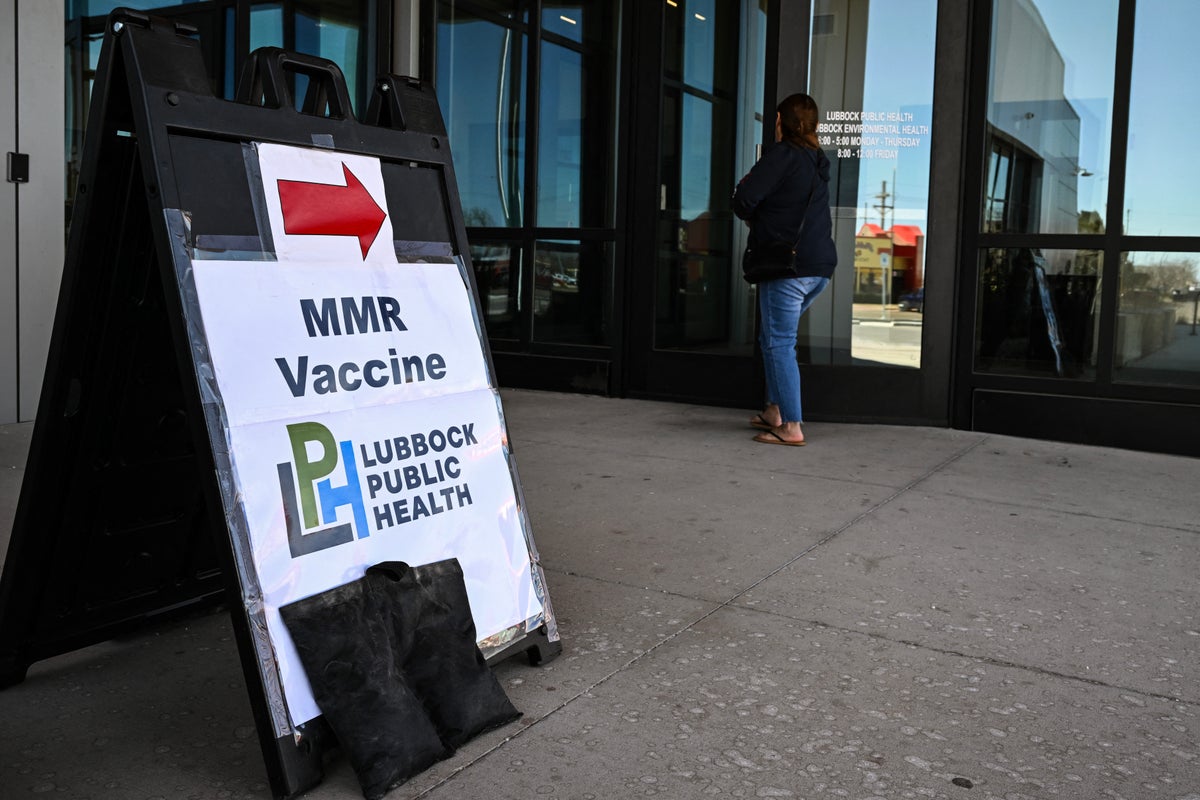
The United States public health system is experiencing a systemic collapse in population-level herd immunity against the measles virus (Measles morbillivirus). Passing annual historical baseline case totals before the third quarter is not an isolated anomaly; it is the predictable output of a decaying epidemiological defense network. With a basic reproduction number ($R_0$) ranging between 12 and 18, measles requires a strict minimum population immunity threshold of 95% to prevent sustained transmission chains. The drop in national kindergarten MMR (Measles, Mumps, and Rubella) coverage to approximately 92.7% represents a critical systemic failure that converts localized exposure into multi-state outbreaks.
The Three Drivers of Vector Acceleration
The current epidemiological surge relies on three primary failure points across public health infrastructure.
- Sub-Critical Community Coverage Pools: National averages mask extreme geographic micro-clustering. While state-level coverage may appear marginally depressed, localized pockets of non-vaccination in specific school districts, religious communities, or county clusters drop well below 80%. These sub-critical pools act as high-efficiency amplifiers for the virus, converting single imported cases into sustained transmission networks.
- The Global Import-Export Feedback Loop: Measles eradication in a single country is unsustainable without uniform global suppression. Rising international case rates combined with unmonitored travel corridors guarantee continuous viral importation. When an infected traveler enters a low-immunity cluster, the probability of secondary transmission approaches 90% among non-immune contacts.
- Surveillance Lag and Asymptomatic Shedding Mechanics: The virus presents a 10-to-14-day incubation period, accompanied by contagious viral shedding during the prodromal phase—up to four days before the characteristic maculopapular rash appears. Traditional public health responses built on passive, symptomatic case reporting operate on a severe temporal delay, allowing three to four cycles of transmission before containment protocols initiate.
The Economics of Transmission: Modeling Outbreak Cost Dynamics
Containing a single index case of measles requires extensive contact tracing, quarantine enforcement, post-exposure prophylaxis (PEP) deployment, and emergency diagnostic verification. Public health expenditures scale exponentially relative to the delay in index case isolation.
The economic strain can be framed as a total cost function:
$$C_{total} = F + \sum_{i=1}^{n} (P_i \times S_i) + E_t$$
Where:
- $F$ represents fixed administrative and laboratory overhead costs.
- $P_i$ is the population size of infected or exposed cohort $i$.
- $S_i$ is the severity index (hospitalization rate, intensive care requirements, and clinical interventions) for cohort $i$.
- $E_t$ represents the exponential cost scaling factor as a function of containment time delay $t$.
When public health departments shift resources to manage active outbreaks, routine preventive care, pediatric screening, and localized outreach suffer severe budget reallocations. This creates a secondary vulnerability cycle, expanding the non-immunized demographic for subsequent viral vectors.
Pathophysiological Consequences and Systemic Risks
Epidemiological discussion frequently oversimplifies measles as a temporary rash accompanied by fever. The underlying clinical reality involves profound immune dysregulation and high rates of acute complications.
Index Exposure ──> Airborne Entry ──> Lymphoid Tissue Replication ──> Systemic Viremia
                                                                            │
      ┌─────────────────────────────────────────────────────────────────────┴─────────────────────────────────────────────────────────────────────┐
      │                                                                     │                                                                     │
Gastrointestinal & Respiratory                                   Atypical CNS Invasion                                              Immune System Reset
      │                                                                     │                                                                     │
Severe Pneumonia & Diarrhea                                  Acute Encephalitis / SSPE                                           Immune Amnesia (CD150/SLAM)
(Leading Cause of Mortality)                               (Permanent Neurological Damage)                                      (Loss of Existing Antibodies)
The virus targets CD150/SLAM receptors on memory T and B lymphocytes. This process leads to "immune amnesia," wiping out pre-existing antibodies against other bacterial and viral pathogens. Patients who recover from acute measles infection remain immunocompromised for months or years, driving secondary mortality rates through opportunistic respiratory and gastrointestinal infections. Hospitalization rates, particularly among unvaccinated children under five years of age, hover between 15% and 20%, placing immediate operational stress on regional pediatric intensive care units.
Institutional Bottlenecks in Containment
Addressing this surge requires identifying operational bottlenecks in the public health deployment pipeline.
Diagnostic Latency
Polymerase chain reaction (PCR) confirmation and viral genotyping often require centralized state or federal laboratory processing. The time delay between patient presentation, sample extraction, and laboratory confirmation creates an unmonitored window where secondary contacts remain unnotified.
Contact Tracing Exhaustion
An $R_0$ of 12–18 means a single case in an open environment generates hundreds of potential contact exposures. Local health departments lack the personnel required to perform manual contact tracing at this scale, leading to rapid systemic coverage failure during multi-state events.
Policy Instability and Regulatory Limitations
Variations in state-level school immunization mandates, non-medical exemption policies, and public health enforcement authorities prevent a unified national containment strategy. Regions with broad exemption criteria act as persistent viral reservoirs, invalidating the mitigation efforts of adjacent jurisdictions.
Operational Execution Plan for Containment
Eliminating endemic transmission chains requires shifting from reactive case tracking to proactive structural intervention.
- Deploy Waste-Water Genomic Surveillance: Establish continuous municipal wastewater monitoring for early detection of measles RNA shedding. Environmental surveillance identifies viral presence prior to clinical presentation, eliminating diagnostic latency.
- Establish Rapid Post-Exposure Prophylaxis Networks: Mandate local health jurisdictions to maintain stockpiles of MMR vaccines and intravenous immunoglobulin (IVIG). Administering the MMR vaccine within 72 hours of exposure, or IVIG within six days, halts transmission chains in high-risk individuals.
- Implement Targeted Micro-Cluster Remediation: Deploy mobile clinical units directly to zip codes identified as falling below the 95% MMR coverage threshold. Provide immediate, point-of-care vaccination access to eliminate logistical barriers for underserved populations.
- Standardize Exemption Criteria: Harmonize state public health standards by removing non-medical and philosophical exemptions for educational institution enrollment, ensuring population coverage systematically returns above the herd immunity baseline.
State public health departments must immediately freeze non-essential administrative expenditures and reallocate regional operations toward high-throughput catch-up vaccination clinics and automated digital contact tracing systems. Failure to achieve the 95% herd immunity threshold within the next two quarters will result in the permanent loss of US measles elimination status, establishing endemic viral circulation as a permanent operational tax on the medical infrastructure.