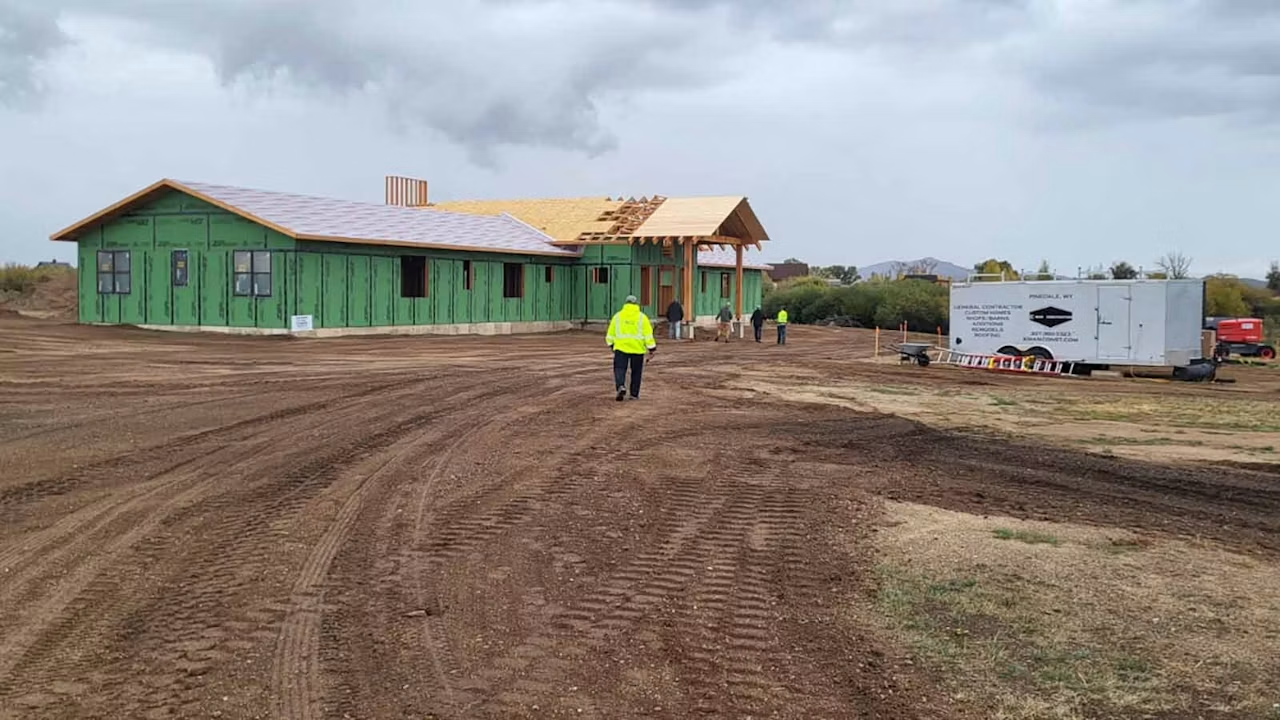
Capital redeployment within non-profit infrastructure depends entirely on the operational efficiency of the underlying asset. When an 84-year-old Wyoming veteran transferred a 207-acre llama ranch to establish a dedicated sanctuary for veterans and first responders, the transaction was typically framed in public discourse as a simple act of altruism. From a structural standpoint, however, this transfer represents a high-leverage allocation of physical real estate to address a critical capacity bottleneck in outdoor therapeutic infrastructure. Evaluating the systemic viability of such a project requires deconstructing the resource conversion rate, the geographical cost function, and the long-term maintenance liabilities associated with rural therapeutic models.
The primary constraint facing veteran and first-responder reintegration programs is not a lack of conceptual models, but a deficiency in scalable physical infrastructure. Traditional urban clinical settings suffer from high overhead and low psychological decompression metrics, often failing to disrupt hyper-vigilance cycles in trauma survivors. Rural land assets, conversely, offer a favorable cost-per-acre metric combined with environmental isolation that accelerates nervous system down-regulation. However, converting an agricultural asset like a llama ranch into an operational sanctuary introduces distinct logistical hurdles.
The Operational Mechanics of Agricultural Conversion
Transitioning a working ranch into a specialized care facility requires a fundamental shift in the asset utilization matrix. Agricultural properties carry fixed operational expenditures that do not scale linearly with therapeutic output.
- The Land-to-Capacity Ratio: Managing 207 acres demands a continuous capital expenditure for boundary maintenance, water rights management, and environmental weed control. Without a dedicated endowment or revenue-generating agricultural component, the land transitions from a productive asset into a financial drain.
- Livestock Integration: Retaining livestock such as llamas on a therapeutic property serves a dual economic and functional purpose. Beyond the lower operational overhead compared to equine facilities, camelids provide non-threatening, low-reactivity biofeedback targets for individuals managing post-traumatic stress. The animal functions as a biological buffer, lowering initial defensive thresholds in human participants.
- Zoning and Permitting Friction: Rural county zoning laws rarely account for multi-day residential or intensive outpatient therapeutic services on agricultural parcels. The legal conversion timeline introduces an administrative carrying cost that can stall institutional scaling.
Geographic Efficiency and the Cost Function of Rural Care
Placing a sanctuary in Wyoming leverages a specific geographical advantage while accepting structural trade-offs. The economic variable of land acquisition is minimized when the asset is donated outright, bypassing the debt service costs that cripple urban non-profits. Yet, the delivery cost per participant increases due to transit logistics.
Total Operational Cost = Fixed Land Maintenance + (Participant Distance * Transport Factor) + Clinical Overhead
The equation demonstrates that while rural real estate reduces the initial capital expenditure hurdle, the logistical friction of remote access requires a decentralized intake model or extended-stay programmatic structures. Short-term, high-frequency visits fail economically in remote environments. The model only achieves cost-efficiency through residential immersion programs where participants remain on-site for extended durations, thereby amortizing the transit and administrative overhead across a multi-week therapeutic window.
Institutional Longevity and Succession Risk
The vulnerability of philanthropic infrastructure built on individual asset donations lies in the transition from founder-led execution to institutional governance. When an octogenarian donor gifts a major real estate holding, the immediate priority is continuity planning.
Donated ranches frequently reflect decades of bespoke, improvised maintenance by the original owner. Institutionalizing such a property requires formalizing operational protocols into repeatable, auditable workflows. If the receiving organization attempts to operate the 207-acre footprint with volunteer labor alone, system degradation occurs rapidly. Infrastructure maintenance, pasture rotation, and facility winterization demand specialized operational competencies that informal volunteer networks cannot reliably sustain.
To ensure survival past the initial media cycle, the management entity must decouple the real estate asset from operational funding by establishing a structured endowment tier. Relying entirely on annual fundraising to cover the baseline operational costs of a multi-acre rural footprint exposes the facility to macroeconomic volatility.
Strategic Allocation of Specialized Real Estate
The creation of veteran and first-responder sanctuaries via direct real estate donations bypasses the traditional capital-raising bottlenecks of the non-profit sector. Yet, real estate is merely a raw input. The long-term efficacy of the Wyoming ranch sanctuary depends on its ability to transition from a sentimental gift into a disciplined, self-sustaining operational unit that treats land management and human recovery as synchronized logistics problems. Capital efficiency in this sector requires treating the acreage not as a static memorial, but as a dynamic production line for psychological rehabilitation.