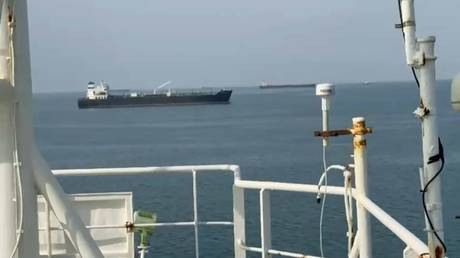
The abandonment of a commercial vessel in the Persian Gulf is not merely a humanitarian crisis; it is a systemic failure of the maritime "contract of certainty." When a ship remains stranded for months or years, it signals the collapse of the three primary pillars that govern global shipping: the insolvency of the shipowner, the jurisdictional friction of the flag state, and the erosion of the seafarer’s psychological contract. In the case of the captain and crew currently immobilized in the Persian Gulf, the primary driver of deterioration is not the physical environment, but the infinite extension of the temporal horizon. Uncertainty, in a quantified operational sense, acts as a corrosive force that degrades human capital more rapidly than physical hardware.
The Triad of Maritime Abandonment
To understand why a ship becomes a ghost vessel, one must analyze the convergence of financial and legal variables. Abandonment occurs when the cost of maintaining the vessel and its crew exceeds the projected residual value of the ship, leading the owner to cease communication and funding. This creates a vacuum of responsibility defined by three specific friction points:
- The Owner’s Exit Strategy: Rational economic actors may choose "strategic abandonment" when a vessel’s liabilities—unpaid wages, fuel debts, and port fees—outstrip its scrap value. In the Persian Gulf, high port costs and complex legal environments accelerate this decision.
- Flag State Inertia: Many vessels operate under "flags of convenience." When an owner disappears, the flag state is often legally or logistically incapable of providing the required repatriation or subsistence, leaving the crew as stateless actors in a jurisdictional limbo.
- The Creditor Logjam: Once a ship is arrested or abandoned, a queue of creditors forms. This legal "gridlock" prevents the crew from leaving, as they are often required to remain on board to maintain the vessel’s safety and "minimum manning" requirements to avoid it becoming a navigational hazard.
The Mechanics of Psychological Attrition
The captain’s statement that "uncertainty is killing us" is a literal description of the physiological and cognitive effects of prolonged isolation. In high-stakes maritime environments, human endurance is built on the expectation of a "relief date." When that date is removed, the crew enters a state of chronic stress that bypasses standard coping mechanisms.
The Breakdown of the Command Structure
In a standard voyage, the captain’s authority is derived from the support of the shipowner and the provision of resources. On an abandoned vessel, the captain remains legally responsible for the lives of the crew and the safety of the vessel, yet lacks the financial means to fulfill these duties. This creates a "Responsibility-Resource Gap." The captain must manage a crew whose morale is disintegrating while simultaneously negotiating with port authorities who may view the ship as a nuisance rather than a tragedy.
Cognitive Load and Decision Paralysis
The absence of information regarding a departure date triggers a feedback loop of hyper-vigilance. Crew members shift from operational tasks to "survival monitoring," where every sound or sighting of a port authority boat is scrutinized for signs of rescue. This persistent state of high cortisol levels leads to:
- Reduced Executive Function: The ability to manage complex shipboard systems (fire safety, engine maintenance) diminishes.
- Social Fragmentation: The initial solidarity of the crew often collapses into individualistic survivalism or internal conflict.
- Learned Helplessness: After multiple failed promises of repatriation, the crew may stop performing the basic maintenance required to keep the vessel habitable.
The Cost Function of Stranded Assets
A stranded ship in the Persian Gulf is a liability that grows exponentially over time. There are no static costs in maritime abandonment; there are only compounding losses.
Maintenance and Depreciation
A ship that is not moving is a ship that is rotting. Without fuel to run generators, the cathodic protection systems that prevent hull corrosion fail. In the high-salinity, high-temperature environment of the Persian Gulf, the rate of structural degradation is significantly higher than in temperate waters. The ship ceases to be an asset and becomes a "dead ship," which is significantly more expensive to salvage or tow.
The Legal Liability Tail
Every day the vessel remains at anchor, it incurs port dues and anchorage fees. If the vessel drifts due to lack of power or crew fatigue, the potential for a collision or environmental disaster—such as an oil spill—introduces catastrophic liability. The "uncertainty" the captain describes is also an uncertainty of risk for the surrounding coastal states. Who pays for the cleanup if a ghost ship hits a tanker?
Jurisdictional Friction and the Maritime Labor Convention (MLC)
The 2006 Maritime Labor Convention was designed to provide a safety net, specifically requiring shipowners to have financial security (insurance) to cover abandonment. However, the Persian Gulf scenario reveals the limitations of this framework:
- Insurance Insolvency: If the shipowner’s P&I (Protection and Indemnity) club insurance has lapsed due to non-payment, the "compulsory" insurance becomes a theoretical concept rather than a practical fund.
- Port State Sovereignty: Local laws in the Persian Gulf often prioritize the payment of port debts over the repatriation of the crew. In some instances, the crew is effectively held as human collateral to ensure the shipowner eventually settles the bill.
- Repatriation Bottlenecks: The cost of flying a crew home is relatively low, but the cost of replacing them with a "skeleton crew" to maintain the vessel is high. Port authorities often refuse to let a crew depart until a replacement arrives, which the insolvent owner cannot provide.
The Strategic Failure of "Wait and See"
The dominant strategy used by many stakeholders in these crises—waiting for the shipowner to reappear or for the legal system to grind to a conclusion—is fundamentally flawed. This approach ignores the reality that a stranded ship is a deteriorating system.
The transition from a "managed crisis" to a "total loss" is often triggered by a single event: a medical emergency, a generator failure, or a storm. Once the crew’s health fails or the ship loses the ability to provide fresh water via desalination, the cost of intervention rises by an order of magnitude. The current situation in the Persian Gulf is nearing this tipping point.
Operational Recommendations for Regional Stakeholders
The resolution of the stand-off requires a shift from legalistic stalling to proactive asset liquidation and humanitarian extraction.
- Immediate Judicial Sale: The most effective way to break the deadlock is an expedited judicial sale of the vessel. Rather than waiting for a full trial on the owner’s debts, the vessel should be sold "as is" to a buyer who can either return it to service or tow it to a breaking yard. The proceeds are then held in escrow for creditors, while the crew is immediately paid and repatriated.
- Sovereign Intervention for Crew Welfare: Local authorities must decouple the crew’s presence from the debt recovery process. Treating seafarers as collateral is a violation of international norms and increases the risk of a navigational disaster.
- The "Safety Crew" Model: To allow the exhausted crew to leave, port authorities should utilize a subsidized local safety crew. This prevents the ship from becoming a hazard while allowing the original crew to escape the psychological damage of the vessel.
The captain’s plea is a warning that the "human hardware" has reached its elastic limit. When the psychological contract is broken, the safety of the vessel is no longer guaranteed, regardless of how much fuel or food remains in the hold. The only viable path forward is the forced liquidation of the asset to fund the extraction of the human capital. All other delays merely increase the probability of an unmanaged catastrophe.
Stakeholders must now prioritize the "forced sale" mechanism over the "debt negotiation" model. The vessel is no longer a bargaining chip; it is a ticking liability. The maritime community must accept a loss on the asset to prevent a total failure of the human and environmental system. The primary goal is no longer the recovery of funds, but the mitigation of an impending structural collapse.