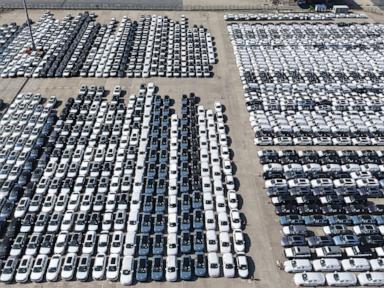
A 73% year-over-year spike in automotive exports is rarely a function of organic consumer preference shifts; it is the manifestation of a profound macroeconomic arbitrage. When May trade data signaled this massive acceleration in Chinese vehicle shipments, mainstream commentary pointed toward localized spikes in global fuel prices as the primary catalyst. This explanation treats a complex, multi-layered supply chain triumph as a simple, reactive phenomenon. Global fuel price volatility did not create the Chinese export surge; it merely accelerated a structural market penetration strategy that has been compounding for over a decade.
To understand the scale of this shift, the phenomenon must be deconstructed into three distinct operational vectors: domestic capacity oversupply, systemic battery supply chain integration, and the asymmetric total cost of ownership (TCO) equation that favors New Energy Vehicles (NEVs) in inflationary environments.
The Triad of Export Drivers
The acceleration of Chinese automotive exports rests on three structural pillars. Isolating these mechanisms reveals why this export volume is highly resilient, rather than a temporary cyclical blip.
+-----------------------------------------------------------------+
|               CHINESE AUTOMOTIVE EXPORT SURGE                  |
+-----------------------------------------------------------------+
                                |
       +------------------------+------------------------+
       |                        |                        |
       v                        v                        v
[Macroeconomic Arbitrage] [Supply Chain Integration] [TCO Optimization]
 - Domestic capacity glut  - Vertical battery control - Margin resilience
 - Capital cost advantage  - Refining dominance       - Parity via fuel spikes
1. The Macroeconomic Arbitrage of Domestic Capacity
The Chinese domestic automotive market has entered a mature, hyper-competitive consolidation phase. Local manufacturing plants, incentivized by provincial credit facilities and industrial subsidies over the past decade, operate at a scale that far outstrips domestic absorption capacity.
When domestic demand softens or plateaus, the fixed costs of these highly automated production facilities remain constant. Automators face a binary choice: slash utilization rates and decimate margins, or maintain utilization and reallocate the surplus units to international markets. Exporting becomes a capital preservation strategy. The vehicles shipped abroad are not speculative inventory; they represent excess high-quality production capacity clearing at international price points that often yield higher unit margins than the cutthroat domestic retail market.
2. Vertical Supply Chain Integration and Lithium-Ion Economics
Western automakers operate primarily as assemblers of components sourced from a fragmented tier-one supplier network. Chinese original equipment manufacturers (OEMs), by contrast, are deeply integrated with the upstream refining and manufacturing of critical battery chemistries.
China controls the vast majority of global lithium refining, synthetic graphite production, and anode/cathode manufacturing capacity. This structural integration eliminates multiple layers of transactional friction and middleman markups. In a product where the battery pack constitutes 30% to 40% of the total vehicle bill of materials (BOM), control over the chemistry supply chain translates directly into a permanent cost advantage. While international competitors face volatile cell costs tied to spot-market mineral prices, Chinese OEMs benefit from predictable, internal transfer pricing models.
3. Total Cost of Ownership Realignment
The consumer thesis for electric vehicles traditionally relied on environmental alignment or technology adoption curves. High global fuel prices shifted the calculation to pure mathematics.
The Total Cost of Ownership (TCO) formula determines mass-market automotive adoption:
$$\text{TCO} = \text{Purchase Price} + \text{Maintenance} + \text{Energy Costs} - \text{Residual Value}$$
When the energy cost component of internal combustion engine (ICE) vehicles swells due to crude oil supply constraints, the delta between fueling an ICE vehicle and charging an EV widens dramatically. By delivering mass-market EVs at price parity with legacy ICE vehicles, the consumer’s payback period on the electric transition shrinks from seven years to less than three. The May export surge proves that international buyers are executing this rational financial calculation under inflationary pressures.
Deconstructing the Fuel Price Catalyst
The thesis that high fuel prices drive EV adoption requires granular qualification. The relationship is non-linear and varies based on regional infrastructure and energy grid composition.
[Image of hydrogen fuel cell]
When gasoline and diesel prices cross critical psychological and economic thresholds, consumer behavior undergoes a structural shift. In markets reliant on imported refined petroleum, high fuel prices act as a regressive tax on mobility. This creates an immediate demand shock for high-efficiency alternatives.
However, the efficacy of this catalyst depends entirely on the local utility grid price architecture. In geographies where electricity generation is decoupled from oil prices (such as markets with high nuclear, hydro, or domestic natural gas mixes), the operational cost savings of an EV maximize. Chinese exporters systematically targeted regions where this utility-to-petroleum price spread was widest, ensuring that their vehicles arrived with a pre-built economic advantage.
This strategy uncovers a massive vulnerability in legacy automotive portfolios:
- Legacy ICE Portfolios: Dependent on highly volatile global oil markets; unable to hedge fuel costs for the end-consumer.
- Chinese NEV Portfolios: Tied to localized electrical grids; insulated from crude oil shocks, offering predictable per-mile operational expenditures.
Supply Chain Velocity as a Defensive Moat
Volume spikes of 73% are impossible without a corresponding logistics apparatus capable of absorbing the throughput. The bottleneck for most global industrial expansions is not factory output, but finished vehicle logistics.
Chinese automakers bypassed traditional third-party shipping constraints through direct capital allocation into maritime transport. Major domestic OEMs commissioned and leased their own fleets of Roll-On/Roll-Off (RoRo) ocean vessels. By controlling the shipping assets, these firms insulated themselves from the skyrocketing spot freight rates and port congestion that crippled other manufacturing sectors.
Furthermore, this logistics control allowed for precise delivery scheduling to key distribution hubs in Europe, Southeast Asia, and Latin America. While Western legacy brands struggled with transit delays and component shortages, Chinese vehicles arrived at international ports with predictable cadence, ready to populate dealership lots that had been starved of inventory for months.
Structural Bottlenecks and Geopolitical Risk Profiles
It is analytically irresponsible to project infinite linear growth based on a single month of explosive data. The mechanisms driving the export surge are hitting structural counter-forces that will determine the long-term equilibrium of global automotive trade.
Tariff Barriers and Protectionist Realignment
The primary threat to sustained export velocity is regulatory intervention. As Chinese vehicles capture meaningful market share in highly profitable Western economies, the probability of defensive tariff implementation approaches certainty. Anti-subsidy investigations and defensive trade barriers represent a hard ceiling on direct import strategies.
To mitigate this, the next operational phase must shift from pure export to localized foreign direct investment (FDI). Automakers must transition from shipping completely built-up (CBU) units to establishing greenfield manufacturing facilities within the target market's trade blocs. This transition introduces complex execution risks, including localized labor negotiations, compliance with regional environmental mandates, and the duplication of supply chains outside of the optimized domestic ecosystem.
The Residual Value Deficit
While the upfront purchase price and operational cost profiles of Chinese EVs are highly competitive, the long-term residual value equation remains unproven in international markets.
Secondary automotive markets require deep historical data regarding battery degradation curves, long-term software support, and component availability. If first-generation export vehicles experience steep depreciation on the secondary market due to perceived battery obsolescence or inadequate regional service networks, the TCO model collapses for the second wave of buyers. Fleet operators and leasing companies—who dominate volume purchasing in developed markets—are acutely sensitive to residual value risk and will restrict procurement if depreciation cannot be modeled accurately.
The Strategic Playbook for Global Re-Centering
The data from May indicates that the window for legacy automakers to protect their domestic market share through traditional product cycles is closed. Competing on features or brand equity is an ineffective defense against an adversary operating with a systemic supply chain and capital cost advantage.
The imperative for international automotive firms requires a two-pronged structural pivot:
First, legacy OEMs must abandon the illusion of vertical independence in battery chemistry. Survival requires entering into strategic joint ventures or long-term procurement contracts with the very Chinese supply chain giants that are anchoring the export surge. Attempting to build localized refining and cell manufacturing capacity from scratch, without leveraging existing intellectual property and processing scale, introduces a time delay that will result in permanent market share loss.
Second, product portfolios must be aggressively rationalized. Legacy manufacturers continue to dilute their capital by maintaining sprawling, multi-powertrain architectures across low-volume segments. They must truncate their ICE offerings to fund hyper-standardized, high-volume EV platforms that mimic the manufacturing simplicity of the Chinese export models. Complexity is the hidden cost driver; radical standardization is the only mechanism that can compress the margin delta and prevent the permanent capitulation of the mid-market automotive sector to East Asian imports.